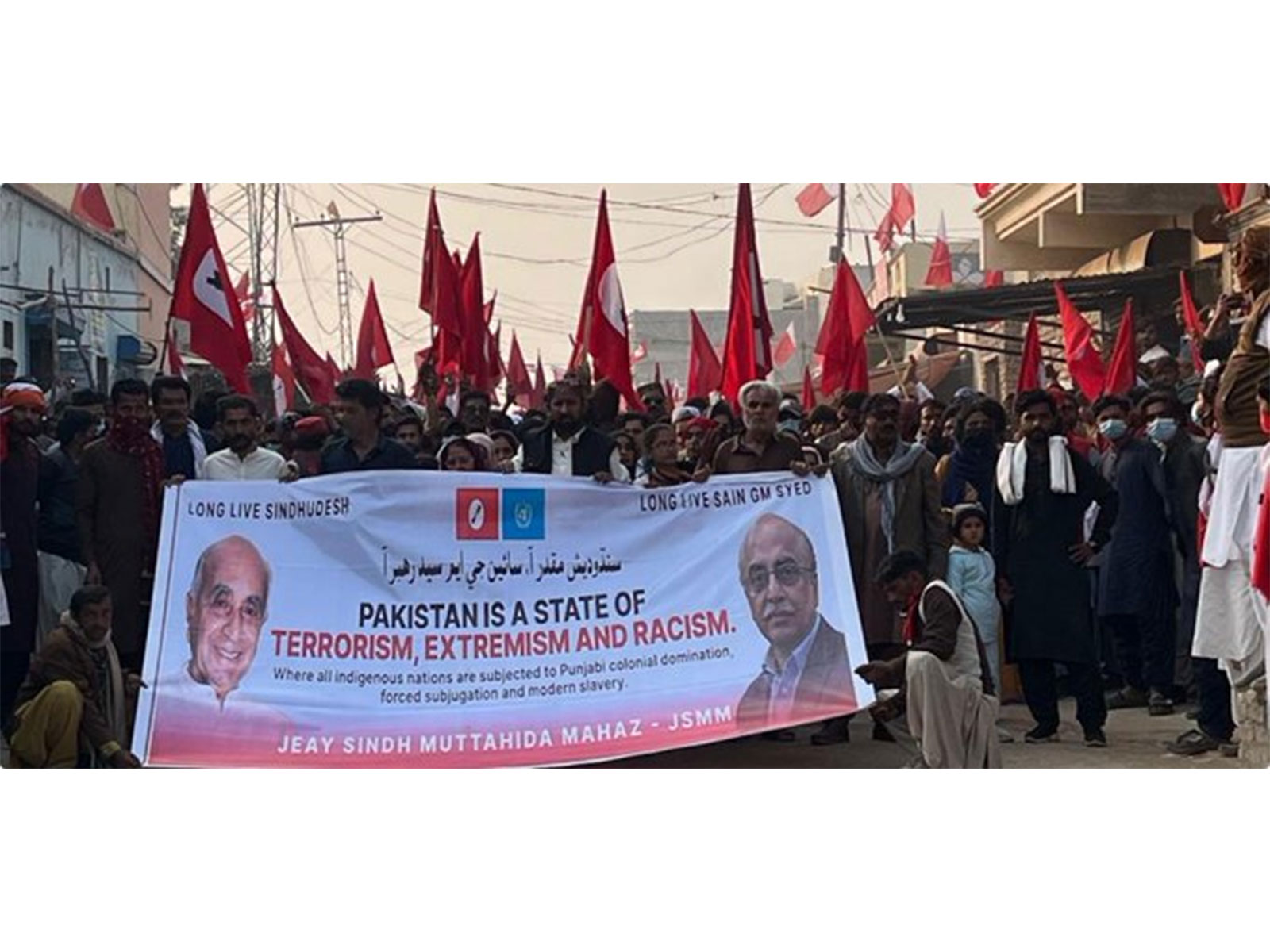
State machinery rarely takes kindly to symbols of cross-border goodwill. When Arzoo Sindhi, a prominent leader of the women’s wing of the Jeay Sindh Mahaz, posted Independence Day greetings to India and displayed flags on August 15, she likely knew she was pushing boundaries. What followed, however, crossed straight into extrajudicial territory. State security agencies allegedly whisked her away into secret detention, sparking immediate outrage and throwing a harsh spotlight on the systematic silencing of political dissent in Sindh.
The Chairman of the Jeay Sindh Muttahida Mahaz (JSMM), Shafi Burfat, didn't mince words from his base in exile. He publicly condemned the enforced disappearance of Arzoo Sindhi, pointing out an uncomfortable truth: expressing political views or cultural solidarity is not a capital crime. Yet, in regions where state narratives are rigidly enforced, even a social media post can trigger a midnight knock.
The Cost of Dissent in Sindh
Enforced disappearances aren't isolated anomalies in this part of the world; they're a recurring mechanism of control. JSMM and other nationalist groups have long accused the Pakistani military establishment of utilizing secret detention centers run by intelligence apparatuses like the ISI. Activists vanish regularly. Some return months later broken or facing fabricated terrorism charges, while others turn up as mutilated corpses dumped in remote fields.
Arzoo Sindhi's detention fits this grim pattern. As a visible woman leader advocating for regional rights and cultural autonomy, her targeting sends a chilling message to anyone else thinking of stepping out of line. The state wants absolute compliance, and it treats secular, nationalist political expression as an existential threat.
History Versus Artificial Borders
Burfat’s defense of Arzoo Sindhi went beyond a simple call for her release. He leaned heavily on history. Sindh shares an ancient civilizational matrix with India—rooted in the Indus Valley—stretching across language, literature, trade, and music. The 1947 partition drew lines on a map, but it failed to rip out centuries of shared heritage from the collective consciousness.
By rejecting the state-sponsored view of India as an eternal, permanent enemy, regional activists challenge the very ideological foundation upon which heavy-handed domestic policies are justified. If ordinary people across the border are neighbors rather than permanent threats, the internal security state loses its primary excuse for domestic repression. That's why displaying a flag or sending a greeting gets treated with such disproportionate, violent paranoia.
What Human Rights Defenders Are Demanding
International law requires due process, open trials, and the right to legal counsel. None of these apply inside the opaque world of military detentions.
The immediate demands laid out by JSMM leadership are straightforward, even if getting authorities to follow them remains an uphill battle:
- Produce Arzoo Sindhi immediately before a competent court of law.
- Grant her immediate access to independent legal representation.
- Allow her family secure and verified contact to confirm her physical well-being.
- Open external investigations through global bodies like the United Nations to monitor state-sponsored abductions.
Ignoring these demands only deepens the complicity of international allies who look the other way for geopolitical convenience. When governments trade human rights for strategic partnerships, activists pay the price in dark rooms and silent cells. Arzoo Sindhi's case is a litmus test for whether the global community still cares about freedom of expression where it costs something to defend it.