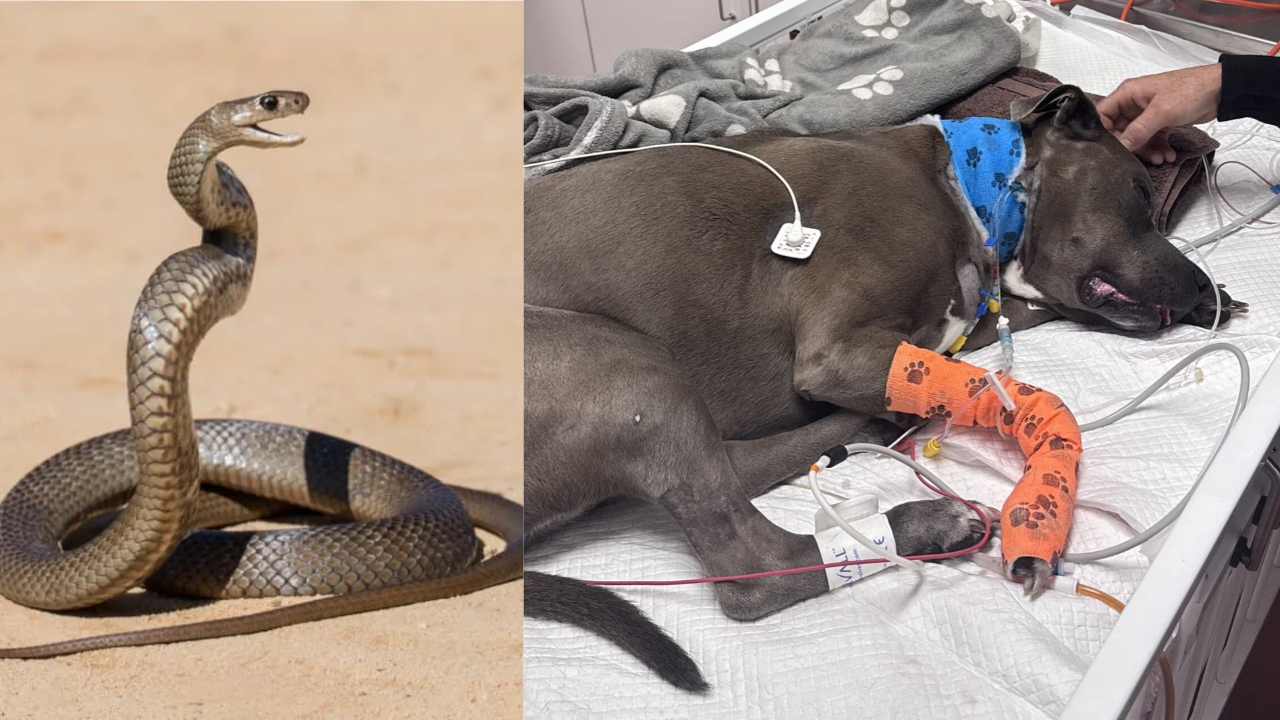
You walk into the backyard and find your dog bouncing around, tail wagging, acting completely normal. Nearby lies a dead eastern brown snake. You breathe a sigh of relief. You figure your dog missed getting struck, or maybe the snake was already dead when the dog found it.
Then you notice a tiny speck of blood on your dog's nose.
That exact scenario happened to an Australian family on Queensland's Sunshine Coast when their seven-year-old dog, Rosco, tangled with a deadly Pseudonaja textilis. Despite a close encounter with one of the planet's most toxic land snakes, Rosco was full of energy, eager to run inside, and showed zero immediate signs of distress. But that tiny nosebleed was the only early clue pointing to an unfolding internal catastrophe that would land him in intensive care for six nights.
Most people don't realize how deceptively quiet snake envenomation can be in pets. You expect immediate collapse, violent thrashing, or agonizing cries. Instead, you get a dog that acts like nothing happened while venom quietly sabotages their internal organs.
The Silence Before the Storm
Eastern brown snake venom works differently than many owners expect. It contains potent neurotoxins and procoagulants that attack the nervous system and blood-clotting mechanisms simultaneously.
When a dog is bitten, adrenaline kicks in immediately. That surge can mask the early physiological shock. Your dog might bounce around, fetch a toy, or greet you at the door with total normalcy. Behind the scenes, however, the venom triggers a terrifying condition called venom-induced consumptive coagulopathy, or VICC.
Instead of clotting normally, the animal's blood uses up all its clotting factors at once. Once those reserves are gone, the blood loses its ability to coagulate entirely. This triggers spontaneous bleeding from mucous membranes—which is precisely why a seemingly minor nosebleed or gum bleeding serves as an emergency flare. If you wait for your dog to collapse before seeking help, you are playing a losing game against time.
What Real Snakebite Symptoms Look Like in Dogs
Because pets rarely bark or yelp when bitten in the yard, you have to watch for subtle behavioral shifts and physiological markers. A bite on the paw or muzzle might leave tiny puncture wounds, but those are frequently hidden beneath thick fur.
Keep an eye out for these red flags:
- A sudden, unexplained nosebleed or bleeding gums
- Unsteady gait, wobbly back legs, or sudden weakness
- Excessive drooling, vomiting, or muscle tremors
- Dilated pupils that don't respond properly to light
- Dark or discolored urine
If your dog was sniffing around tall grass, timber piles, or outbuildings and suddenly acts unusually quiet an hour later—or conversely, shows bizarre nervous tremors—treat it as a medical emergency immediately. Never adopt a wait-and-see approach.
Why Immediate Vet Intervention Changes Everything
When Rosco was rushed to Kawana QVS on the Sunshine Coast, emergency veterinarians didn't guess at the treatment. They acted fast because they knew the species involved.
Treating an eastern brown snake bite requires aggressive, professional intervention. It isn't something you can fix with home remedies or waiting it out. Veterinarians typically administer multiple vials of specific antivenom depending on the severity of the envenomation. In severe cases like Rosco's, where blood-clotting factors have been completely depleted, a plasma transfusion becomes mandatory to restore normal blood function and prevent fatal internal hemorrhaging.
Intensive care monitoring is standard protocol. Dogs often need to stay hospitalized for days because snake venom can linger, and secondary organ damage can take time to manifest. Six nights in a clinic isn't an exaggeration; it's what it takes to pull an animal back from the brink when their biological clotting system has failed.
How to Protect Your Pets from Backyard Encounters
Living in regions where venomous snakes share territory with residential neighborhoods means vigilance is your primary line of defense. Snakes don't want to tangle with dogs any more than you want them in your yard, but accidental close encounters happen when pets step on them or corner them.
Clear out tall grass, brush piles, and building materials where rodents—the primary food source for brown snakes—like to nest. Keep your lawn closely mowed and seal off gaps under decks or sheds where reptiles can shelter during hot afternoons.
If you ever spot a snake in your yard, call a professional snake catcher immediately. Never try to kill or relocate it yourself, as the vast majority of snakebites happen when humans attempt to handle or strike the animal.
Check your dog carefully every single time they come inside from an unsupervised yard run. If you see a dead snake, assume your dog was bitten until proven otherwise by a veterinarian. A quick blood test at the clinic can identify venom activity long before catastrophic symptoms take over.
Do not wait for your dog to look sick. By the time they show obvious signs of collapse, the venom has already done severe damage. Trust your instincts, check for minor bleeding, and get professional help right away.