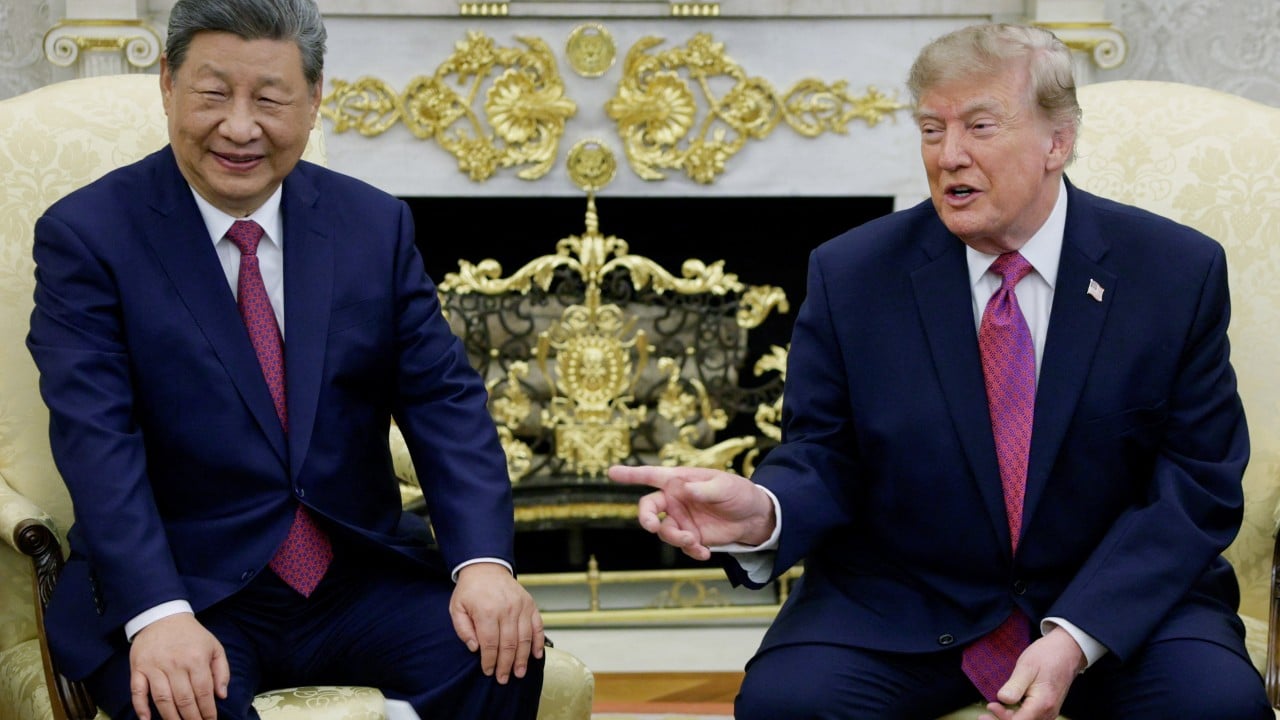
Foreign policy rarely produces genuine surprises anymore. Most state visits are heavily scripted choreography where every handoff and press statement is sanitized by committees of cautious bureaucrats months in advance. Then Donald Trump steps into the room and asks Xi Jinping if Beijing wants to buy American weaponry.
US Ambassador to China David Perdue dropped this revelation on Fox News following the Chinese leader's high-profile state visit to the White House. Naturally, the geopolitical commentariat went into immediate overdrive. Was it an off-the-cuff joke, a masterclass in transactional diplomacy, or a subtle pressure tactic designed to upend traditional defense paradigms in Asia?
The State Department moved with unusual speed to put out the fire. Officials clarified immediately that US federal law outright prohibits arms sales to China, leaving no room for ambiguity about an actual defense deal materializing. Yet the damage or the intrigue was already done. Observers immediately contrasted Trump floating the idea of arming Beijing with his administration's ongoing delays on multi-billion-dollar military packages destined for Taiwan.
To understand why this comment matters, you have to look past the superficial shock value. Trump operates through a lens of commercial negotiation rather than traditional ideological alignment. When he views global power dynamics, he views them through balance sheets, trade deficits, and manufacturing output. Pitching military hardware to a chief strategic competitor sounds absurd on its face, but it fits his established pattern of turning adversarial relationships into bizarre commercial pitches.
Think about how other capitals reacted. In Taipei, policymakers monitoring defense shipments watched closely. The timing of a rumored delay on billions in arms sales to Taiwan colliding with casual chitchat about selling military hardware directly to the People's Republic of China sends deeply confusing signals to allies on the front lines. Deterrence relies heavily on predictability. When the commander-in-chief treats sovereign defense commitments like an open market bazaar, regional stability gets complicated.
At the same time, Beijing likely viewed the remark with characteristic pragmatism. Chinese leadership understands American domestic politics well enough to separate campaign-style rhetoric from binding statutory restrictions. They know about the legal barriers preventing such transactions. Still, the remark highlights a transactional style of statecraft that breaks every rule in the conventional diplomatic playbook.
If you are trying to read the tea leaves of modern US-China relations, stop looking for ideological consistency. Look instead for transactional leverage. Whether the remark was a punchline or a calculated probe, it exposes the raw, unpredictable nature of bilateral talks when conventional diplomatic filters are stripped away.
Watch the actual policy outputs rather than the viral soundbites. Track the status of regional defense packages, monitor tech export controls, and pay attention to enforcement mechanisms. That is where real strategy happens.