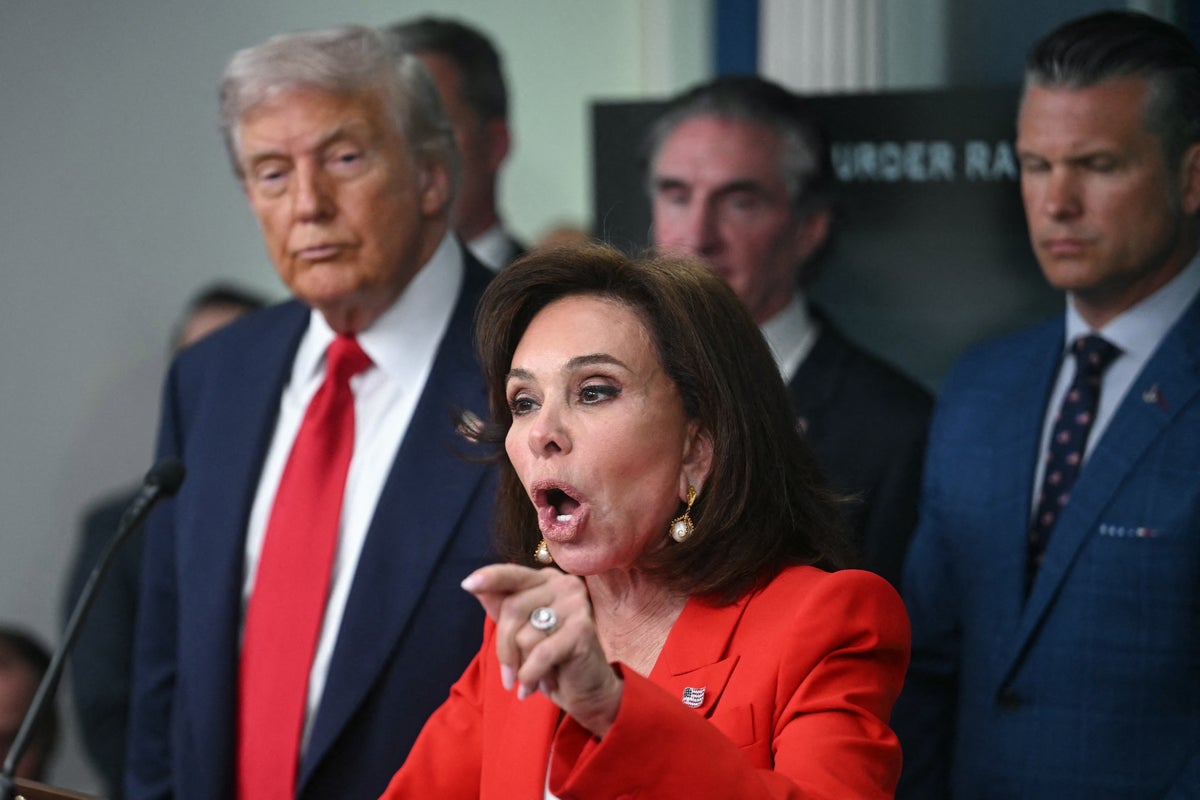
Loyalty in Washington usually runs deep, until it hits the hard edge of reality. President Donald Trump recently found himself staring down an unexpected truth from one of his most steadfast allies: U.S. Attorney for the District of Columbia Jeanine Pirro. The issue wasn't a major national security crisis or a sweeping legislative defeat. It was a stretch of blue plastic lining at the Lincoln Memorial Reflecting Pool.
Trump insisted that vandals had wrecked his prized renovation project just before Independence Day. Pirro’s office looked at the evidence, realized the charges against former Olympic canoeist David Hearn and others wouldn't hold up, and quietly moved to drop them. The culprit wasn't a malicious mob of midnight destroyers. It was shoddy workmanship by a rushed contractor.
Trump didn't hide his annoyance. He complained publicly that Pirro had "choked" and folded like a cheap umbrella. He expressed disbelief that she would commit such a "stupid thing" by contradicting his narrative. Yet, despite the Oval Office showdown that followed, Trump stopped short of firing her.
Anatomy of an Oval Office Clash
When facts collide with political narratives, tension is guaranteed. Trump wanted a villain. He wanted a public trial to prove that vandals had targeted his administration's aesthetic handiwork. Video footage from a distance supposedly showed people messing with the site, which fueled his conviction.
Pirro walked into a tight spot. As a federal prosecutor, pushing forward with a case built on weak ground risks professional sanctions and judicial embarrassment. Her office uncovered new evidence proving the pool's liner was failing because of flawed installation and rushed labor ahead of the July deadline.
When the court filings dropped, the facade cracked. Trump made it clear he was unhappy, hauling key figures like Interior Secretary Doug Burgum and Pirro into the White House to hash it out. Observers expected a swift firing. Trump values absolute alignment, and public contradiction is rarely forgiven in his orbit.
So why did Pirro keep her job?
The Pragmatic Calculus of Keeping Pirro
Firing a high-profile U.S. attorney over a botched pool liner creates a worse news cycle than keeping her around. Trump knows how to hold a grudge, but he also understands optics. Ousting a prominent loyalist and former Fox News personality over a local misdemeanor case would signal weakness and internal chaos. It would draw even more oxygen to the embarrassing reality that the renovation project suffered from structural failures rather than criminal sabotage.
Instead of a pink slip, Trump chose public grumbling. He vented to reporters, questioned her instincts, and doubled down on his version of events. It is a classic playbook move. He gets to express his displeasure while avoiding the administrative headache of a replacement confirmation battle in the Senate.
Political analysts view the episode as a classic illustration of the friction points inside modern governance. When leaders demand ideological conformity from independent offices, friction is inevitable. Pirro chose professional self-preservation over total alignment with a demonstrably false claim. Prosecutors cannot easily manufacture criminal intent when physical evidence points straight to construction errors.
What This Means Moving Forward
The reflecting pool incident might sound like a bizarre Washington footnote, but it highlights a recurring vulnerability. High-profile infrastructure projects face intense pressure to meet arbitrary deadlines. Contractors rush. Oversight slips. When the flaws inevitably show up, blaming outside actors makes for a convenient political shield.
Pirro's refusal to prosecute a weak case established a minor boundary. It proved that even loyalists have limits when a grand jury or a federal judge is likely to throw a case out entirely. Trump keeps his U.S. attorney, the pool remains under repair, and the administration navigates the awkward aftermath of a public disagreement over basic physics and construction materials.
Keep an eye on how future oversight handles similar urban renewal projects in the capital. Deadlines matter, but quality control matters more. When shortcuts happen, the truth usually surfaces long before the paint dries.