The ink is barely dry on the temporary truce between Washington and Tehran, and the narrative has already devolved into a shouting match over American farm products.
If you listen to the White House, the newly signed memorandum of understanding (MoU) is a massive financial jackpot for the American heartland. President Donald Trump and Vice President J.D. Vance are out here telling anyone who will listen that billions of dollars in unfrozen Iranian assets will be spent exclusively on American corn, soybeans, and wheat. Trump even posted on social media that the money is going right "to our farmers and ranchers."
But if you turn your eyes to Tehran, the story is entirely different. Iranian Parliament Speaker and top negotiator Mohammad Bagher Ghalibaf completely tore into that narrative on X, mocking the idea that Washington will dictate how Iran spends its own money. His words weren't subtle. He accused the U.S. of exporting nothing but "GMO soybeans, broken promises and trash talks," adding that the only thing Iran is harvesting from America is "decades of mistrust."
This public spat isn't just standard diplomatic posturing. It exposes a massive, fundamental disconnect at the heart of this fragile 60-day interim deal. Trump is selling the agreement to his base as an economic windfall for U.S. agriculture, while Iranian leadership is fighting for its life domestically to prove they didn't just hand their economic sovereignty over to Washington.
The Real Numbers Behind the Rhetoric
Let's look at the actual cash on the table. The current dispute centers on roughly $12 billion in total frozen assets, broken down into two distinct $6 billion tranches. One of these tranches sits restricted in Qatari escrow accounts, managed via mechanisms set up through past negotiations.
The Trump administration’s plan—orchestrated behind the scenes by Jared Kushner alongside Qatari officials—claims the U.S. Treasury will operate a hub in Doha to ensure this money goes strictly toward buying American agricultural products.
But sanctions experts are scratching their heads over how the White House plans to enforce an "exclusive" buying mandate. Richard Nephew, a senior research scholar at Columbia University who helped design previous Iran sanctions, points out that while the U.S. can tell foreign banks to only move the money for specific U.S. goods, forcing absolute compliance on a sovereign nation's procurement strategy is legally murky territory.
Historically, Iran hasn't been a major player for U.S. agricultural exports in nearly a decade.
- 2008: The absolute peak of U.S.-Iran ag trade, hitting $593 million.
- 2018: Iran bought $318 million in U.S. soybeans during the height of the U.S.-China trade war.
- 2019–2025: Purchases effectively dropped to zero after the re-imposition of severe sanctions.
The View from Tehran
Iranian Central Bank Governor Abdolnasser Hemmati tried to inject a bit of cold economic realism into the conversation, contradicting Ghalibaf's fiery rhetoric but still rejecting Trump’s claims. Hemmati made it clear that the signed memorandum contains absolutely zero legal obligations forcing Iran to buy exclusively from American suppliers.
Instead, Hemmati notes that Iran spends billions annually on essential food and medicines and will buy from whoever offers the best price and quality. If American grain is competitive, they might buy it. If not, they'll stick to their established partners like Brazil, India, Turkey, and Argentina.
For the Iranian regime, this is about domestic survival. Hardline political factions in Tehran are already revolting against Ghalibaf and President Masoud Pezeshkian, calling the Swiss-mediated agreement a sellout. If the Iranian public believes their unfrozen billions are just being funneled back into the pockets of American farmers to fulfill a Trump campaign promise, the political blowback inside Iran could tank the permanent negotiations before they even start.
What Happens Next
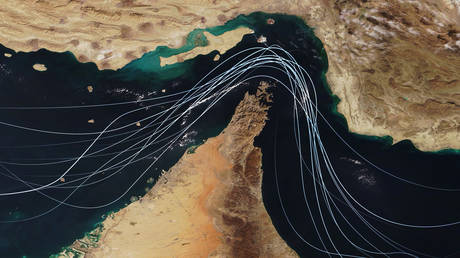
The temporary deal gives Iran a 60-day window to export energy products and reopens the vital Strait of Hormuz, which usually sees a fifth of the world's oil supply. But with U.S. Secretary of State Marco Rubio currently touring the Persian Gulf to assure allies that Iran won't be allowed to collect tolls on the strait, tensions are incredibly high.
Don't expect a sudden flood of Iranian grain orders to hit the American Midwest this month. For commodity traders and agricultural exporters watching this play out, the immediate play isn't rewriting your supply chain logs—it's managing risk. Watch the Treasury Department's actions in Doha over the next two weeks. If the U.S. actually sets up a rigid veto structure over the Qatari escrow accounts, Iran may choose to let the funds sit rather than accept humiliating purchasing conditions, leaving American farmers caught right in the middle of the political crossfire.