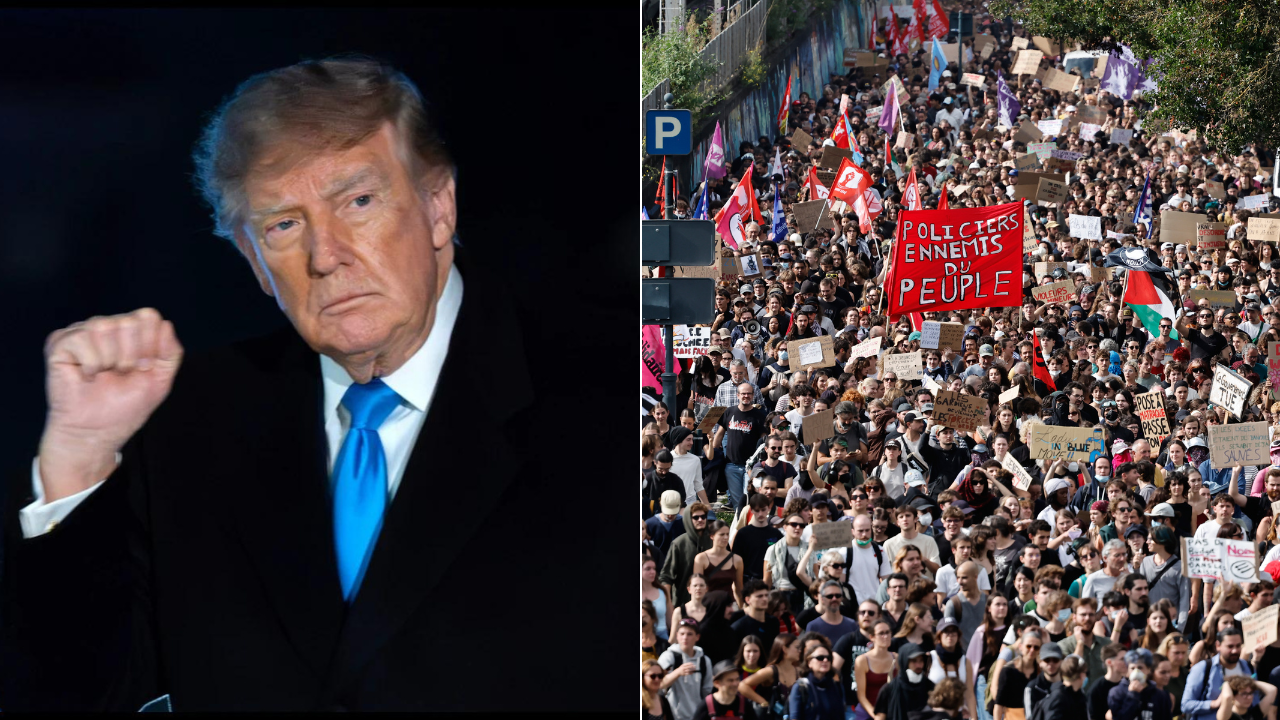
Street battles in Paris look nothing like a normal student strike. Tear gas hangs heavy in the air, thousands of teenagers are blockading campuses, and the unrest has quickly spiraled far beyond local funding disputes. Into this volatile mix stepped Donald Trump, claiming the chaos points directly to mass migration and a cultural takeover.
When foreign leaders and global figures weigh in on domestic European riots, the underlying political dynamics shift immediately. You have to look past the smoke bombs and burning barricades to understand what is actually driving both the French student demonstrations and international reactions like Trump's.
The Reality Behind the French School Protests
What started in mid-September at a single high school in the Paris region ballooned into a nationwide movement involving over 266,000 demonstrators. Students are furious about education funding, public spending cuts, and mounting economic pressures. Wealth inequality and soaring fuel costs linked to ongoing conflicts abroad have pushed young people to the breaking point.
Yet, the state's response has been brutal. Police forces have deployed batons and tear gas against minors, leading to thousands of arrests and severe injuries, including a 15-year-old boy who lost a hand to a stun grenade. French interior minister Laurent Nuñez defended the crackdown as proportionate against ultra-violence, while Prime Minister Sébastien Lecornu rejected allegations of systemic racism.
Why Global Figures Jump Into Local Unrest
When Donald Trump took to Truth Social to declare that the protests are about "Islam wanting to take over a once great Country" rather than schools, he tapped into a well-established populist playbook. By reframing civil unrest through the lens of identity politics and mass migration, international commentators reshape local economic grievances into a broader civilizational struggle.
This framing resonates deeply with right-wing movements across Europe and the United States. It connects domestic budget fights over classrooms and pensions to existential fears about demographic shifts. Critics argue this ignores the genuine grievances of French youth who simply want better schools and a fair economic shot. Supporters counter that uncontrolled migration creates fractured societies where baseline civic trust breaks down entirely.
The Political Fallout for Paris
French leadership finds itself trapped in a multi-front crisis. Presidential election campaigns are heating up, and the unrest provides a ready-made battleground for candidates eager to prove their toughness on law and order. Blaming foreign influence or outside agitators is easy, but it fails to fix the crumbling infrastructure inside public schools or calm an angry generation of students facing high youth unemployment.
Expect the rhetoric to escalate as long as police sirens echo through French cities. When economic frustration meets heavy-handed policing, the spark catches fast. International reactions only amplify the noise, turning a domestic governance failure into global theater.
Fix the root economic causes or watch the streets burn again next week.