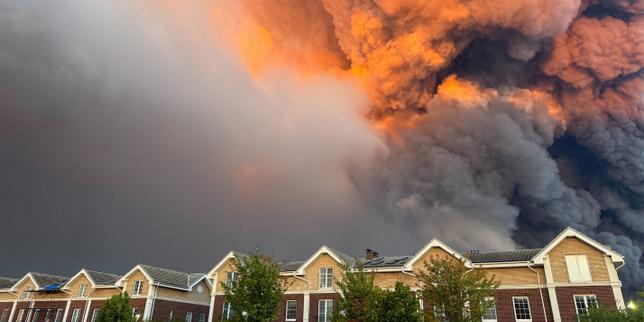
The night of August 15 to 16, 2026, marks a brutal shift in the geography of the Ukraine war. We’ve seen escalations before, but six hundred drones swarming toward Moscow in a single night isn't just another headline. It’s a message. For years, the Russian capital felt insulated by its distance from the front lines. That illusion is officially dead.
You need to understand the scale here. We aren't talking about a few localized strikes. This was a coordinated, massive saturation of the skies over the Russian capital and its surrounding regions. While the official reports from Moscow mention 201 drones intercepted in the capital’s immediate perimeter, the sheer volume of aircraft involved signals a new tactical reality. Ukraine isn't just playing defense anymore. They’re forcing the conflict directly into the daily lives of those who previously thought they were safe.
The human cost of the escalation
War is rarely about statistics, but the numbers this weekend are grim. Six people are dead across the border regions and the front lines. Three of them lost their lives in the Rostov region, a direct consequence of the intensified exchange. At the same time, Ukraine didn't escape the night unscathed. Three more lives were lost on the Ukrainian side—two in the Zaporijjia region and one in Kryvyï Rig.
It’s the same old tragedy, just on a much larger, more terrifying map.
Back in Kyiv, the night was equally violent. A ballistic missile barrage struck the city, leaving at least three people injured and setting a market ablaze. It’s a stark reminder that while Ukraine is developing the capacity to hit deep into Russian territory, Moscow remains committed to its strategy of attrition and terror against major Ukrainian population centers.
Why this changes the narrative
Why does this matter right now? Because the "red lines" of this conflict keep shifting. For a long time, Western analysts argued about how much pressure the Russian public could take before the war became politically unsustainable. By bringing the war to the doorstep of the Russian establishment, Kyiv is testing that hypothesis in real-time.
It’s also about the technology. Six hundred drones is an insane logistical feat. It requires manufacturing, supply chain management, and, crucially, a way to bypass increasingly sophisticated Russian electronic warfare systems. If Ukraine can sustain this kind of pressure, the Russian Ministry of Defense faces a nightmare scenario: having to defend a massive, sprawling interior while simultaneously trying to push forward on the eastern front.
The reality of living under the sirens
If you’ve been following this, you know that the "People Also Ask" questions usually boil down to one thing: "When will it stop?" The honest answer is that it won't. Not yet. The UN reports that last month was the deadliest for civilians in Ukraine since 2022, with hundreds of deaths and thousands of injuries.
This weekend’s attacks aren't an anomaly. They are the new baseline.
What should you watch for next?
- Response patterns: Look for how Moscow reshuffles its air defenses. If they pull assets from the front to protect the capital, the tactical balance in the Donbas could shift rapidly.
- Diplomatic friction: Expect more noise from both sides regarding "peace plans," but take them with a grain of salt. As long as both sides believe they can achieve a decisive advantage through long-range strikes, the appetite for a genuine ceasefire is basically non-existent.
- Infrastructure vulnerability: Keep an eye on the energy sector. Both sides are increasingly targeting the fuel that keeps the war machine running—refineries, depots, and power grids.
The conflict has crossed a line where the distinction between "front line" and "home front" is disappearing. You’re seeing a war that’s becoming harder to ignore for anyone living in either country. We’re in a phase where endurance is the only metric that matters. Whoever loses their nerve first, or runs out of munitions, loses the war.
For now, the sirens in Kyiv and the drone swarms over Moscow are just the opening chords of an even more intense chapter. Expect more of the same, only faster, and much, much louder.