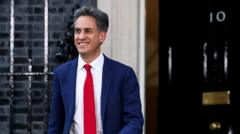
Ed Miliband called his appointment as Foreign Secretary the honour of his life. It was a dramatic moment in Westminster, but anyone following British politics knew this shift had been brewing for a while.
When Prime Minister Andy Burnham reshuffled the Cabinet, swapping out established figures and bringing key heavyweights into core posts, putting Miliband at the helm of the Foreign, Commonwealth and Development Office made an undeniable statement. It isn't just a political comeback for a former party leader. It's a fundamental recalculation of how Britain intends to project its influence on the global stage.
If you thought Miliband's career peaked during his time heading the Labour Party in 2015, think again. His move from Energy Security and Net Zero straight into King Charles Street brings a totally different energy to British foreign policy.
The Personal Ties Shaping His Global View
Politics is rarely just about policy position papers. For Miliband, international relations start with family history.
His parents arrived in the United Kingdom as Jewish refugees escaping Nazi persecution. His mother, Marion Kozak, survived the Holocaust in Poland with help from local families, while his father, Ralph Miliband, escaped Belgium during the Second World War to become one of Britain's prominent political thinkers.
That backstory matters. When Miliband talks about human rights, the rule of law, and international protection, it isn't canned political soundbite material. He views international law through the lens of personal family survival.
There's also the obvious historical echo that political watchers instantly spotted. His elder brother, David Miliband, served as Foreign Secretary under Gordon Brown from 2007 to 2010. Nearly two decades later, the younger Miliband brother walks into the exact same office. It's a rare dynamic in modern British cabinet history.
Merging Climate Priorities with Foreign Policy
In his previous post as Energy Secretary, Miliband spent two years driving heavy investment in clean power, pushing green infrastructure deals, and negotiating international energy agreements. Taking those priorities and dropping them directly into global diplomatic policy is a deliberate choice by the new administration.
For years, British foreign policy treated climate negotiations as a separate track from hard-headed geopolitical diplomacy. Miliband's appointment bridges that gap entirely.
Expect climate diplomacy to sit right at the center of Britain's bilateral relationships. When British diplomats meet with leaders from developing nations, trade and security will no longer sit in isolation from green energy investment. Miliband has consistently argued that international development and climate resilience are two sides of the same coin.
What Changes at King Charles Street
- Diplomatic strategy will align closely with international energy security.
- The UK will push harder for reforms within international financial institutions to aid developing nations.
- European partnerships will focus heavily on shared grid infrastructure and green technology supply chains.
How the Burnham Cabinet Reorganisation Set the Stage
Prime Minister Andy Burnham made quick work of reshaping his team. Appointing John Healey as Chancellor of the Exchequer, retaining Shabana Mahmood at the Home Office, moving Yvette Cooper to Health, and handing Miliband the foreign portfolio signals a clear direction.
Burnham needed a diplomat who carried immediate international recognition. Miliband brings years of top-level political experience, deep ties across Washington and European capitals, and a policy style that balances ideological conviction with pragmatic detail.
His relationship with Burnham goes back years. Miliband beat Burnham for the party leadership back in 2010, yet Burnham served loyally in his shadow cabinet for five years afterwards. That mutual respect creates a direct line between No 10 and the Foreign Office, preventing the tension that sometimes breaks out between prime ministers and their foreign secretaries.
The Immediate Global Challenges on His Desk
Taking over the Foreign Office right now isn't a victory lap. The geopolitical map is as volatile as it's been in decades, and Miliband faces immediate test cases across multiple fronts.
The Middle East and Diplomatic Strains
Miliband's stance on Middle Eastern policy has often differed from traditional party consensus. During his time as opposition leader in 2014, he took a firm line on Gaza and pushed for parliament to support the recognition of a Palestinian state.
Now, managing Britain's diplomatic strategy in the Middle East puts him under an intense spotlight. International partners will be watching how he balances long-standing security commitments with his emphasis on international humanitarian law and conflict resolution.
Washington and European Relations
Building bridges across the Atlantic while cementing ties with European neighbours is the core duty of any British Foreign Secretary. Miliband has extensive ties in American policy circles, having spent time as a visiting scholar at Harvard University earlier in his career.
His challenge will be navigating shifting domestic politics in the United States while maintaining a unified stance on NATO commitments and European security. On the European side, expect Miliband to pursue pragmatic, practical cooperation on cross-border security, migration, and trade standards without re-opening raw political arguments over treaties.
Debunking Common Assumptions About His Appointment
A lot of political commentary got this move wrong when the news first broke. It's worth setting the record straight on a few common misunderstandings.
- Myth: This is a reward or a political favor from the Prime Minister.
Reality: Burnham needed an experienced weight in the Foreign Office who could handle complex international negotiations immediately without a learning curve. - Myth: Miliband will focus exclusively on green issues and ignore traditional security.
Reality: In his initial address, Miliband explicitly highlighted Britain's commitment to NATO, defense alliances, and democratic security. - Myth: His foreign policy will mirror his brother's approach from 2007.
Reality: The global situation in 2026 is vastly different from 2007, and Ed Miliband's background in global economic planning and energy policy gives him a distinct style.
What International Partners and Businesses Should Expect Next
For diplomats, foreign governments, and global investors watching London, Miliband's arrival brings predictable patterns you can plan around.
First, expect Britain to take an assertive stance in global forums on international institutional reform. Miliband has long argued that institutions like the World Bank and UN bodies need structural updates to reflect modern global realities.
Second, British diplomacy will lean heavily into building economic partnerships around supply chain security and clean technology exports. If your business operates in international development, renewable energy, or cross-border infrastructure, the Foreign Office will likely be far more active in your space.
Third, the tone of British diplomacy will shift toward multilateral consensus building. Miliband's preferred style relies on building working coalitions rather than relying purely on unilateral declarations.
Next Steps to Track His Policy Direction
To get a true read on how this appointment will play out over the coming months, keep your eyes on these key indicators.
- Watch the first official bilateral visits: Pay close attention to whether his initial overseas trips prioritize European capitals, Washington, or nations in the Global South.
- Monitor upcoming global summits: Look at how the UK positions itself during climate and trade summits later this year to see if the Foreign Office and Energy departments present a unified front.
- Track international development budget decisions: Watch for shifts in how UK aid and development funds are allocated toward long-term climate adaptation and regional stability projects.
Miliband's tenure at the Foreign Office will be judged by concrete diplomatic outcomes, not just speechmaking. He steps into the role with clear ideas and a lifetime of political preparation behind him.