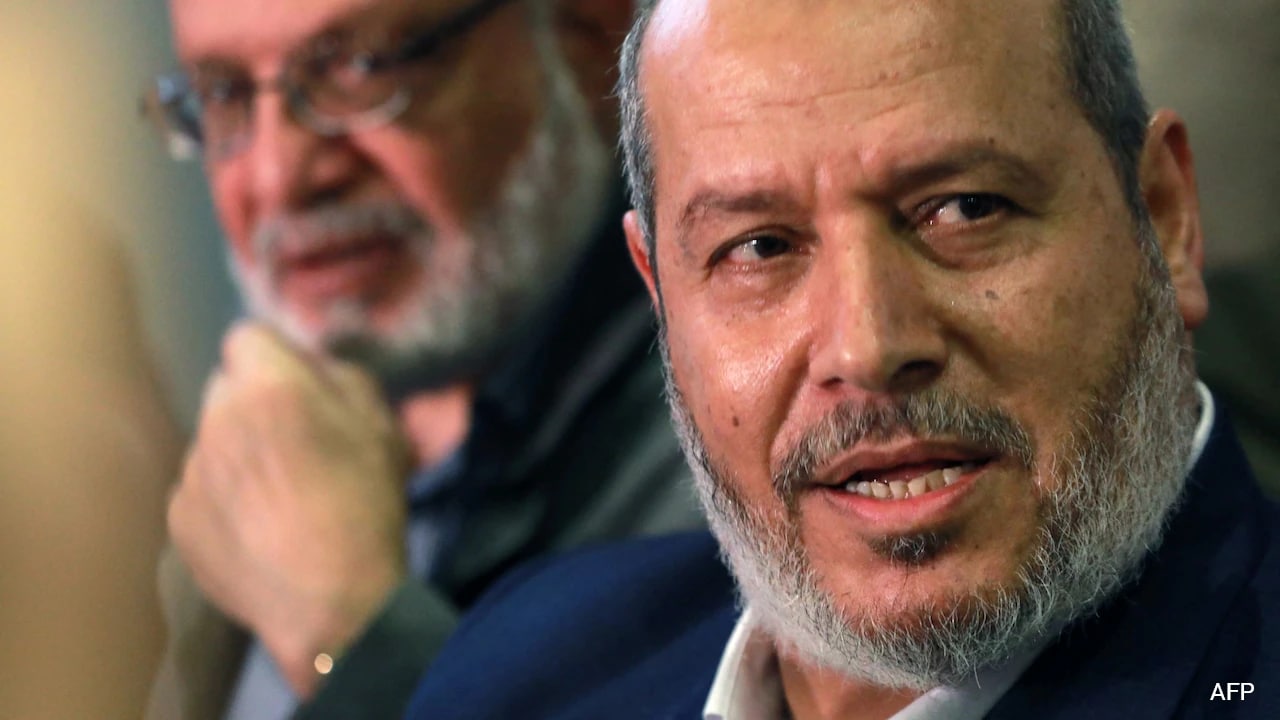
Hamas just threw a massive curveball at Middle Eastern diplomacy. After months of operating under a shadowy council following the death of Yahya Sinwar in late 2024, the group finally chose its definitive new boss. Khalil al-Hayya, the group’s chief diplomat and the man who spent the last few years haggling over ceasefires, is now officially running the show.
If you think this means the group is softening its stance because they picked a diplomat, you’re looking at it all wrong. Meanwhile, you can find similar events here: Why The Federal Probe Into New York Times Family Phone Records Crosses Every Red Line.
Al-Hayya didn't just win a routine promotion. He beat out Khaled Mashaal—the old guard veteran—in a highly secretive, high-stakes internal election. By picking al-Hayya, Hamas is sending a crystal-clear signal about where its loyalties lie, how it plans to negotiate, and why the war in Gaza is entering a completely unpredictable phase.
The Doha Diplomat with a Direct Line to Tehran
For years, the Western media painted Hamas as a fractured entity split cleanly between the "moderate" political leaders living in luxury in Qatar and the hardline militants fighting in the tunnels of Gaza. Al-Hayya completely shatters that lazy narrative. To understand the full picture, we recommend the recent article by The Guardian.
He is deeply embedded in both worlds.
Born in Gaza City in 1960, he’s a founding member of the movement. He didn't just watch the group grow from a small offshoot of the Muslim Brotherhood; he helped build it alongside Ahmed Yassin and Yahya Sinwar. He spent three years in Israeli prisons during the First Intifada. He knows the military commanders personally, and the armed wing, the Izz ad-Din Al-Qassam Brigades, instantly came out to declare their full backing for his new role.
But his defining characteristic is his relationship with Iran.
While Khaled Mashaal famously alienated the Iranian regime years ago by refusing to back Bashar al-Assad during the Syrian civil war, al-Hayya did the exact opposite. He spent years rebuilding those broken bridges. He personally led the delegation to Damascus to patch things up with Assad. He sat in high-level meetings in Tehran, acting as the primary conduit for Iranian cash and weapons flowing into the Gaza Strip.
By overwhelmingly voting for al-Hayya over Mashaal, the Hamas Shura Council made a definitive choice. They chose the Iranian orbit. They chose to double down on the regional alliance that keeps their rockets funded, rejecting Mashaal’s preference for closer ties with Gulf Arab states and the Palestinian Authority.
The Price He Paid to Get Here
You can’t understand al-Hayya’s mindset without looking at the staggering personal toll the conflict has taken on him. Israel has tried to kill him for decades, and while he managed to survive, his family paid the price.
- In 2007, an Israeli airstrike slammed into his family home in Gaza's Sejaiyeh neighborhood, killing several of his relatives.
- During the 2014 war, another strike targeted his eldest son, Osama, killing him, his wife, and three of al-Hayya's grandchildren.
- More recently, in September 2025, Israeli operatives launched a targeted strike against a compound in Doha, Qatar, aiming directly for al-Hayya. He escaped with his life, but another one of his sons was killed in the blast.
This isn't a detached political bureaucrat pushing papers in a safe haven. This is a man whose immediate family has been systematically decimated by the state he is fighting. When he sits down at a negotiating table, that history sits there with him. It makes him an incredibly tough, uncompromising negotiator who views the struggle through an intensely personal lens.
What This Means for the Stalled Ceasefire Talks
This is the big question everyone is asking right now. Does having the chief negotiator as the top boss make a peace deal more likely?
Don't hold your breath.
Yes, al-Hayya has built an unexpected level of international cachet. He was the face of the Hamas delegation during the intense diplomatic scrambles that led to the brief, US-brokered ceasefire in October 2025. He even managed to establish a weirdly functional working rapport with high-level American envoys like Steve Witkoff and Jared Kushner during backchannel discussions. He knows how to speak the language of international diplomacy when he needs to.
But don't mistake diplomatic manners for ideological flexibility.
Al-Hayya has consistently defended the October 7 attacks, publicly arguing that the operation succeeded because it forced the Palestinian issue back onto the global stage when the world was trying to ignore it. He has repeatedly stated that the main goal of taking hostages was to trade them for Palestinian prisoners, and he hasn't shown any willingness to abandon that core leverage.
Right now, the second phase of the Gaza ceasefire talks is completely deadlocked. Israel wants Hamas completely disarmed and removed from any governing role in Gaza. Hamas, under al-Hayya, refuses to surrender its weapons or its political authority. Now that he holds the absolute highest position in the organization, he has zero incentive to compromise on those red lines. He will likely use his diplomatic sophistication not to concede, but to box Israel into a corner internationally while keeping the weapons flowing from Iran.
The Secretive Election That Rebuilt Hamas
The sheer fact that this election happened at all tells us something crucial: Hamas is far from defeated structurally.
Following the death of Sinwar, the group was being run by a temporary five-member leadership council out of Qatar. Israel assumed that by taking out top leaders like Ismail Haniyeh in Tehran and Sinwar in Gaza, the group would fracture into competing regional factions.
Instead, they executed a highly complex, completely secret voting process across multiple countries. They managed to coordinate between officials hiding in Doha, representatives operating in Istanbul, and commanders dug into the tunnels of Gaza.
The transition is planned down to the millimeter. The current five-member council is dissolving entirely. Next week, the political bureau is convening a massive strategy meeting in Istanbul to formalize committees and completely restructure the leadership bodies for the next phase of the war. They are moving away from the ad-hoc survival mode of the past year and shifting back into a centralized, highly organized political machine.
The Reality Check
We need to drop the illusion that the elimination of individual leaders fundamentally changes the DNA of these organizations. Israel spent the last two years decapitating the top tier of Hamas leadership, thinking it would break the group's back.
It didn't. It just cleared the path for a savvier, more media-trained version of the exact same ideology.
Al-Hayya is far more dangerous to Israel than Sinwar ever was. Sinwar was a militant operating in isolation, cut off from the world, relying on brutal force. Al-Hayya is a smooth political operator who can charm international mediators in Istanbul on Tuesday, coordinate a multi-million dollar drone shipment with Iranian generals on Thursday, and maintain the absolute loyalty of the fighters inside Gaza on Friday.
He isn't looking for a quick exit strategy. He is digging in for a long, exhausting war of attrition.
Key Realities to Watch Next
If you want to understand how this leadership shift plays out on the ground over the coming weeks, keep your eyes on these three specific developments.
The Istanbul Leadership Summit
Watch the upcoming meetings in Turkey closely. The specific individuals appointed to lead the newly formed committees will reveal exactly how much control the military wing retains over the political bureau. If tunnel commanders get major political portfolios, expect an immediate escalation in regional operations.
The Iranian Supply Chain
With an explicitly pro-Tehran leader at the helm, look for changes in how weapons and funding are smuggled into the region. If Iran feels their guy is securely in charge, they will likely increase their financial risks to keep the group viable.
The Backchannel U.S. Diplomacy
Al-Hayya’s existing lines of communication with American envoys mean the diplomatic track isn't completely dead. However, the nature of the conversations will shift. He will likely use his leverage to push for permanent ceasefire terms that guarantee Hamas's survival, using the remaining hostages as his ultimate bargaining chips.