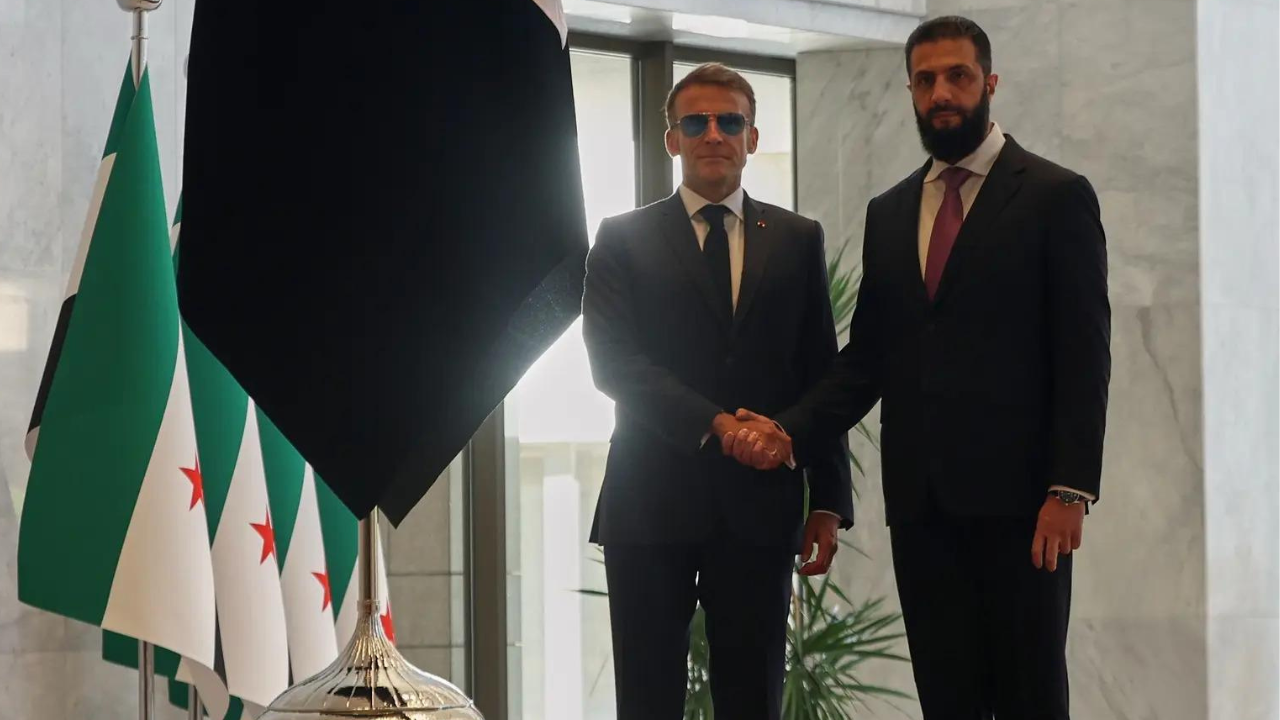
Walking away wasn't an option for Emmanuel Macron. When twin improvised explosive devices ripped through a busy street in Damascus right next to the high-security Four Seasons Hotel, the message from the ground was loud and clear. Syria remains incredibly volatile. Yet, just minutes after his motorcade departed the area, leaving behind a plume of black smoke, a burning vehicle, and 18 wounded people, the French president doubled down. "My visit continues," he announced.
This isn't just about a European leader showing physical courage in a conflict zone. It's about a high-stakes geopolitical gamble that most Western leaders are still too terrified to make. Macron's presence in Damascus makes him the first major Western head of state to set foot in Syria since rebels shattered the five-decade autocracy of the Assad family. By standing shoulder-to-shoulder with the country's new leader, Ahmed al-Sharaa, Macron is signaling a massive shift in European foreign policy. He's betting that engagement, rather than isolation, is the only way to prevent the war-torn nation from collapsing right back into chaos.
The Damascus Blasts and the Illusion of Stability
The timing of the July 7 bombings wasn't an accident. One device was hidden inside a garbage bin, and another was rigged to a vehicle parked near the hotel where Macron had been holding meetings with civil society groups. The area sits on a bustling thoroughfare between the National Museum and the Syrian Tourism Ministry. It's normally one of the most heavily fortified zones in the capital.
Graphic footage from the scene captured the raw reality of the blast. One video showed local police officers inspecting a trash receptacle seconds before it detonated, wounding four of them. An ambulance parked nearby was caught in the secondary blast.
The Elysee Palace quickly issued a statement confirming that Macron didn't hear the explosions and that his itinerary wasn't disrupted. He was already inside the presidential palace, embracing Ahmed al-Sharaa for the cameras. But you can't gloss over the optics. These explosions hit right at the heart of the image the new Syrian government is desperate to project to the international community.
Who is Ahmed al-Sharaa and Why is France Backing Him
To understand why Macron is risking his life and political capital here, you have to look at who is running the show in Damascus. Ahmed al-Sharaa isn't your typical Western-approved democrat. He's a former Islamist insurgent commander who once led Hayat Tahrir al-Sham, a group that originally grew out of al-Qaeda.
That past makes a lot of people in Washington and Brussels deeply uncomfortable. But since taking power, Sharaa has pivoted aggressively. He dropped the hardline rhetoric, promised an inclusive, pluralistic state for Syria's diverse religious and ethnic minorities, and systematically rebranded himself as a pragmatist.
France has been the primary Western force driving this rehabilitation. Macron didn't just show up for a photo op. He brought a massive economic delegation with him, including heavyweight executives like Jacques Saadé of the global shipping giant CMA CGM. The goal? Sign memorandums of understanding, show global investors that Syria is open for business, and convince the United States to permanently lift crippling economic sanctions.
The Real Stakes for Europe
Why is France leading the charge instead of waiting for a unified NATO or EU consensus? The answer comes down to geography and regional security.
- The Migration Threat: A completely collapsed Syrian economy means another massive wave of refugees heading straight for European borders.
- The Resurgence of ISIS: While Sharaa's forces are fighting the remnants of Islamic State terror cells, the security environment is fragile. Just days before Macron's arrival, a separate bombing at a cafe near the Damascus Justice Palace killed 10 people.
- Countering Regional Rivals: If Western powers refuse to engage with the new leadership in Damascus, they leave a power vacuum. Iran, Russia, and other regional actors are more than willing to step in and dictate the terms of Syria's reconstruction.
Macron's strategy is simple. By offering economic normalization and diplomatic legitimacy early, France gains leverage over Sharaa's domestic policies. It's a calculated risk that engagement will incentivize the new regime to protect minorities and maintain regional stability.
What Happens Next
The smoke has cleared in Damascus, but the underlying tensions aren't going anywhere. For travelers, journalists, and non-governmental organizations operating in the region, the security environment requires extreme vigilance.
If you are tracking international business developments or policy shifts regarding the Middle East, keep a close eye on the upcoming NATO summit in Ankara. Macron is heading there next, and his firsthand assessment of the situation in Damascus will likely dominate the security discussions. Watch whether other European nations follow France's lead in easing diplomatic restrictions, or if the lingering threat of urban bombings keeps foreign investment frozen in place.