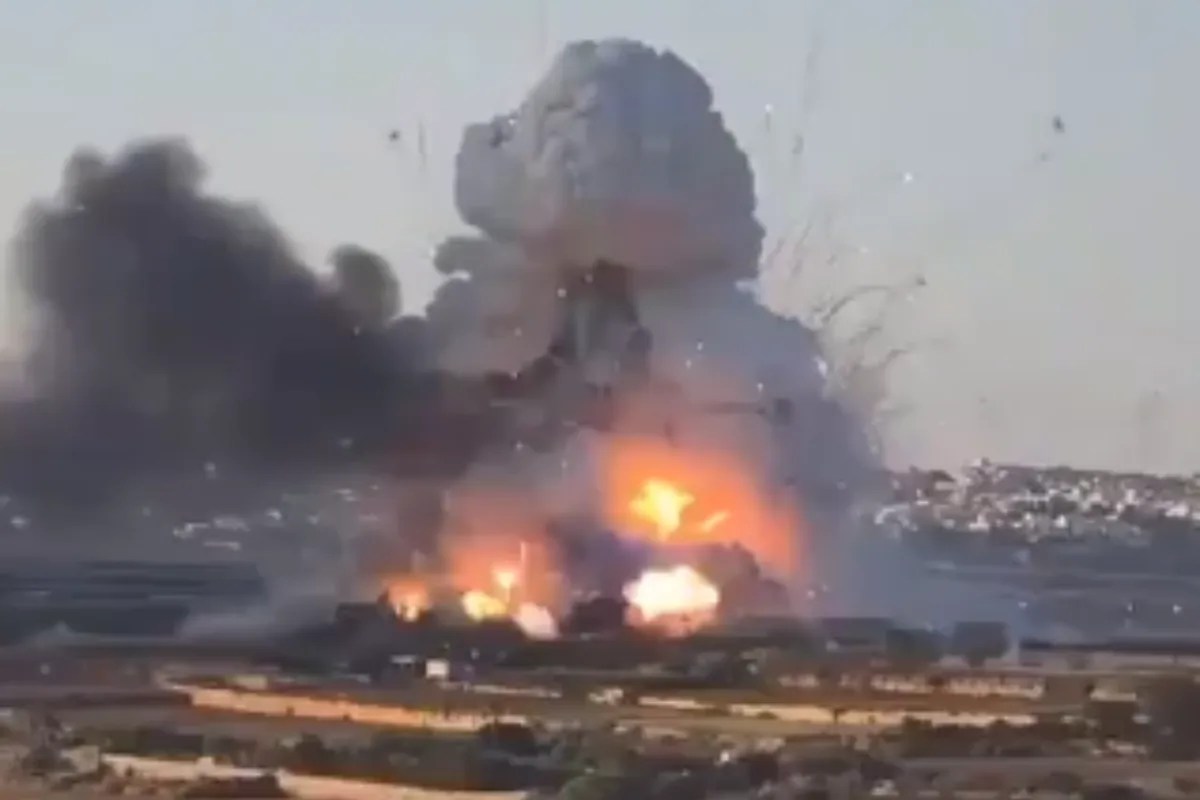
Air raid sirens shattered the early morning calm in Kuwait City on Saturday as a barrage of Iranian missiles and drones forced the immediate closure of Kuwaiti airspace. The regional proxy war between Washington and Tehran has officially broken its banks, spilling directly onto the shores of the Gulf states.
Kuwait Airways quickly announced the rescheduling of almost all commercial flights after the country suspended operations at Kuwait International Airport. It's a chaotic scenario that travelers and regional analysts have feared for a week. The reality on the ground is getting uglier by the hour.
This isn't a minor border skirmish. It's a massive, coordinated retaliatory strike by Iran's Islamic Revolutionary Guard Corps (IRGC) targeting countries that host American military infrastructure. If you think this is just another standard Middle Eastern geopolitical dispute, you're missing the bigger picture. The critical transit paths of global energy and aviation are now directly in the line of fire.
The Shocking Scale of the Iranian Strikes in Kuwait
The IRGC launched what it calls Operation Nasr 2, unleashing waves of drones and ballistic missiles aimed squarely at American military assets situated inside Kuwait. However, the damage didn't stay contained to military compounds.
According to the Kuwait Petroleum Corporation, a vital oil installation suffered repeated strikes, causing significant material damage and leaving several workers injured. Emergency teams scrambled to evacuate the facility. Almost simultaneously, the Ministry of Electricity, Water and Renewable Energy reported that another missile struck a crucial power and water desalination plant.
For a nation as arid as Kuwait, which relies on desalination for roughly 90% of its drinking water, targeting this infrastructure hits below the belt. The attack forced the shutdown of multiple power generation units, threatening the country's utility grid during the harsh summer heat.
Kuwait’s Fire Force sent eight separate firefighting teams to control the blazes at the struck infrastructure sites. While state media confirmed that the fires are under control and no civilian fatalities occurred, the economic and psychological toll is massive.
Why Iran Crossed the Red Line With Gulf States
Tehran isn't hiding its motives. The Iranian government explicitly stated that these strikes are direct retaliation for a week of intensive US military bombardments inside Iran. The US military has been targeting Iranian surveillance sites, underground weapons depots, and maritime capabilities. In response, Iran decided to strike back at the very launchpads hosting American forces.
The IRGC claimed responsibility for hitting specific high-value targets in Kuwait:
- Camp Arifjan: The IRGC claimed it struck the Ground Forces Support Centre, alleging casualties among American service members.
- Ali Al Salem Air Base: A drone strike allegedly targeted and destroyed a key US radar installation.
- Al Ahmadi Port: Iranian naval forces used a combination of drones and missiles to hit a US Navy fuel-support pier.
- Communications Hubs: A US signals and communications center was also reportedly compromised.
Kuwait wasn't the only nation caught in the crossfire. Air sirens also blared across Bahrain as its air defenses repelled incoming threats targeting the Sheikh Isa airbase. Jordan’s air defense systems actively downed Iranian missiles flying over its territory, while Saudi Arabia issued urgent civil defense alerts for its Al Kharj and Yanbu provinces.
The Broader Danger to Global Trade and Energy
This escalation marks a dangerous collapse of the fragile framework agreement that the US and Iran tried to patch together last month. With Iran openly suspending its commitments, the Strait of Hormuz has turned into a total war zone.
The IRGC claims to have blocked four commercial vessels violating its navigation rules in the strait, while the US military attempts to enforce a strict naval blockade. Given that a fifth of the world’s oil and gas supply flows through this narrow waterway, the immediate closure of Kuwait’s airspace and the targeting of its oil infrastructure will send shockwaves through global markets.
Jasem Mohamed al-Budaiwi, the secretary-general of the Gulf Cooperation Council, fiercely condemned the attacks, labeling the deliberate targeting of civilian infrastructure and utility plants as blatant war crimes under international law. Kuwait's Foreign Ministry echoed this stance, stating that the systematic targeting of vital facilities reveals a hostile approach that puts innocent civilian lives at risk. The government has firmly asserted its right to respond to protect its sovereignty.
What Lies Ahead for Regional Security
The situation remains incredibly fluid. With over 50,000 American service members deployed across the Middle East, the Pentagon maintains that its forces are vigilant and ready. But as long as both sides continue to trade heavy blows, the risk of an all-out regional war is higher than it has been in decades.
If you are currently traveling through the Gulf region or have upcoming flights routed near Kuwait or Bahrain, take immediate action to protect your plans.
Check your flight status directly via the Kuwait Airways official app or text notifications, as schedules are changing minute by minute. Avoid all non-essential travel to areas close to active military bases or major energy infrastructure hubs in the upper Gulf. Keep a close eye on updates from local embassies, as airspace restrictions can expand without notice.