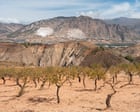
You can't build a green future without getting your hands dirty, but the European Union might be drowning its own neighborhoods to do it.
The European Commission is quietly planning a radical rewrite of its flagship environmental law, the Water Framework Directive (WFD). The goal? To fast-track heavy mining projects across the continent. Brussels calls it a strategic necessity to secure the raw materials needed for electric vehicles, defense systems, and artificial intelligence infrastructure. But an investigation has pulled back the curtain on a terrifying reality. Many of these planned "strategic" mines sit directly on top of regions running completely dry.
It's a classic case of environmental tunnel vision. In the rush to cut carbon emissions and break reliance on foreign superpowers, Europe is actively preparing to sacrifice its own dwindling water supplies.
The Mapping Data Brussels Ignored
A recent geographical mapping analysis by Watershed Investigations exposed a massive disconnect between European industrial ambitions and basic climate reality. The findings reveal that more than half of the 33 newly proposed or expanded "strategic mining projects" designated under the EU Critical Raw Materials Act are sitting in territories that have been steadily drying out over the last two decades.
The short-term picture looks even worse. Data from the EU's own observation networks shows nearly half of these strategic sites suffered through severe drought conditions in early 2026. Roughly 25 percent of the planned projects are locked inside zones officially classified as highly water-stressed.
Take a look at where these mines are actually going:
- Spain: Six major strategic projects are slated for areas facing intense water scarcity. This is the same country where Catalonia had to declare a state of emergency due to unprecedented drought conditions, and Andalucía had to ration water to keep taps flowing.
- Portugal: Home to several critical mineral prospects, despite the fact that recent climate data showed a staggering 96 percent of the country gripped by "extreme" or "severe" drought.
- Greece: Slated for industrial expansion while simultaneously climbing the European Environment Agency's list of the most water-scarce nations on the continent.
Global demand for these minerals has skyrocketed, tripling since 2010. It makes sense why European politicians are panicking. They want domestic supply chains. But local communities are asking a much more immediate question: what happens when processing rock takes priority over drinking water?
The Illusion of Closed-Loop Mining
Industry lobby groups like Euromines argue that modern mining isn't the environmental monster it used to be. They frequently highlight green tech fixes, such as closed-loop water recycling, extensive monitoring programs, and strict local regulatory oversight.
In theory, a closed-loop system recycles the vast majority of water used to crush, wash, and process raw ore. But hands-on experience in industrial resource extraction tells a different story.
First, "closed loop" does not mean "zero water." These systems still require a massive initial injection of freshwater to start operations, and they constantly lose water through evaporation and moisture trapped in the leftover waste rock, known as tailings. When you dump a water-intensive operation into an area where rivers are already turning into dust, even a small fraction of water loss can completely break a local aquifer.
Second, mining operations must deal with mine dewatering. To get to deep ore bodies, miners have to pump out the groundwater that seeps into the pits. This lowers the surrounding water table, drying up nearby agricultural wells and destroying local wetlands long before the processing plant even switches on.
Sara Johansson, a water policy manager at the European Environmental Bureau, didn't mince words when she pointed out that the mining sector hasn't provided real evidence that current water protections are actually blocking viable projects. Instead of innovating within ecological limits, the industry is simply lobbying to lower the legal bar.
Dismantling the Legal Guardrails
The European Commission's planned rewrite of the Water Framework Directive isn't just a minor bureaucratic tweak. It undermines decades of hard-fought environmental policy. The WFD has historically prevented industrial projects from moving forward if they threatened to degrade the chemical or ecological status of a water body.
By creating loopholes or fast-tracking exemptions for "strategic" raw materials, Brussels is shifting the financial and ecological risk onto regular citizens. If a mining project taints an underground aquifer or dries up a municipal supply, it won't be the corporate executives in Brussels paying the price. It will be the local farmers, small businesses, and village residents who find their properties worthless and their taps empty.
National authorities will still technically run environmental impact assessments, but when the overarching European mandate screams that these mines are matters of absolute continental security, local regulators face immense pressure to rubber-stamp approvals. Activist groups like Spain's Ecologistas en Acción are already filing legal challenges against the strategic designations, arguing that biodiversity and water security were completely ignored during the selection process.
Real Steps for True Supply Chain Security
Securing minerals for the energy transition shouldn't require turning Southern Europe into a desert. If the EU wants a resilient, secure supply chain that doesn't trigger a massive domestic backlash, it needs to completely shift its tactical approach.
Force Mandated Secondary Recycling Architecture
Before tearing up drought-prone mountainsides, Europe needs to maximize what it already has. Urban mining—the extraction of critical minerals from discarded electronics, old electric car batteries, and industrial waste—remains tragically underfunded. Mandating strict circular-economy laws that force tech and auto manufacturers to use high percentages of recycled domestic materials would immediately take the pressure off fragile ecosystems.
Implement Strict Water Auditing Before Granting Strategic Status
Strategic project status should not be an ideological gift. It must be earned. The European Commission needs to implement a hard ecological gatekeeping mechanism: if a proposed mine sits within a high-risk water-stressed zone as defined by satellite data, it must be automatically disqualified from fast-tracked permitting unless the operators can prove a literal zero-net-water impact on the surrounding municipality.
Protect the Legal Integrity of the Water Framework Directive
Do not touch the WFD. Legal stability creates predictable markets. Weakening Europe's primary water protection law for mining sets a dangerous precedent that heavy industry, agriculture, and chemical manufacturing will exploit later. True innovation happens when regulations are strict, forcing companies to develop genuinely waterless extraction technologies rather than relying on outdated, thirsty methods.