When punishing summer temperatures bake the continent, an old architectural vulnerability rears its head. Nuclear power plants across Europe rely heavily on massive volumes of natural water to stay cool. When rivers like the Rhône, Garonne, and Danube heat up or drop to historic lows, operators face an immediate crunch. They aren't shutting down because the technology is failing. They throttle output to prevent discharged cooling water from cooking local aquatic ecosystems past legal environmental limits.
Right now, roughly half a dozen nuclear power stations across Europe are either completely offline or running on severely restricted power. It is a recurring summer crisis exposing the friction between heavy industrial power generation and a shifting climate.
The French Dilemma and the Environmental Catch-22
State-owned Électricité de France (EDF) operates under strict legal mandates. Power plants pull cold water from local waterways, circulate it through condensers, and discharge it back. Under normal weather conditions, this process is seamless. But during a blistering heatwave, the math changes entirely.
Take the Golfech plant on the Garonne River. When air temperatures push past 40°C and river flows dwindle, running reactors at full blast means pumping warm water back into an already stressed aquatic environment. Regulators cap the discharge temperature to protect fish and prevent ecological dead zones.
Critics often argue that these plants are simply too hot to function, but that misses the point. It is a regulatory and ecological threshold, not an immediate mechanical meltdown. EDF has had to ramp down units at Bugey, Nogent-sur-Seine, and Saint Alban, cutting gigawatts of dispatchable baseload generation precisely when air conditioning demand spikes.
Central Europe Faces the Danube Drought
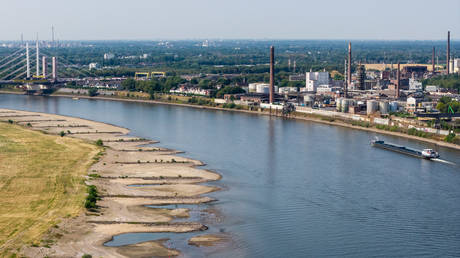
The crisis isn't limited to France. Further east, a brutal drought has driven the Danube River down to record-low levels. This creates a completely different physical headache: water scarcity.
In Hungary, the Paks nuclear power plant—responsible for nearly half of the nation's electricity—has been forced to throttle reactors because the river level threatens to drop below the intake pump thresholds. Romania's Cernavoda plant has dealt with similar emergency disconnections.
Over in Bulgaria, the Kozloduy plant has flirted with severe grid alerts, prompting unusual cross-border coordination. Serbia has had to strategically release water upstream from the Iron Gates dam system just to keep the Danube high enough for Bulgarian cooling intake pipes to function. When a nuclear superpower depends on neighboring dam adjustments to keep its pumps wet, your regional energy security is walking a tightrope.
What This Means for the Future of European Grids
People look at these summer powerdowns and assume nuclear energy is fundamentally incompatible with a warming planet. That is an oversimplification. Nuclear assets provide essential low-carbon baseload power that wind and solar cannot always match on hot, windless summer days.
However, the design philosophy of mid-20th-century energy infrastructure assumed a stable climate baseline that no longer exists. River temperatures are rising, summer flows are shrinking, and extreme weather events are compressing margins.
Fixing this requires more than just political finger-pointing. Operators are investing in closed-loop cooling towers, engineering efficiency upgrades, and pushing for more flexible regulatory waivers during extreme meteorological events. Without these adaptations, Europe will spend every subsequent summer juggling rolling power curbs, fossil fuel backups, and grid anxiety. The heat isn't going away, and the cooling water problem demands a permanent engineering answer.