Modern warfare runs on high-speed data, not just steel. If you take away a military's internet connection, tanks become blind, drones fall out of the sky, and tactical units are left completely isolated. That harsh reality hit Kyiv hard when unexpected restrictions hit the country's connection to SpaceX's satellite network. Suddenly, reliance on a single American commercial provider felt like a massive strategic vulnerability. Ukrainian officials are now pushing for an indigenous European alternative, but closing that gap is going to take years of brutal engineering and political alignment.
When SpaceX systems faced speed and access caps—particularly affecting fast-moving drones traveling above 160 kilometers per hour—it exposed a terrifying truth for European capitals. A single private corporation based across the Atlantic holds a kill switch over critical defense infrastructure on the European continent. EU leaders watched closely as operational capabilities shifted based on commercial and political decisions made in Washington. Now, the push is on to find out if Brussels can actually build a sovereign replacement before the current geopolitical window closes.
The Scale of the Dependency Problem
You cannot simply swap out thousands of active terminals overnight. Ukraine relies on tens of thousands of Starlink dishes to coordinate artillery fire, stream real-time reconnaissance footage, and keep frontline medics in touch with rear hospitals. Low-Earth orbit constellations require massive capital, thousands of launches, and robust ground station architecture. Right now, SpaceX has a colossal head start that commercial rivals are struggling to match.
Europe does possess alternative assets, such as Eutelsat OneWeb, which offers lower-Earth orbit connectivity, alongside the EU’s Govsatcom program designed to bundle secure government communication channels. Yet, these networks were built primarily for commercial maritime, aviation, and diplomatic use cases. They were never optimized for the extreme bandwidth demands and electronic warfare resilience required on a high-intensity modern battlefield. Transitioning from commercial satellites to tactical military grade links is like trying to turn a commercial airliner into a fighter jet mid-flight.
Can Brussels Bridge the Divide
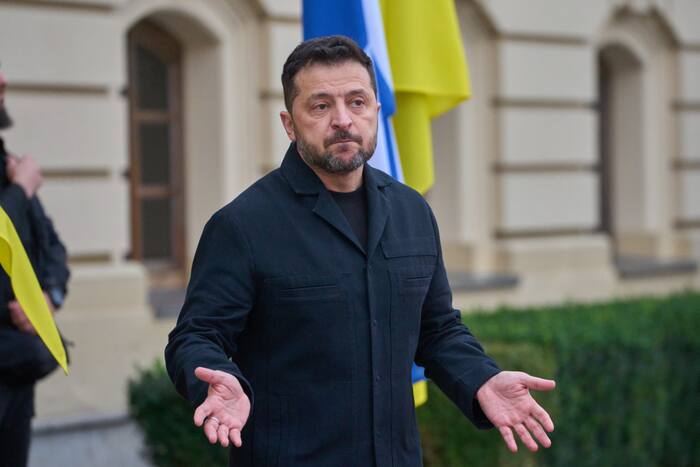
President Volodymyr Zelenskyy's office has made it clear that Kyiv is already in active talks with European partners to map out a multi-year timeline for sovereign satellite communication. Officials in Brussels argue that the bloc must secure its own orbital independence, especially as trans-Atlantic political winds shift unpredictably. The EU's Govsatcom initiative, operational since early 2026, combines government satellite resources for secure data sharing, but it still lacks the raw density and low-latency punch of private megaconstellations.
The real hurdle isn't technological capability—it's political fragmentation. Europe loves grand multi-state initiatives, but getting twenty-seven member states to agree on defense spending priorities, launch schedules, and procurement contracts is notoriously slow. While Washington or Silicon Valley can move at the speed of venture capital and executive fiat, European agencies move at the speed of bureaucratic consensus. That mismatch could cost precious time.
The Road Ahead for Sovereign Orbit
If Europe wants to plug the gap, it has to commit billions of euros to a dedicated low-Earth orbit defense constellation, often discussed in policy circles under various sovereign initiatives. This means fast-tracking rocket programs, cutting through regulatory red tape, and partnering directly with European aerospace startups instead of relying solely on legacy defense contractors.
Ukraine's frontline experience has proven that commercial space assets are the ultimate high ground in modern conflicts. If Europe fails to build its own independent network, it will remain permanently exposed to foreign policy shifts outside its control. The timeline discussed by officials points toward solutions taking up to five years to fully mature. For a continent facing immediate security pressures, five years is an eternity.