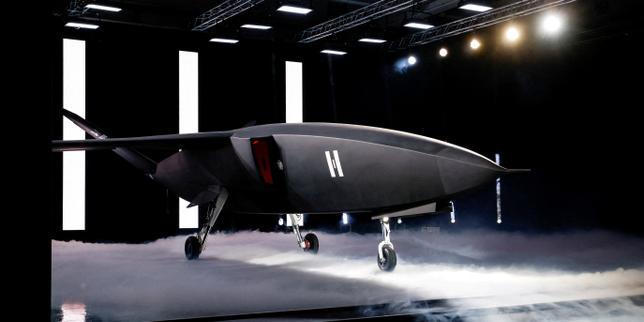
European defense tech just crossed a major line. Munich-based AI defense startup Helsing locked in a massive $1.8 billion Series E funding round, sending its valuation climbing to an eye-watering $18 billion. Let's skip the corporate spin. This isn't just another tech company getting a big check. It's a seismic shift in how Europe plans to defend its borders and who gets to write the software running the weapons.
If you've been tracking the defense sector, you know this is a wild escalation. Just two years ago, in mid-2024, Helsing was valued at €5 billion. By June 2025, that climbed to €12 billion. Now, in July 2026, they're sitting on an $18 billion valuation.
But behind the massive dollar signs lies a complicated tension: can a company claim to build "sovereign European AI" when its biggest checks are coming from across the Atlantic?
The Sovereign Tech Paradox
Helsing has always built its brand around one core promise. They want European governments to buy home-grown defense software rather than importing critical tech from the United States. In theory, it's a great pitch. European militaries get to keep control of their own data and weapon systems.
But look at who actually put up the money for this massive $1.8 billion round:
- Dragoneer Investment Group (led the round)
- Lightspeed Venture Partners (co-lead)
- General Catalyst
- Goldman Sachs Alternatives
- JPMorgan Chase
- Canada Pension Plan Investment Board
Notice a pattern? The largest checks in this round come from American venture funds, Wall Street banks, and a Canadian pension fund.
Helsing insists they remain "predominantly European-owned." Earlier this year, co-CEO Torsten Reil mentioned the company was roughly 80% European-owned. But after adding an extra half-billion dollars to this round since it leaked in May, that math is getting tighter. The board of directors still looks European, co-chaired by Spotify founder Daniel Ek and former Airbus CEO Tom Enders. Yet, the reality is clear: Europe lacks the massive, aggressive venture capital pools needed to fund its own defense champions at this scale. To build a giant, they had to take American money.
Moving Beyond Simple Software
When Gundbert Scherf, Torsten Reil, and Niklas Köhler founded Helsing in 2021, the focus was almost entirely on software. They built Altra, a platform that takes messy, chaotic battlefield data from satellites, drones, and radars, fusing it into a single real-time picture.
But in 2026, software isn't enough. The war in Ukraine showed that you need physical hardware capable of executing commands in environments where GPS is jammed and communications are cut. Helsing adapted fast.
The company's product line has quietly expanded into serious physical hardware:
- The HX-2 Strike Drone: An electric-powered, X-wing drone with a range of up to 100km. Armed with warheads supplied via a recent deal with European manufacturer EURENCO, these autonomous systems are designed to operate even under heavy electronic jamming. Thousands have already been supplied to Ukraine.
- The CA-1 Europa Platform: Helsing's ambitious foray into military aviation. This modular, unmanned aircraft comes in different variants. The CA-1EA (Electronic Attack) is built to fly ahead of manned jets like the Eurofighter, jamming hostile radar to clear a safe path. The CA-1KA (Kinetic Attack) is the weaponized sibling, with first test flights slated for early 2027.
Why Investors Are Panic-Buying Defense Tech
If you think an $18 billion valuation for a five-year-old defense company sounds like a bubble, you're missing the broader picture. European defense spending is surging. NATO countries are scrambling to modernize decades-old hardware, and they've realized legacy defense giants move too slow.
Just look at the momentum. Weeks before Helsing's announcement, Munich-based reconnaissance drone manufacturer Quantum Systems pulled in a $1.2 billion round, pushing its valuation to $8 billion. Over in the UK, maritime defense startup Kraken Technology reached unicorn status with a $175 million raise.
Militaries aren't just buying tanks and artillery anymore. They're buying autonomy. When electronic warfare can brick standard commercial drones in seconds, the software running the drone becomes more important than the plastic and metal frame. Helsing's software-first approach means they can upgrade existing platforms, like Sweden's Saab fighter jets, without waiting a decade to build a new plane from scratch.
What Happens Next
Helsing's immediate focus isn't on finding more capital—they have plenty of that now. The real challenge is execution.
If you're watching this space, keep your eyes on two key milestones:
- The Integration of CA-1 Autonomy: Watch for the scheduled early 2027 test flights of the CA-1KA. Delivering reliable, fully autonomous combat flight without human-in-the-loop lag is incredibly difficult.
- The Scale-Up of the HX-2: Helsing must prove they can manufacture thousands of these advanced strike drones under tight timelines while maintaining the supply chain for specialized energetic materials.