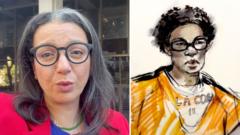
High-profile celebrity trials draw massive public interest, but they often distort the actual legal process. When indie-pop artist D4vd—legally known as David Anthony Burke—was charged with the first-degree murder of fourteen-year-old Celeste Rivas Hernandez, headlines moved fast. The case transitioned from online speculation to grim courtroom reality in Los Angeles.
If you're following the legal proceedings outside the downtown LA courtroom, you need to look past the social media noise. Let's break down what is actually happening in the D4vd trial, the evidence presented by prosecutors, and why this case has shocked the music industry.
The Charges and Courtroom Realities
Burke, twenty-one, faces severe felony counts, including first-degree murder with special circumstances, continuous sexual abuse of a minor, and the unlawful mutilation of human remains. He has pleaded not guilty across the board.
The preliminary hearings in downtown Los Angeles laid out a disturbing timeline. Los Angeles County prosecutors allege that Burke and Hernandez were romantically involved beginning when she was thirteen and he was eighteen. According to court documents, the relationship deteriorated by early 2025.
Prosecutors argue that Hernandez threatened to expose their history, which motivated the killing to protect his rising music career.
The Physical Evidence Presented
A preliminary hearing isn't a full trial. It exists to determine if enough evidence exists to move forward. The prosecution brought forward substantial forensic details during these sessions.
Criminalists and forensic experts testified that DNA consistent with Hernandez turned up in multiple locations inside Burke's Hollywood Hills garage. Investigators found matching DNA traces on rubber floor mats, a Tesla charging point, and a rowing machine. Her remains were eventually discovered in September 2025 inside the front trunk of an impounded Tesla Model X registered to the musician.
Prosecutors also detailed chilling purchases made under a fake name, including a burn cage, a blue inflatable pool intended to contain blood during dismemberment, and heavy-duty bags. Burke's defense team maintains his innocence and plans to contest the validity and interpretation of this physical evidence in court.
Understanding the Legal Strategy
Legal observers know that preliminary hearings set the battlefield for the actual trial. The defense is pushing back against the narrative constructed by the District Attorney's office. While the prosecution frames the case around career preservation and premeditation, defense attorneys are scrutinizing the chain of custody for forensic evidence and testing methods used on items like chainsaws recovered from the property.
Public fascination remains high due to Burke's sudden rise to fame on platforms like TikTok and streaming services. However, the legal system operates on strict evidentiary standards, not public opinion. The preliminary phase dictates whether the defense can successfully suppress specific evidence or challenge witness credibility before a jury is ever seated.
Watch for upcoming motions regarding forensic testing limits and digital communications data. The trial will test the strength of circumstantial and digital footprints in modern celebrity crime prosecutions.
Track local court filings directly through the Los Angeles County Superior Court portal to monitor future hearing dates and judge rulings without media spin.
D4vd murder case moves forward with preliminary hearing set
This video provides an overview of the status conference and the timeline for the preliminary hearing in downtown Los Angeles.
http://googleusercontent.com/youtube_content/1