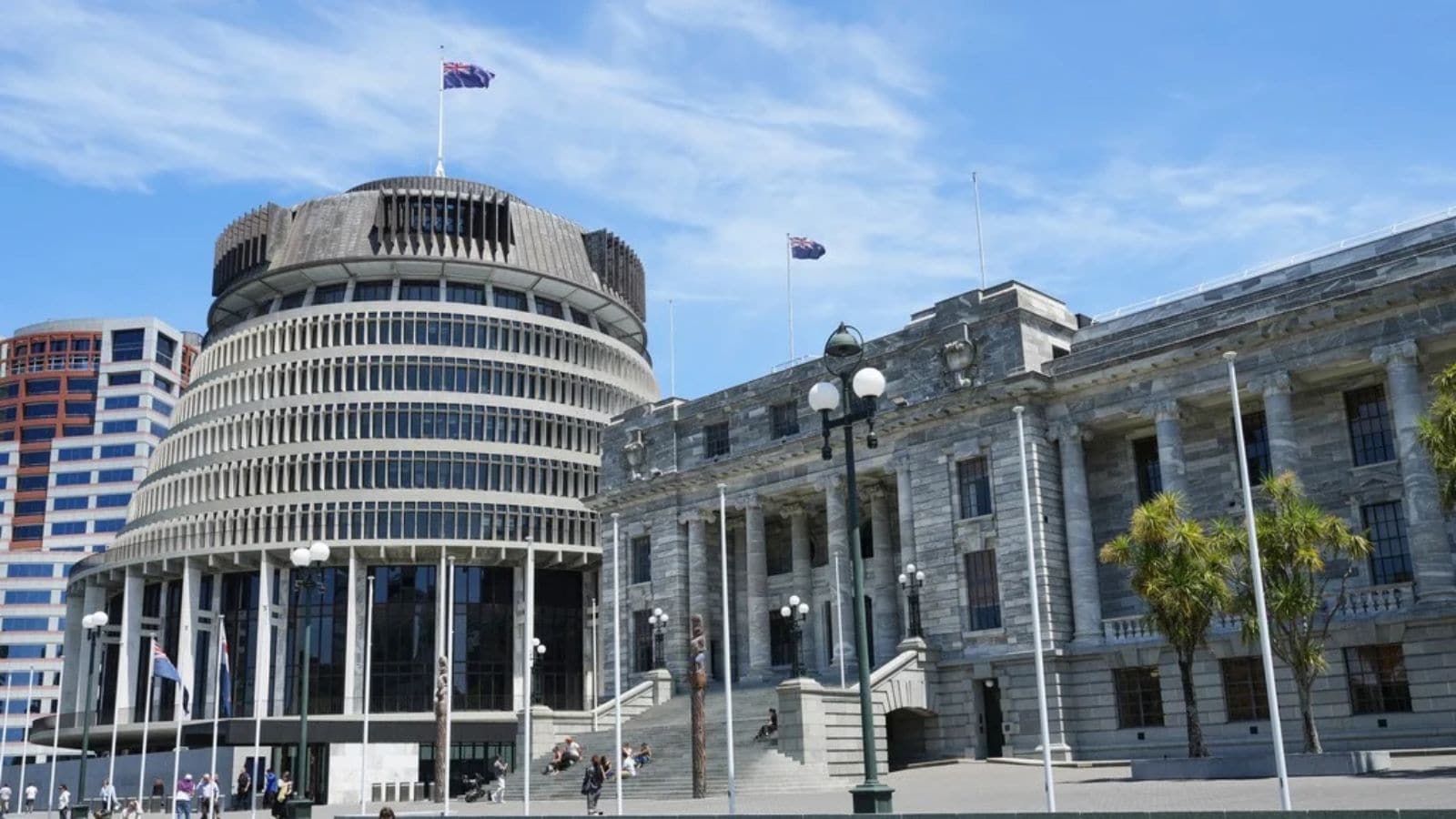
The final count in New Zealand's election gives neither the right nor the left bloc enough seats for a majority. If you've only skimmed the headlines, you probably think Wellington is locked in a symmetrical stalemate where both sides have an equal shot at taking power.
They don't.
Once you look past the top-line drama and actually examine the seat math from New Zealand's Electoral Commission, a very lopsided picture emerges. Prime Minister Christopher Luxon's center-right coalition—made up of National, ACT, and New Zealand First—finished with 65 seats in an expanded 130-seat Parliament. That's exactly one seat shy of the 66 needed to govern. Meanwhile, Chris Hipkins's left-leaning opposition bloc of Labour, the Green Party, and Te Pāti Māori sits at 58 seats. Sitting right between them is the centrist Opportunity Party, led by Auckland businesswoman Qiulae Wong, holding seven list seats in its breakthrough parliamentary debut.
Do the arithmetic. Even if Opportunity handed all seven of its seats to the left bloc, Labour, the Greens, and Te Pāti Māori would still only hit 65 seats—still one short of a majority. Unless a party from the governing coalition defects across the aisle, National has the only viable mathematical road to forming a government.
Why Special Votes Flipped the Script
For nearly three weeks after the November 7, 2026 general election, Luxon's coalition looked safe. Preliminary results on election night gave the right bloc 67 seats, a slim but workable cushion. Then came the slow, methodical tally of 484,865 special votes—ballots cast by New Zealanders overseas, voters outside their home electorates, and late enrollees—which made up 16.5% of the total 2,931,604 votes cast.
In New Zealand politics, special votes almost always break to the left, and 2026 was no exception.
When the official numbers dropped on Friday, November 27, three razor-thin electorate races had flipped, stripping the National Party of two seats and handing the Green Party an extra list seat:
- Wairarapa: Labour's Kieran McAnulty edged out National's Mike Butterick by just 81 votes.
- Hamilton East: Labour's Georgie Dansey overturned an election-night deficit of 456 votes against National's Ryan Hamilton to win by 173 votes.
- Wellington Bays: Green Party candidate Julie Anne Genter erased a 140-vote election-night lead held by Labour's Craig Renney, finishing ahead by 1,610 votes.
That Wellington Bays swing didn't change the left bloc's overall total of 58 seats, though it did knock Renney out of Parliament entirely since he wasn't high enough on Labour's party list to survive losing the electorate. What broke the coalition's majority were the two National losses in Wairarapa and Hamilton East. Because National won zero list seats—every single one of its 40 MPs entered via a local electorate—losing two local races meant losing two total seats in the House.
The 10-Seat Overhang Nobody Explains Properly
Most international coverage glosses over why Parliament suddenly has 130 seats instead of the usual 120. If you don't understand how New Zealand's Mixed-Member Proportional (MMP) system handles overhangs, the final tally looks like a typo.
Under MMP, voters cast two ballots. One goes to a preferred political party, which determines the overall proportion of seats each party should hold in Parliament. The second goes to a local electorate candidate. Usually, if a party wins 30% of the party vote, it gets roughly 30% of the 120 seats, topped up from its party list after counting its local electorate wins.
An overhang happens when a party wins more local electorate races than its nationwide party vote entitles it to. Under New Zealand law, those local winners keep their seats, and Parliament temporarily expands to accommodate them.
In 2026, both major traditional winners of local races created a massive 10-seat overhang:
- National Party: Won 28.35% of the party vote (819,012 votes), which would normally entitle it to 34 seats. Because National candidates swept 40 local electorates, it triggered a six-seat overhang.
- Te Pāti Māori: Won just 0.63% of the party vote (18,310 votes), well below the 5% threshold normally required to enter Parliament without an electorate win. Yet the party captured five Māori electorates, creating a four-seat overhang.
Add six plus four to the baseline 120 seats, and you get 130 MPs. That expansion pushed the magic number for an absolute majority from 61 to 66—turning National's 65-seat tally from a comfortable majority into a cliffhanger.
A Punishing Night for Both Legacy Parties
Strip away the seat-counting gymnastics and look at the raw party vote percentages. Both of New Zealand's traditional governing giants suffered historic bruising from an electorate tired of polarized politics and cost-of-living pressures.
Labour actually won the nationwide party vote with 29.88% (863,238 votes), beating National's 28.35% by more than 44,000 ballots. Yet Labour ended up with 36 total seats (22 electorates and 14 list MPs) compared to National's 40, purely because National's overhang protected its local winners. Even so, both major parties finishing below 30% of the party vote is a blunt message from voters.
Smaller parties absorbed the refugees from both camps. On the left, the Greens climbed to 14.06% (406,356 votes) for 17 seats. On the right, libertarian ACT took 10.54% (304,521 votes) for 13 seats, while Winston Peters's nationalist New Zealand First secured 9.60% (277,565 votes) for 12 seats.
Then there's Opportunity. Founded back in 2016 by economist Gareth Morgan as an evidence-based centrist alternative, the party spent a decade banging against MMP's 5% threshold without winning a seat. Under Qiulae Wong, who took over as leader in November 2025 and rebranded the movement, Opportunity finally broke through with 6.06% of the party vote (175,093 votes), translating into seven list seats.
How Coalition Negotiations Actually Work From Here
If you're expecting an overnight deal, don't hold your breath. New Zealand's coalition talks are notoriously slow, high-stakes poker games, and this one brings four distinct ideological agendas into the same room.
During the campaign, Luxon initially ruled out working with Opportunity, only to soften his tone once the election-night numbers pointed toward trouble. Following the final count, Luxon confirmed National will negotiate with its existing partners—ACT and New Zealand First—alongside Opportunity to build a stable government and avoid sending exhausted voters back to the polls.
Wong has been consistent about her protocol. She stated before and after the vote that Opportunity would talk first with the party holding the most seats, which puts National at the front of the queue. Still, she hasn't handed Luxon a blank check. Calling her party's arrival in Parliament a "pivotal moment," Wong warned media that while stability matters, she won't rule out a fresh election if talks fail. She put the odds of going back to the polls higher than at any other point in recent memory.
The Policy Friction Points
Bringing Opportunity into a National-ACT-NZ First arrangement isn't just a matter of handing out a couple of cabinet portfolios. Wong campaigned on five explicit bottom lines announced in September 2026:
- Supermarket competition: Giving the Commerce Commission stronger powers to rein in grocery prices.
- Lobbying and donation reform: Capping political donations and regulating lobbyists to clean up Wellington politics.
- Healthcare: Committing to a structured 10-year health plan.
- Ocean protection: Banning bottom trawling.
- Climate targets: Recommitting New Zealand to its emissions obligations under the Paris Agreement.
Wong also named honoring Te Tiriti o Waitangi (the Treaty of Waitangi) as a non-negotiable condition.
Anyone who has watched New Zealand politics over the past three years knows where the sparks will fly. ACT and New Zealand First have built much of their platform around rolling back climate regulations, questioning Treaty co-governance frameworks, and resisting heavy-handed market intervention. Getting ACT leader David Seymour, NZ First's Winston Peters, and Opportunity's Qiulae Wong to sign off on the same governing document will require serious concessions from someone—or a looser arrangement where Opportunity offers confidence and supply without joining Cabinet.
Could the Left Still Pull Off a Miracle?
Technically, yes. Realistically, it's a long shot.
Because Labour, the Greens, Te Pāti Māori, and Opportunity together only reach 65 seats, Chris Hipkins cannot form a government without peeling away one of Luxon's current partners. In 2017, Winston Peters famously shocked the country by choosing Labour over National after weeks of deliberation, installing Jacinda Ardern as prime minister.
History doesn't repeat itself easily here, though. Relations between NZ First and the current left bloc—particularly Te Pāti Māori and the Greens—are deeply strained, and Peters has spent the last term governing alongside National and ACT. While Wong hasn't closed the door on speaking with other parties if talks with National collapse, the math on the left simply doesn't add up without a political earthquake.
What You Should Watch Over the Coming Weeks
With Christmas less than a month away, New Zealand enters a caretaker period where Luxon's outgoing government remains in office with limited authority until a new administration is sworn in. If you want to track whether Wellington is heading toward a four-party governing deal or an unprecedented snap election, pay attention to three specific signals:
- Watch the structure of the deal, not just the policy trade-offs. A full four-party coalition with ministers from National, ACT, NZ First, and Opportunity would be fragile from day one. Look for signs of a "confidence and supply" agreement instead, where Opportunity stays on the crossbenches, votes with the government on budgets and confidence motions, and extracts wins on one or two signature issues like donation caps or supermarket reform without having to defend every ACT or NZ First policy.
- Track the climate and Treaty language in any joint statement. Opportunity's Paris Agreement and Te Tiriti commitments directly collide with red lines held by ACT and NZ First. If negotiations stall publicly over either of those two points within the first fortnight, the probability of a second election spikes dramatically.
- Keep an eye on the parliamentary calendar. Under New Zealand's Constitution Act, Parliament must meet no later than six weeks after the date fixed for the return of the election writ. That hard constitutional deadline forces party leaders to either lock in a majority or admit deadlock before the summer holiday break—meaning you'll know before the new year whether Luxon has survived or New Zealand is heading back to the ballot box.