You watch the coverage and you see the same script every time. A major summit happens. The world’s cameras focus on a few tense handshakes, a leaked draft, or some fiery rhetoric about budgets. We are told the alliance is either on the brink of collapse or stronger than ever before. Honestly, the truth usually lives somewhere in the boring middle.
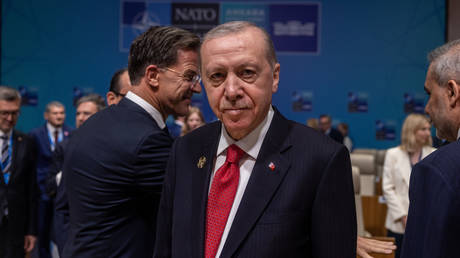
The rhetoric around these events is designed to be loud. It’s theatrical. When you see leaders shouting about "ironclad commitments," they are rarely speaking to each other. They are speaking to their own voters back home. They need to look tough. They need to look like they are fighting for national interests. But if you look past the noise and the televised drama, the real work of NATO happens in the quiet hallways, the procurement offices, and the logistics command centers. That’s where the actual history gets written.
The obsession with the two percent target
You have heard the 2% figure thrown around constantly. It became the yardstick for loyalty. The logic is simple enough on paper: every member state should spend 2% of their GDP on defense. If you don't, you aren't paying your fair share. It’s a nice, round number that works great for headlines.
But here is the reality check most pundits ignore. A country can hit the 2% target by buying things that don't actually help the alliance. You could dump money into pensions, military administration, or legacy systems that can’t talk to a neighboring country’s digital network. You have met the metric, but you have not improved the capacity.
True defense capability is about interoperability. It is about whether a tank battalion in Germany can share data with an artillery unit in Poland. It is about whether your ammunition is compatible with your neighbor's weaponry. Focusing only on the 2% number is a mistake. It prioritizes accounting over readiness. When you look at these summits, stop counting the money. Start looking at what they are actually buying.
The theatrics of diplomatic tension
We saw this dynamic play out during the Trump years. The temper tantrums and the public browbeating made for incredible television. It felt chaotic. It felt unstable. But if you strip away the personality-driven drama, this was a continuation of a debate that started long before 2017.
Every US president since Eisenhower has grumbled about European burden-sharing. It’s a feature of the alliance, not a bug. The United States provides the security umbrella, and in return, it expects its partners to pull their weight. When the US president turns up the heat, it forces a conversation that many European capitals would rather avoid.
Was it uncomfortable? Absolutely. Was it disruptive? Sure. But look at the defense spending trends across Europe after those heated summits. They went up. You can argue about the methodology or the tone, but the pressure worked. It shifted the needle. Leaders who previously ignored their defense budgets suddenly found the political will to increase them. You don't get that kind of movement without a little bit of friction.
Why the ironclad commitment matters
When you see a joint statement full of flowery, diplomatic language about unity, your skepticism is warranted. Documents are just paper. However, the importance of this language shouldn't be dismissed entirely. In the world of high-stakes geopolitics, signal matters.
Potential adversaries are always looking for cracks. They are looking for hesitation. If the member states come out of a summit appearing divided, they send a message that the alliance is brittle. When they come out speaking with one voice, they create a deterrent. That is the utility of the "ironclad" language. It is not a legal guarantee—it is a signal of resolve.
You have to distinguish between public posturing and private consensus. The public posturing is the show. The private consensus is where the contingency planning happens. Do not confuse the two. If you want to know if NATO is working, don't check the press release. Check the joint training exercises. Check the speed of supply chain integration. Check the personnel rotations in the Baltics. That is the actual pulse of the organization.
Looking ahead at the alliance
The biggest mistake you can make is viewing these summits as isolated events. They aren't. They are milestones in a decades-long trajectory. The challenges of 2026 aren't the same as they were in 2018. We have moved from a post-Cold War mindset into a period of acute great-power competition.
The nature of warfare is shifting under our feet. It is no longer just about heavy armor divisions. It is about cyber resilience, artificial intelligence, drone swarms, and the ability to fight in the electromagnetic spectrum. If NATO remains stuck in a cycle of arguing about 2% budget targets from the last century, it is going to fall behind.
The successful members of the alliance right now are the ones who are pivoting their industry toward these new technologies. They aren't just writing checks for tanks. They are investing in R&D partnerships. They are streamlining their procurement processes so that innovation can actually reach the frontline.
How to track the progress
If you want to understand where the alliance is actually heading, keep your eyes on three things. First, watch the cross-border procurement deals. If countries are buying from each other, they are becoming codependent in the best possible way. It makes decoupling impossible.
Second, pay attention to the joint command structures. Are they becoming leaner or more bloated? A command structure that cannot make a decision in under an hour is useless in a modern conflict.
Third, look at the public sentiment in the member countries. NATO ultimately relies on democratic mandate. If the voters lose interest, the politicians will eventually follow. The most critical defense of the alliance isn't happening in a boardroom. It’s happening in the conversations people are having about why their security matters in the first place.
Stop waiting for the next summit to tell you if things are okay. The work is constant. It’s happening every single day in the background. Pay attention to that instead.