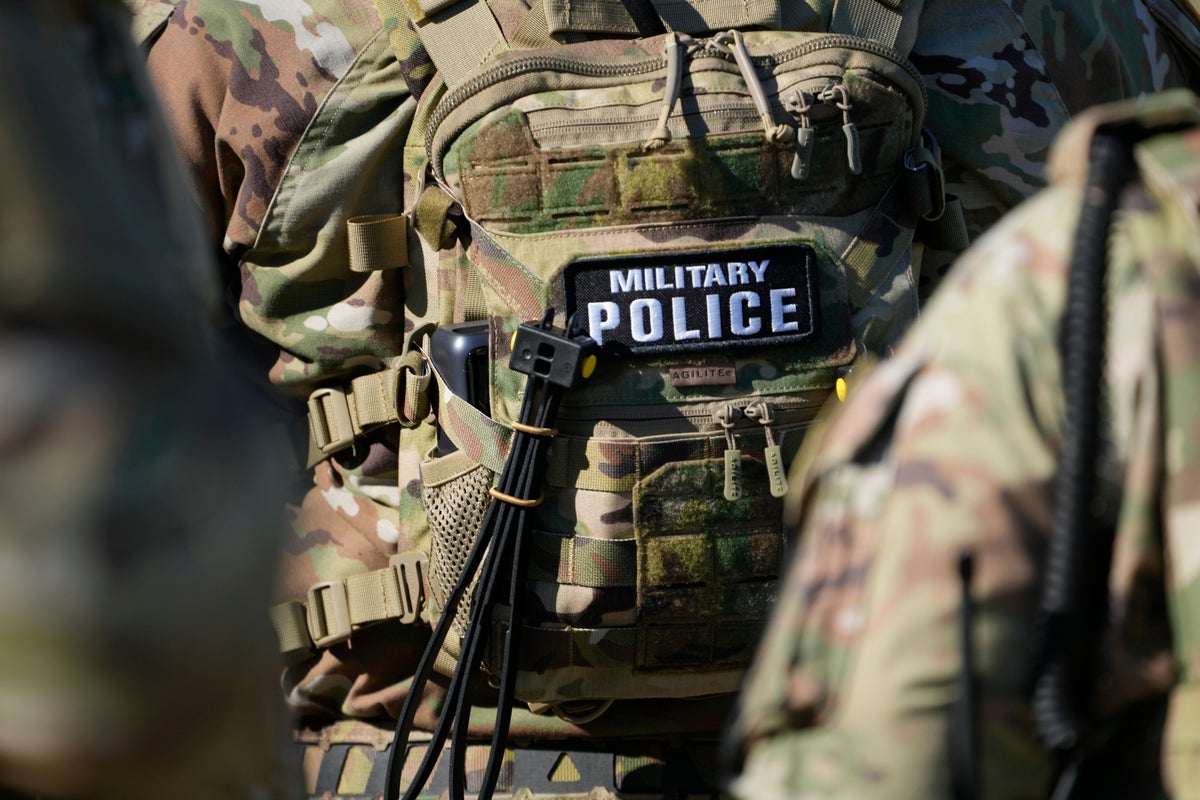
A city street at 4 a.m. is always unpredictable. But when military camouflage mixes with local police cruisers, the stakes change completely. Early Sunday morning in downtown Memphis, that mixture turned fatal. Two Tennessee National Guard soldiers chased down 20-year-old Tyrin Johnson and shot him dead in the street.
The official line came down fast. Police say Johnson had a handgun and turned toward the guardsmen. The soldiers opened fire. Johnson died right there, despite two military medical specialists trying to give him first aid. His family says he was shot twice in the chest. They want answers.
This is not just another tragic shooting on a weekend night. It is a major flashpoint. These soldiers were not doing typical weekend drills. They are part of the Memphis Safe Task Force, a federal crime-fighting initiative backed heavily by the Trump administration. It puts military boots on municipal pavement. Now that a local resident is dead, a massive debate is exploding over whether putting soldiers on city beats actually protects people or just creates a powder keg.
The Reality of the Memphis Safe Task Force
We need to look at how we got here. Last autumn, federal troops and agents started patrolling Memphis. The Trump administration launched similar operations across six cities led by Democrats, including New Orleans and Washington, D.C. The idea sounds straightforward on paper: flood high-crime areas with massive federal resources to back up understaffed local police departments.
Republican Governor Bill Lee eagerly deployed the Tennessee National Guard to support the effort. But the local leadership in Memphis did not roll out the red carpet. Memphis Mayor Paul Young, a Democrat, openly objected to the deployment from the start. He argued that federal military intervention was not the right answer for the city.
The financial cost of this operation is staggering. According to the nonpartisan Congressional Budget Office, these national deployments cost taxpayers nearly half a billion dollars through the end of last December alone. This year, that bill is projected to clear $1 billion.
Has it worked? It depends on who you ask. In June, the U.S. Marshals Service reported that the task force racked up more than 10,000 arrests. The administration has pointed to these numbers as proof of success. Trump even visited Memphis in March for a roundtable event to praise the operation. He credited the task force with driving down violent crime.
But local numbers tell a more complicated story. Violent crime, homicides, and carjackings have plagued Memphis for years. Yet both local Democrats and Republicans acknowledged that certain crime categories were already falling last year before the federal troops even arrived. The local drops mirrored a broader national trend across major American cities. The federal task force walked into a situation where numbers were already shifting, then claimed all the credit.
When Soldiers Become Police Officers
There is a fundamental difference between a soldier and a local police officer. Police officers are trained in community policing, local laws, and de-escalation within a civilian framework. Soldiers are trained for combat. When you put military personnel on civilian streets to handle routine law enforcement, the lines get dangerously blurry.
Sunday morning showed exactly how fast things can go sideways. Memphis police officers responded to reports of gunfire downtown around 4 a.m. They spotted an armed man fleeing on foot. Two National Guard soldiers who were nearby joined the foot chase. Within moments, those soldiers fired their weapons.
The Tennessee Bureau of Investigation is currently digging into the case. They have a lot of questions to answer. Was a foot chase the right move? Did the soldiers follow proper protocol? This is the first time we know of that National Guard members have killed someone during this specific deployment. However, it is not the first violent encounter involving this task force.
TBI data shows there have been at least four officer-involved shootings linked to the Memphis Safe Task Force. Two occurred in May, though those did not involve guardsmen firing weapons. Another shooting happened back in October. The tension has been building for months.
The Local Backlash and Legal Wars
People living in Memphis are not taking this lightly. The presence of camo-clad troops on Beale Street has created an atmosphere of intimidation for many residents. It feels less like public safety and more like an occupying force.
The anger has already spilled into the courtrooms. Local leaders tried to block the federal deployment entirely, but they hit a wall. In April, the Tennessee Court of Appeals ruled that state and local Democratic officials lacked the legal standing to stop the federal troops from patrolling.
With the politicians blocked, everyday citizens took the fight to federal court. In May, four Memphis residents filed a federal lawsuit against the task force. They are taking aim at a controversial local law used by the task force that bans residents from coming within 25 feet of law enforcement officers to record their actions.
The residents, backed by the American Civil Liberties Union, claim task force members have aggressively retaliated against anyone trying to film them. The lawsuit alleges that unmarked vehicles and individuals in tactical vests showed up outside the homes of residents who caught operations on camera. This is the kind of heavy-handed behavior that shatters trust between a community and the people supposedly sent to protect them.
Who Was Tyrin Johnson
Behind the political talking points and the legal briefs is a family grieving a young man. Tyrin Johnson was only 20.
A search of state and federal court databases reveals no major criminal record. He had a few minor traffic violations in Memphis and Nashville, but nothing that points to a dangerous lifestyle. His grandfather, Evaniel Johnson, shared that Tyrin had taken classes at Tennessee State University and was actively preparing to help run the family construction business. He had a passion for making music. Most importantly, he became a father earlier this year. He leaves behind a newborn child.
His cousin, Terracle Nelson, described him as a good kid who had not harmed anyone. The family wants to see the investigation findings and any available video footage before drawing final conclusions, but the pain is raw. They are left wondering why a 20-year-old had to die from two bullets to the chest during a chaotic foot pursuit.
The Immediate Steps Needed for Accountability
This shooting cannot be swept under the rug of political theater. If federal task forces are going to operate in American cities, they must be held to the highest standards of transparency. Here is what needs to happen next.
First, the Tennessee Bureau of Investigation must release all body camera and dashboard footage from the incident. The public deserves to see exactly what happened when Johnson turned toward the soldiers. Relying solely on initial police statements is not enough.
Second, the Department of Justice needs to review the rules of engagement for National Guard members participating in these anti-crime task forces. Soldiers should not be engaging in high-speed foot pursuits or standard police patrols unless they have undergone the exact same rigorous community-based training as local officers.
Third, local community groups must continue to document and film task force operations. The right to record law enforcement is a vital check against abuse of power. The ongoing ACLU lawsuit must be watched closely, as its outcome will dictate how much transparency citizens are allowed to maintain.
The deployment of military forces to clean up American cities sounds like a tough-on-crime win in a press release. But on the pavement of Memphis, it cost a young father his life and pushed an already tense city closer to the edge. Action and clear oversight are required immediately to prevent the next tragedy.