If you tried to get a ticket for the blockbuster Bayeux artifact exhibition at the British Museum, you already know the pain. The digital queue dragged on for nine brutal hours when bookings opened, shattering single-day sales records. Tickets vanished instantly. King Charles and billionaire tech moguls snagged private previews, while high-end London hotels packaged £1,000-a-night rooms with preferential access and themed mead spritzers.
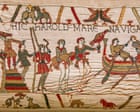
Everyone wants a piece of an artifact most people mistakenly call a tapestry. Curator Michael Lewis notes that it is actually a massive embroidery. Stretching over 68 meters, this medieval masterpiece illustrates the violent events leading up to the Battle of Hastings in 1066. William the Conqueror crushed King Harold, and history was rewritten in colored wool.
Bishop Odo, William’s half-brother, supposedly commissioned the piece around 1077 for his cathedral in Bayeux. Odo loved self-aggrandizement, which explains why he gave himself a prominent role in the stitched narrative. Despite its name, evidence strongly suggests it wasn't even made in Bayeux. Researchers point to Canterbury as the likely birthplace, stitched together by anonymous English women using wool dyed with woad, madder, and indigo.
The Real Story Behind the Stitches
Forget what you learned in school. The artifact features nine separate linen panels stitched into one continuous, 68.3-meter visual strip. It packs in 623 men, 190 horses, 35 dogs, 37 buildings, and 41 ships. Yet, out of all those figures, only three women appear. None of them catch a break. One weeps at a deathbed, another flees a burning house, and a third faces assault by a priest. That third woman, Ælfgyva, remains the only named female figure in the entire piece.
The main narrative gets all the glory, but the borders tell a wilder story. Fantastical beasts and mythological monsters creep along the edges. You will even find an early depiction of Halley’s Comet stitched into the upper border.
Pop culture loves the dramatic climax where King Harold takes an arrow to the eye. Historians argue that scene is likely apocryphal. Harold was probably hacked to death in the melee. Furthermore, the piece ends abruptly. Nobody knows what the final missing scene originally depicted, though a coronation at Westminster Abbey remains a strong guess.
Surviving Revolution and Nazi Looting
This artifact has cheated death more times than an action movie hero. It survived at least three major fires at Bayeux Cathedral. During the French Revolution in 1792, revolutionaries nearly used it as a wagon cover. An alert official swapped it for a plain canvas sheet at the absolute last second. Two years later, officials seriously considered cutting it into strips to decorate a festival float.
Napoleon borrowed it in 1803, dragging it to the Louvre in Paris to hype up his planned invasion of Britain. Later, during World War II, Heinrich Himmler and the SS targeted it as Nazi propaganda to prove Normans descended from Vikings. French resistance fighters, tipped off by Bletchley Park codebreakers, intercepted SS officers to save it from a Louvre basement.
The High-Stakes Modern Loan
Getting this fragile relic to London required military-level precision. For decades, French authorities flatly rejected British loan requests for coronations and anniversaries. When Emmanuel Macron finally agreed to send it across the Channel, art purists lost their minds. Critics and artists like David Hockney called the move absolute madness, warning that the fragile cloth was far too precious to risk.
Conservators laid down strict rules. The artifact had to stay flat, enduring zero vibrations greater than two millimeters per second. A specialized logistics team built a custom folding screen called a "paravent" to house the piece safely. Ninety people in blue latex gloves spent seven grueling hours transferring it. Vibrations were tested on dry-run replicas, proving French roads are smoother than British ones.
Insured for a staggering £800 million by the Treasury indemnity scheme—more than double the price of Leonardo da Vinci's Salvator Mundi—the piece sits inside a custom British Museum case. Lights are strictly dimmed to 50 lux to prevent fading.
If you missed out on tickets, stop scrolling through resale sites. Dive into high-resolution digital archives online to inspect every single stitch, monster, and ship yourself.