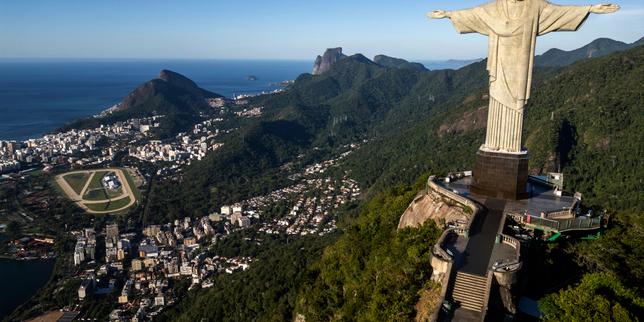
If you visit Rio de Janeiro, someone will inevitably tell you about the Tijuca National Park. They will call it the largest man-made urban forest in the world. They might mention Emperor Pedro II, or Major Manuel Archer, the man officially credited with overseeing the massive reforestation project in the nineteenth century.
But the official tour guide narrative leaves out the most important part of the story.
Major Archer did not plant those hundred thousand trees. He did not spend decades clearing ruined coffee plantations, hauling saplings up steep mountainsides, or engineering a complex ecosystem from scratch. Eleven enslaved men did the actual work. For over a century, their names and lives were erased from Brazil's environmental history. Recent historical discoveries are finally forcing a rewrite of how this world-famous green space came to be.
The Real Workers Behind Rio Green Icon
The standard history textbook tells a neat story. By the mid-1800s, coffee farming and logging had utterly destroyed the hills surrounding Rio de Janeiro. The city faced severe water shortages because the cleared land could no longer retain rainfall. In 1861, Emperor Pedro II ordered the area to be replanted to save the city's water supply.
Enter Major Manuel Archer. He gets the monuments. He gets the credit in the archives.
The truth is much grittier. Archer was given a small budget and a handful of workers to accomplish a monumental task. Historical records recently brought to light reveal that the heavy lifting was done by eleven enslaved individuals. We know names like Eleutério, Manuel, Maria, and others. They were forced into hard labor, living in isolation up in the mountains to complete one of the earliest environmental restoration projects in human history.
Think about the sheer physical reality of this task. These eleven people had to collect seeds from nearby forests, cultivate them in makeshift nurseries, and transport them across rugged, trackless terrain. They planted more than 100,000 trees in just a few decades. They did it under a scorching tropical sun, dealing with venomous snakes, steep cliffs, and the constant threat of injury.
Erasure From the Archives
It is no accident that you have probably never heard of these eleven people. The archival record deliberately obscured their contributions. In nineteenth-century Brazil, enslaved laborers were viewed merely as property or tools, not as skilled workers or individuals worthy of documentation.
When the project achieved success, the glory went straight to the top. Major Archer was praised for his administrative genius. The imperial state patted itself on the back for its forward-thinking environmental policy. Meanwhile, the enslaved workers who possessed the actual botanical knowledge and physical endurance were left as footnotes, if they were mentioned at all.
This type of historical amnesia is common in Brazil, the country that imported more enslaved Africans than any other nation in the Americas. Slavery intersected with every single industry, including early environmental conservation. The lush canopy that tourists admire today from the Christ the Redeemer statue is literally rooted in the forced labor of Black individuals whose identities the state tried to erase.
Why This Matters Today
Understanding who actually planted the Tijuca forest changes how we view environmental conservation. It challenges the idea that saving nature has always been the domain of wealthy elites and visionary politicians.
Instead, the world's most successful urban reforestation effort was built on the backs of exploited people who held deep, practical knowledge of the local land. They knew which species would take root in the depleted soil. They understood how to manage water runoff on the steep slopes.
When you walk the trails of Tijuca today, you are not walking through an untouched wilderness, nor are you walking through a monument to imperial benevolence. You are walking through a living testament to the skill and survival of eleven human beings who were denied their freedom but managed to build an ecosystem that still keeps Rio alive.
To truly honor this history, stop looking at the statues of nineteenth-century officials. Pay attention to the new historical research coming out of Rio institutions that aims to identify every single one of those eleven workers. Support local historical preservation projects that center Afro-Brazilian narratives rather than colonial myths. The next time you see a photo of Rio's green peaks, remember the names that the archives tried to burn.
(mh=cRa7qAmccsmHLkk2)0.jpg)