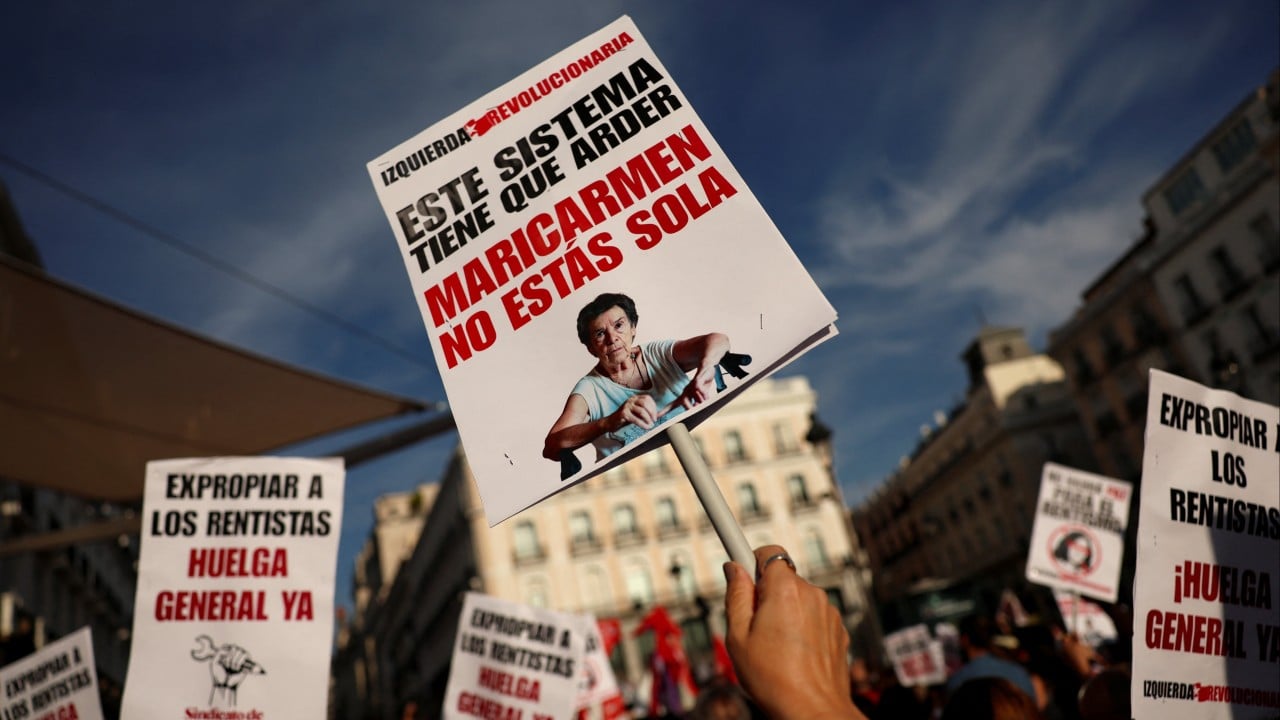
You could be next. That was the chilling warning written across placards in central Madrid as tens of thousands of citizens flooded the streets. They weren't marching for higher wages or a new political party. They were furious about an 87-year-old woman named Maricarmen Abascal, and her forced removal from a home she had occupied for seven decades.
If you've watched European real estate markets over the past few years, you know affordability has cratered. But this case crossed a line. When state authorities and police broke down the door to evict an octogenarian on a stretcher, it stopped being a local property dispute. It became a cultural tipping point for a nation where housing has turned into an impossible luxury.
What Happened to Maricarmen Abascal
Let's look at the concrete facts. Maricarmen Abascal lived in the same apartment in Madrid's central Retiro neighborhood for 71 years. Her family's tenancy dates back to a rent-capped lease signed in 1956. Over generations, that contract passed down to her. She paid her rent faithfully every month.
Then, an investment firm called Urbagestión bought the building. The new owners wanted the apartment cleared so they could cash in on soaring market rates. They attempted to raise her rent by a staggering 275 percent, pushing the monthly cost to 2,650 euros. When she couldn't pay, the legal machinery rolled forward.
After multiple failed attempts, police officers in riot gear finally forced their way inside on September 23. They carried her out on a stretcher. She spent her first night away from her lifelong home in a hospital bed, treated for exhaustion, stress, and anxiety.
Why This Sparked Massive Street Protests
Spain has grappled with sky-high property costs for years, driven by short-term rentals, foreign investment funds, and a massive supply shortage estimated by the Bank of Spain at roughly 700,000 homes. Yet, the imagery of an elderly woman wheeled out of her home by law enforcement triggered an immediate, visceral reaction.
Spontaneous demonstrations erupted almost overnight. Organizers with the Madrid Tenants' Union estimated that up to 300,000 people turned out for the march, while government officials placed the baseline closer to 25,000. Crowds blew whistles, shook rattling house keys, and chanted slogans directly targeting real estate speculators and government inaction.
The anger wasn't isolated to fringe activists. Ordinary citizens—young graphic designers, retired pensioners, and college students—realized that legacy rental protections are completely gone. If a woman who lived in the same flat for 71 years can be thrown out overnight, nobody's lease is safe.
The Political Fallout and Empty Promises
Politicians are scrambling to control the narrative now that public fury has boiled over. Socialist Prime Minister Pedro Sánchez called the eviction a "social tragedy that we cannot accept as a country," pointing fingers at local and regional political opponents. Meanwhile, Housing Minister Isabel Rodríguez García blasted the incident as the direct consequence of rolling out the red carpet for "vultures and speculators."
In response to the public outcry, the government is rushing to draft a package of measures dubbed the "Maricarmen decree." This proposed legislation aims to provide automatic rental contract renewals and heavier restrictions on evictions.
Don't hold your breath for immediate fixes, though. Sánchez's government lacks a solid majority in parliament, and similar housing bills have stalled or failed before. Private real estate firms hold immense leverage, and the political friction between national leaders and regional authorities means renters remain exposed.
What You Can Learn From the Spanish Housing Protests
Housing markets across major global cities are following the exact same playbook. Investor-backed buying sprees, sudden rent hikes, and the erosion of tenant rights are displacing long-term residents everywhere from London to New York.
If you rent your home, take a hard look at your local jurisdiction's tenant laws right now. Don't assume an old contract protects you indefinitely, and monitor who actually owns your building. Grassroots organizing and tenant unions proved in Madrid that collective pushback can at least force politicians to sweat.
Maricarmen Abascal said it best in a video message recorded from her hospital bed before the protest. She wants her ordeal to inspire others to fight back and change the laws that allowed her to be cast out. The street marches proved her message landed. Now comes the hard part: forcing legislative systems built for profits to protect human lives instead.