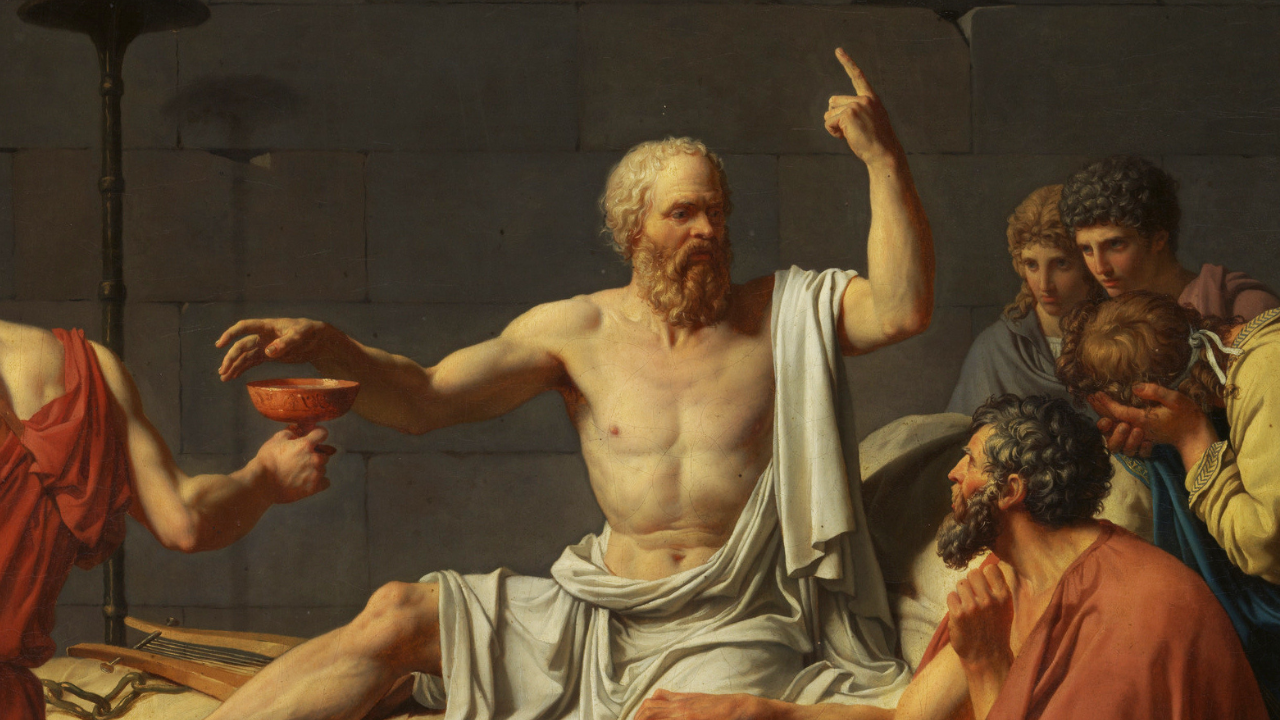
Most people treat survival as the ultimate achievement. You protect your job, guard your reputation, and dodge discomfort at all costs. Socrates looked at that exact panic and called it an illusion.
During his trial in Athens, facing a death sentence for his persistent questioning, he didn't beg for mercy or scramble for a safe loophole. Instead, he delivered a line that stings just as much today as it did in 399 BC: the real challenge isn't staying alive, but avoiding unrighteousness.
The Socratic Reversal on Survival
We spend an incredible amount of energy trying to dodge bad outcomes. We bend our opinions to match the room, stay quiet when someone takes the blame for our mistake, and treat physical safety or social comfort as the highest good.
Socrates flipped that hierarchy completely upside down.
He argued that death is an unknown quantity. Nobody in human history has returned with a verified field report on what happens after the heart stops. Worrying constantly about an unknown biological endpoint is irrational.
On the other hand, moral compromise is entirely knowable. You know the exact second you sell out your values. You feel the precise weight of a cowardly choice. According to this ancient view, becoming an unjust person is an active catastrophe, whereas suffering an unjust fate is merely something happening to you.
Why Wickedness Runs Faster Than Death
Plato’s account of the trial includes a brilliant metaphor that cuts through modern self-help fluff. Socrates notes that wickedness runs faster than death.
Think about how that works in real life. Physical death moves at its own steady pace. Old age and biological decline take their time catching up to us. But moral corruption? That sprint happens instantly.
You can ruin your integrity in a single afternoon by lying to protect a bonus, throwing a colleague under the bus, or staying silent to keep the peace. The sprinter of ethical shortcutting overtakes us long before our biological clock ever winds down. Socrates was old and moved slowly, meaning death caught him easily. But his accusers, rushing headfirst into malice and false condemnation, were overtaken by a much uglier fate.
Translating Ancient Athens to Modern Compromise
It is easy to read about ancient Greek trials as distant theater. Yet you face miniature versions of this exact dilemma every single week.
Consider the workplace pressure to nod along with a strategy you know is garbage because the boss wants validation. Think about the social media silence when you watch a mob target an innocent person because joining in feels safer than standing apart.
Every time you choose convenience over conviction, you are negotiating with the very fear Socrates warned against. You preserve your immediate comfort, but you erode the internal architecture that makes you human.
The Cost of Staying Safe
Socrates had multiple chances to escape his sentence. Friends offered exit plans, and exile was a realistic alternative to drinking hemlock. Escaping would have bought him a few more years of biological existence.
He refused. Running away would mean breaking the moral framework he spent his whole life teaching. It would mean acknowledging that principles are only valid until things get uncomfortable.
He chose integrity over a prolonged pulse.
Look at your own choices today. Ask yourself what you are currently protecting at the expense of your standards. Stop treating physical preservation as the ultimate victory and start worrying about the compromises you are making when nobody is keeping score.