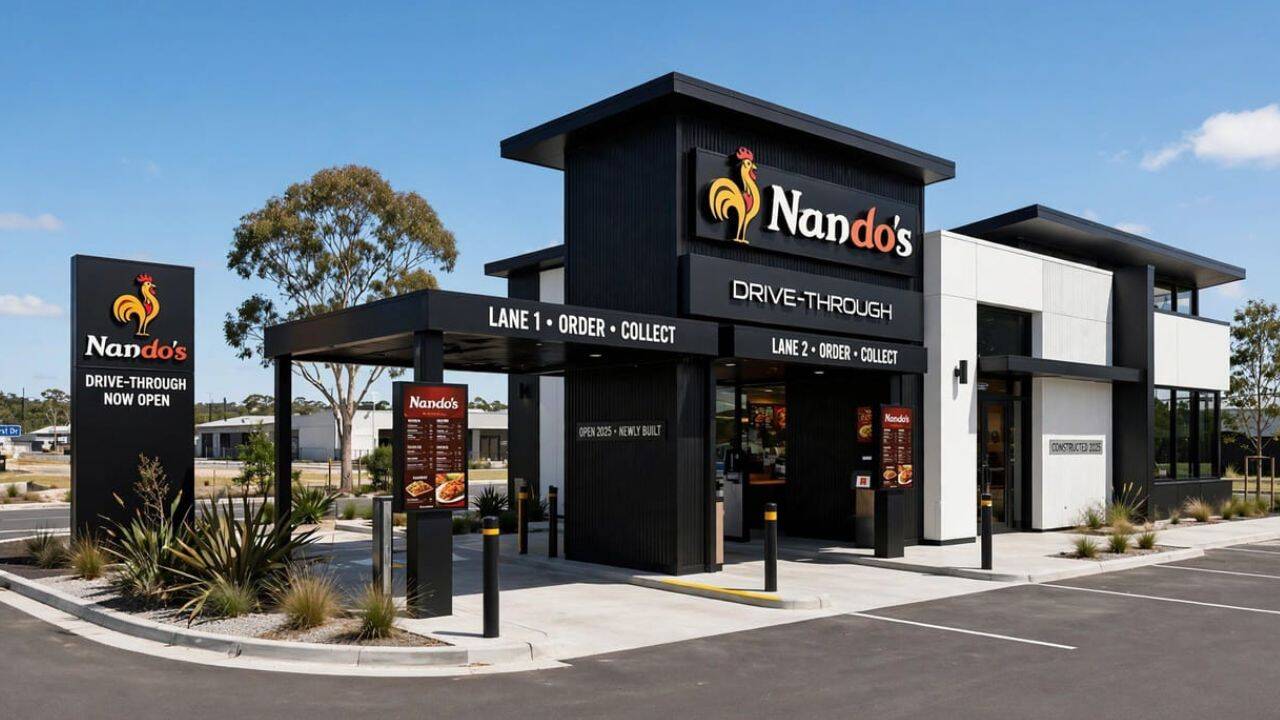
Commercial property investors are dropping millions on fast-food chains for a reason. Real estate tied to popular brands like Nando's offers reliable cash flow that residential rentals simply cannot match. Take the recent sale of a newly constructed Nando's drive-through in Cranbourne North, Victoria. It fetched a staggering $5.845 million, highlighting just how aggressive the market is for secure, corporate-backed commercial assets.
If you look past the headline numbers, this deal exposes how institutional and private buyers view risk in today's economy. Let's break down why these properties trade at such high valuations and what investors actually look for when buying a fast-food asset.
The Numbers Behind the Cranbourne North Deal
The property at 1587 Thompsons Road in Cranbourne North changed hands recently, secured by a private investor based in New South Wales. Built in 2025, the site features a purpose-built dual-lane drive-through leased directly to Nando's Australia.
The transaction numbers tell a clear story:
- Sale Price: $5.845 million.
- Annual Net Income: $319,035 as of October 2026.
- Yield: Approximately 5.3%.
- Lease Structure: Head-office lease running until 2040, with extension options stretching out to 2060.
- Rent Escalation: Fixed annual increases of 3%.
This sale came within striking distance of the Australian record for a Nando's asset set earlier in the year. In February 2026, a drive-through location in Munno Para, South Australia, sold for $6.2 million, returning $320,000 annually on a 5.16% yield.
Investors aren't buying the physical bricks and mortar. They are paying for the safety of a corporate tenant that guarantees rent through economic ups and downs.
Why Investors Chase Corporate Fast-Food Leases
Retail and residential landlords deal with tenant turnover, maintenance headaches, and vacancy periods. Commercial properties backed by major national tenants operate on an entirely different rulebook.
When Nando's Australia signs a multi-decade lease, they handle interior upkeep, insurance, and operational costs through a net lease structure. You collect a check every month while the tenant runs the business.
Fixed annual rent increases of 3% protect your cash flow against inflation. Over a 15-year primary lease term, compounding rent hikes compound your yield significantly without requiring any active management on your part.
Properties featuring drive-through capabilities command a heavy premium. Post-pandemic consumer habits favor quick, convenient service, making dual-lane drive-throughs exceptionally resilient commercial assets.
Rising Construction Costs Push Valuations Up
Building a commercial asset today is vastly more expensive than it was a decade ago. Surging construction expenses mean that developers demand higher initial rents and sale prices to make projects pencil out.
Compare the Cranbourne North figures with older Victorian Nando's investments. A Clayton location sold in 2009 returned $82,400 annually, while a Lynbrook tenancy fetched $82,727 in 2015. Modern properties trade at vastly higher entry points because replacement costs have skyrocketed. If you wanted to replicate a purpose-built 2025 drive-through today, land acquisition, council approvals, and supply chain expenses make the $5.845 million price tag look realistic to industry insiders.
The Shift Toward Interstate Commercial Buyers
Local buyers no longer dominate the Australian commercial market. Interstate investment is reshaping property values, particularly in Victoria.
According to agency data from Stonebridge, five of their last six Victorian commercial listings sold to interstate buyers. Sydney-based investors frequently look south, viewing Melbourne commercial real estate as a relative bargain compared to opportunities in New South Wales.
Tax policy changes also steer investor behavior. With adjustments to negative gearing and capital gains tax rules, many high-net-worth individuals pivot away from residential properties. Commercial assets offering secure, long-term yields provide a clean alternative for capital preservation.
What to Watch Before Buying Commercial Real Estate
Buying a fast-food investment isn't completely risk-free. If you plan to enter this market, keep a few realities in mind:
- Lease Term Length Matters: Never buy a commercial property with less than 10 years remaining on the primary lease unless the purchase price reflects a heavy discount.
- Tenant Covenant Strength: A lease signed by a corporate head office carries far more weight than a lease signed by a single-store franchisee.
- Location Resilience: Drive-throughs rely heavily on traffic flow and arterial road access. If local infrastructure changes, store performance can drop.
- Interest Rate Sensitivity: Higher borrowing costs compress yields. Ensure your capital structure can handle fluctuating interest rates if you use leverage.
Commercial real estate rewards discipline and careful analysis. Look past the glossy marketing brochures, audit the lease covenants, and run your own yield calculations before writing a multi-million-dollar check.