A tragic afternoon at a golf resort near Peterborough ended in a loss of life, turning what should have been a routine summer day into a multi-agency death investigation.
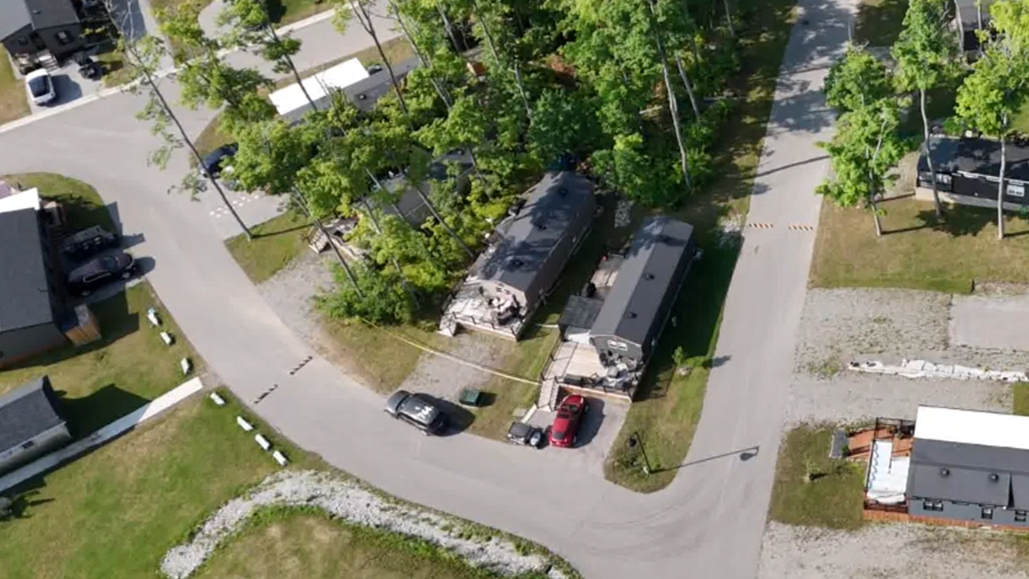
On Wednesday, July 22, 2026, around 3:00 p.m., emergency personnel rushed to Bellmere Winds Golf Resort. The property sits along Villiers Line in Otonabee-South Monaghan, just south of Peterborough. When first responders arrived, they found a devastating scene. A propane tank had exploded inside a residential trailer on the resort grounds.
Inside that trailer was a 63-year-old worker from Warkworth, Ontario. Emergency medical crews treated him at the scene before an air ambulance flew him to a specialized hospital in Toronto. He was fighting for his life with severe injuries. Early Thursday morning, officials confirmed he died from those injuries.
The resort owner, Great Blue Resorts, later confirmed through a social media statement that the victim was one of their staff members. No other injuries were reported from the blast.
Now, six different regulatory and law enforcement bodies are trying to figure out what went wrong.
What happened at Bellmere Winds Golf Resort
The blast happened fast. Reports indicate that the explosion occurred within a residential unit located on the property owned by the golf resort.
Firefighters, paramedics, and Peterborough County OPP officers swarmed the site. Because of the extreme severity of the worker's injuries, Ornge air ambulance was called in to transport him directly to Toronto.
The senior executive team at Great Blue Resorts released a statement emphasizing that safety remains their top focus. They noted that they're fully cooperating with investigators.
When a workplace incident results in a death, standard procedures trigger an immediate full-scale response from multiple regulatory watchdogs. The Peterborough County OPP Major Crime Unit is leading the investigation alongside several specialized agencies:
- Office of the Fire Marshal (OFM)
- Technical Standards and Safety Authority (TSSA)
- Ministry of Labour, Immigration, Training and Skills Development
- Office of the Chief Coroner
- Ontario Forensic Pathology Service
Every one of these agencies handles a distinct piece of the puzzle.
Why propane explosions inside trailers are so destructive
To understand why an explosion in a trailer causes such total devastation, you have to look at how propane behaves physics-wise.
Propane is heavier than air. Standard air has a vapor density of roughly 1.0. Propane sits at around 1.5.
If propane leaks, it doesn't just float up and drift out an open window. It sinks down. It collects in lower areas like floors, crawlspaces, and enclosed cabinets. In a small space like a residential trailer, even a tiny leak can quickly build up to dangerous levels.
Explosions require three things: fuel, oxygen, and an ignition source. In a enclosed space, propane needs a concentration between 2.1% and 9.5% in the air to ignite. That range is surprisingly narrow. If the gas concentration sits in that window, literally anything can ignite it. A refrigerator compressor kicking on, a light switch flipping, a phone ringing, or static electricity from walking across the floor can set off the blast.
When ignition happens in a sealed or semi-sealed trailer, the burning gas expands almost instantly. Pressure builds up in milliseconds. Walls blow outward, roofs lift off, and intense heat burns everything inside. That's why victims in trailer explosions suffer catastrophic trauma and thermal injuries.
The regulatory safety net in Ontario
Ontario actually has strict laws governing propane storage, handling, and maintenance. The problem often comes down to enforcement, age of equipment, or simple human oversight.
The Technical Standards and Safety Authority oversees fuel safety across Ontario. TSSA inspectors enforce the Technical Standards and Safety Act along with Ontario Regulation 211/01 (Propane Storage and Handling). Under these rules, any propane equipment used in commercial or multi-unit residential properties must meet specific standards:
- Annual inspection requirements for fuel-burning appliances.
- Mandatory certification for anyone installing or servicing lines.
- Strict limits on where tanks and cylinders can be stored relative to entrances and ignition sources.
- Proper installation of leak detection and automatic shutoff valves.
The Ministry of Labour steps in because this incident involved an employee on work grounds. Under the Occupational Health and Safety Act (OHSA), employers have a clear legal duty to take every precaution reasonable in the circumstances for the protection of a worker.
If an employer provides housing or work trailers for staff, those structures must meet safety standards. Investigators will check whether the propane equipment was properly inspected, whether the employee had proper training, and whether known safety hazards were ignored.
Common risks associated with seasonal resort housing
Resort communities, golf courses, and seasonal campgrounds present unique safety challenges. Equipment sits idle through harsh Canadian winters. Temperatures freeze and thaw repeatedly. Metal fittings expand and contract. Flexible hoses rot or get chewed by rodents looking for shelter.
When spring and summer roll around, people hook up propane cylinders and fire up appliances without inspecting the system. That's where things go sideways.
Here are the biggest hazards surrounding seasonal trailer propane systems:
Pipe corrosion and loose fittings
Vibration from moving trailers or settling foundations loosens brass and copper gas fittings over time. Moisture traps near floor lines cause steel piping to rust out from the outside in. A microscopic crack in a corroded line can fill a trailer with gas overnight.
Animal damage
Mice, red squirrels, and insects love building nests in appliance burner tubes and venting systems. Spiders are notorious for spinning webs inside burner orifices, creating blockages. When gas gets turned on, it can't flow properly. Pressure builds, gas spills into the interior, and a single spark ignites the whole room.
Appliance age and lack of safety shutoffs
Older recreational vehicles and seasonal trailers often lack modern safety equipment. Newer propane systems feature automatic shutoff valves (EFVs) that stop gas flow if a line ruptures. Older units don't have these safeguards. Without a functioning carbon monoxide and propane alarm, occupants have zero warning before it's too late.
Improper cylinder storage
Storing propane tanks indoors or in enclosed crawlspaces violates safety codes for a good reason. If a safety relief valve vents gas due to summer heat expansion, that gas must vent into open air outside, never into an enclosed room.
Employer legal responsibilities and potential liability
When a fatal incident happens at a workplace, liability extends far beyond insurance payouts.
If Ministry of Labour inspectors find that safety regulations were violated, charges can be laid under the Occupational Health and Safety Act. Fines for corporations in Ontario can reach up to $2,000,000 per offense, while individual supervisors or managers can face fines up to $150,000 and jail time.
The Office of the Fire Marshal will analyze the origin and cause of the blast. They look for burn patterns, valve positions, and structural damage to pinpoint where the leak originated. Their findings often dictate whether criminal charges or regulatory fines follow.
For resort owners and business managers, this tragedy is a stark reminder. Seasonal worker accommodations carry the exact same legal duty-of-care expectations as standard commercial facilities.
Essential propane safety measures for seasonal properties
If you manage a golf resort, run a seasonal campground, or own a recreational trailer, you can't treat propane systems casually. Lives depend on proper maintenance.
Conduct professional inspections every spring
Never assume a system that worked fine last autumn is safe today. Hire a licensed TSSA gas technician to pressure-test gas lines every spring before turning on the main valve. A pressure drop test detects leaks that soap spray won't reveal.
Install dual gas and carbon monoxide detectors
Standard smoke detectors don't sense propane leaks. You need dedicated propane leak detectors mounted low to the floor, where heavy propane gas settles first. Replace these detectors every 5 to 7 years, as their sensors degrade over time.
Check lines with leak detection fluid
If you ever connect a new propane cylinder yourself, spray every connection point with a certified leak-detection solution or soapy water. Look for growing bubbles. If you see bubbles forming, turn off the cylinder valve immediately and tighten the fitting. If it keeps bubbling, shut it off and call a technician.
Keep ignition sources away from tanks
Ensure propane cylinders sit on a flat, stable surface outdoors at least 3 feet away from building openings, windows, or electrical equipment. Never store spare tanks inside a garage, shed, or trailer.
Smell something, act immediately
Propane manufacturers add ethyl mercaptan to give the naturally odorless gas a distinct "rotten egg" smell. If you catch even a faint whiff of that smell:
- Do not touch any light switches, electrical appliances, or phones.
- Do not light a match or smoke.
- Evacuate everyone from the building immediately.
- Shut off the main gas valve on the cylinder outside if you can reach it safely.
- Call emergency services from a safe distance outside the property.
What happens next in the Bellmere Winds investigation
The investigation at Bellmere Winds Golf Resort won't wrap up overnight. TSSA investigators and forensic specialists will examine the physical evidence, including the damaged tank, valves, piping, and appliances.
The Chief Coroner will determine the exact medical cause of death, while the Ministry of Labour reviews maintenance logs, safety training records, and inspection documents.
The results of this joint investigation could take months to be released. Depending on what investigators uncover, it may trigger safety advisories across Ontario's golf and resort industry or lead to formal regulatory charges.
In the meantime, property managers across Ontario should take this moment to inspect their own fuel systems, review worker housing protocols, and ensure every propane appliance on their property meets current safety codes.