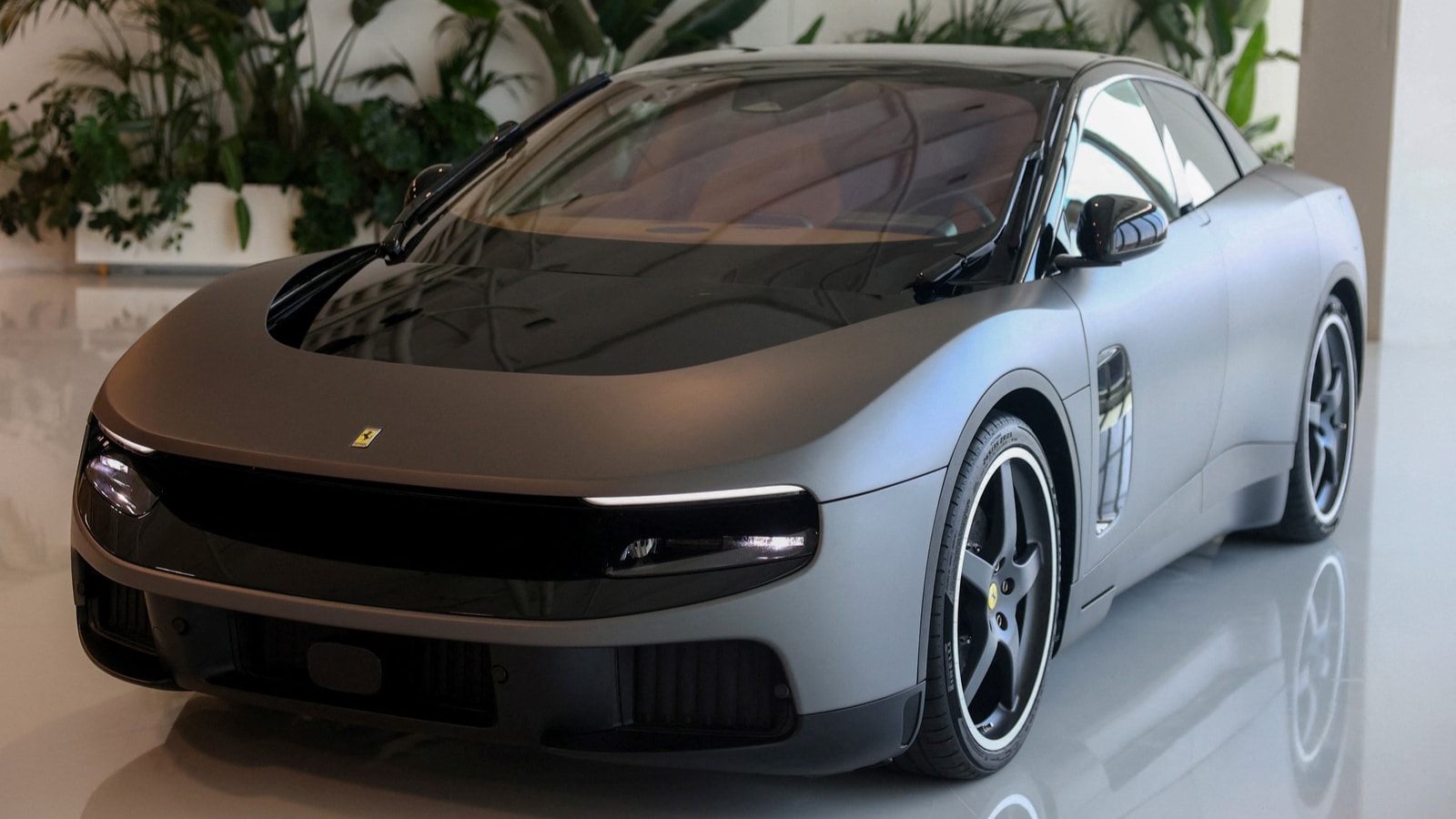
Internet outrage doesn't translate to falling sales, especially when you are selling a badge that people will wait years to own. Ferrari CEO Benedetto Vigna just dropped a reality check during an earnings call, confirming that the brand's first fully electric vehicle, the Luce, has already sold out its entire 2027 production run.
If you try to buy one right now, you are looking at a minimum one-year wait. Not bad for a car that spent the last several months getting brutally roasted online by purists, traditionalists, and even government officials.
The Noise Versus the Checkbook
When Ferrari pulled the cover off the Luce in Rome back in May, the reaction wasn't just mixed; it was hostile. The five-seat, four-motor EV sporting a design penned in collaboration with Apple's former design chief Jony Ive sent Ferrari’s stock tumbling 8.4% in a single day.
Purists screamed that a battery-powered Ferrari was blasphemy. Critics tore into its unconventional lines, arguing it looked too futuristic, too sterile, and too far removed from the screaming V12 heritage of Maranello. Former company management and prominent Italian politicians chimed in with complaints about losing the soul of the Prancing Horse.
Car enthusiasts on forums predicted disaster. They assumed wealthy buyers would boycott the brand over its pivot to electrons.
They were completely wrong.
Vigna brushed off the early turbulence during the third-quarter results briefing, noting that production is tracking smoothly toward initial customer deliveries scheduled before the end of 2026. "Everything we plan to sell next year is already fully allocated," Vigna told reporters.
Decoding the Strategy Behind the Luce
Starting at roughly $615,000, the Luce isn't meant for casual buyers. It is an ultra-luxury statement piece carrying complex architecture, numerous proprietary components, and advanced technologies that test the limits of Ferrari’s manufacturing partners.
Ferrari has historically managed its volumes tightly. They build one fewer car than the market demands to preserve exclusivity. By keeping production numbers close to the chest while filling the order books a year in advance, the company is exercising masterclass supply control.
What makes this demand even more interesting is that most buyers haven't even driven it yet. Official client test drives are slated to roll out next year, which Vigna expects will trigger an even larger wave of secondary demand.
The Reality of Luxury Electrification
Automakers across the board are recalibrating their timelines. Just last year, Ferrari adjusted its long-term roadmap, dialing back its 2030 projection for fully electric models from 40% down to 20% of its total lineup.
That adjustment wasn't a retreat; it was a pragmatic acknowledgment that combustion engines still hold deep emotional value for sports car buyers. But the Luce proves that when you anchor a radical new powertrain to an elite tier of prestige, the wealthy early-adopter crowd will clear out inventory regardless of internet commentary.
You can complain about the styling or mourn the absence of exhaust notes all you want. At the end of the day, cash talks, and the order ledger for Ferrari's electric future is already closed for the foreseeable future.