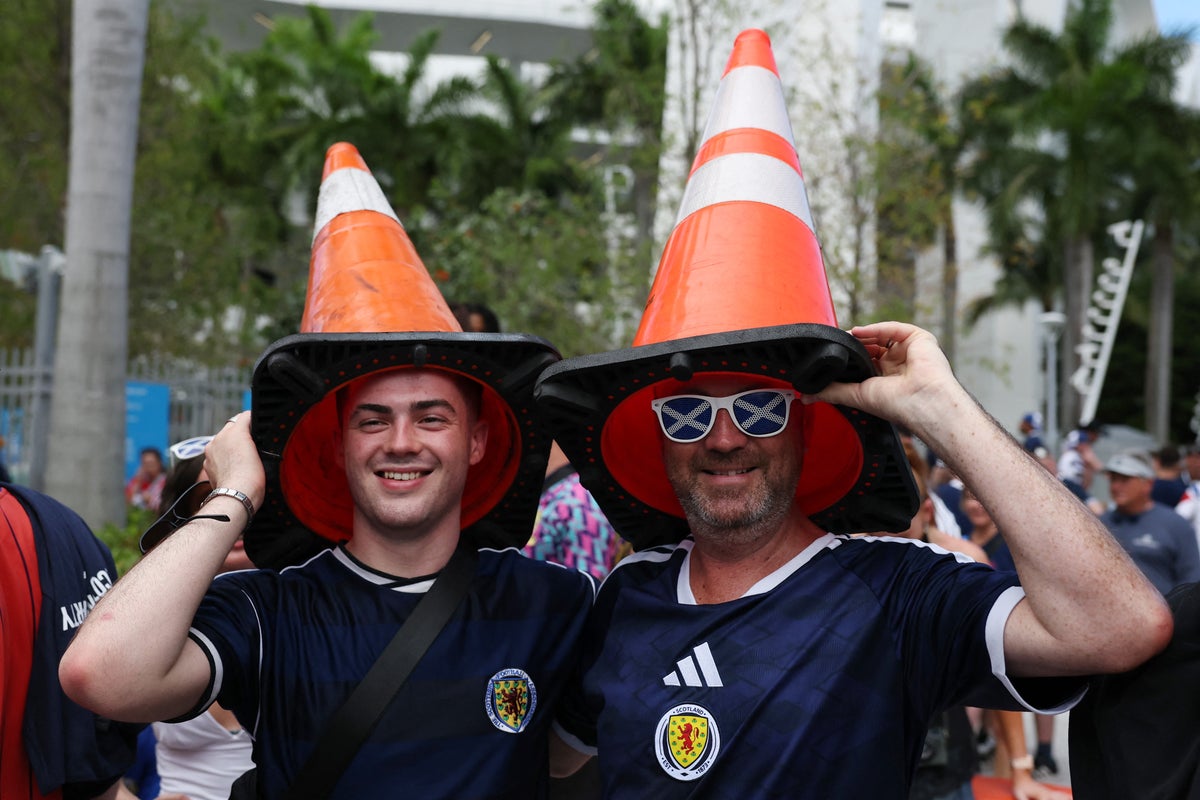
Running 10 to 14 kilometers in 90 minutes is brutal under perfect conditions. Doing it when the local weather feels like a sauna is a fast track to medical emergency. As the 2026 World Cup tears through North America, the biggest opponent on the pitch isn't a rival team or a tactical formation. It's the suffocating, unyielding summer heat wave gripping host cities from the American Midwest down to Guadalajara.
The international players' union, FIFPRO, just issued a blistering climate warning. They aren't mincing words. Players are being forced onto fields where the temperatures aren't just uncomfortable. They are actively dangerous. For an alternative look, consider: this related article.
We've already seen the cracks showing. Heavy storms forced France and Iraq into a two-hour delay during the group stage. Now, meteorologists are flashing red alerts for Kansas City, where Colombia and Ghana are set to clash in the round of 32. The National Weather Service is predicting a heat index that could skyrocket between 105 and 110 degrees Fahrenheit. Let that number sink in. That's not football weather. That's a public health hazard.
FIFA wants you to think they have everything under control with their state-of-the-art stadiums and quick water breaks. Don't buy the corporate spin. The current protocols are outdated, unscientific, and fundamentally risk the lives of the athletes on the pitch. Further reporting on the subject has been provided by CBS Sports.
The Deadly Math of Wet Bulb Globe Temperature
Most fans look at a standard thermometer and think they know how hot it is. Sports scientists know better. They rely on Wet Bulb Globe Temperature, or WBGT. This specific metric factors in ambient temperature, stifling humidity, direct wind speed, and intense sun exposure to measure the exact heat stress on a human body.
A 30-degree Celsius day in a dry climate is manageable. Add the thick, heavy moisture flowing north from the Gulf of Mexico into cities like Houston, Atlanta, or Dallas, and that same temperature turns deadly. High humidity stops the body's primary cooling system from working. Your sweat simply won't evaporate.
Data from the climate research group World Weather Attribution shows that roughly a quarter of all 104 matches in this expanded tournament are likely to breach safe thermal limits. Think about that. One in four games will be played in conditions that should legally trigger a stoppage.
Elite footballers are basically high-performance internal combustion engines. Chris Minson, a physiology professor at the University of Oregon, points out a terrifying reality. Roughly 75 percent of all the energy an athlete uses during heavy exercise gets converted directly into internal body heat. Before you even look at the blistering sun or the baking turf, these players are cooking themselves from the inside out. When external humidity prevents that heat from escaping, their core temperatures spike. Sprints drop off. Recovery time doubles. Then comes the dizziness, muscle cramping, delirium, and total physical collapse.
Where FIFPRO and FIFA Clash on Athlete Safety
The tension between player welfare and television broadcast schedules has never been more obvious. FIFPRO recommends that matches face immediate postponement or rescheduling the moment the WBGT hits 83 degrees Fahrenheit. That's their hard line for protecting human health.
FIFA operates under a completely different, much looser reality. They generally don't consider delaying a match until the thermometer crosses a staggering 90 degrees Fahrenheit. That gap between 83 and 90 degrees is where players get hurt.
FIFPRO Safety Standard: Reschedule or postpone at 83°F WBGT
FIFA Action Standard: Only consider delays above 90°F
To throw a bone to critics, FIFA effectively split matches into four quarters this summer by introducing mandatory three-minute hydration breaks in each half. They also scheduled high-risk games in enclosed, air-conditioned venues like Atlanta, Dallas, and Houston where roofs can be pulled shut.
But air conditioning a stadium doesn't solve the broader crisis. Training bases aren't all covered by massive domes. Teams like Argentina, England, and the Netherlands are currently camped out in Kansas City, absorbing the full brunt of the relentless Midwestern heat wave during their daily preparation. You can't shield athletes from a changing climate by just turning up the AC for a couple of hours on match day.
A recent study from Climate Central revealed that human-caused climate change altered the baseline weather for 97 out of the 104 tournament matches, making dangerous heat vastly more likely. The absolute worst spike happened during the group-stage match between Uruguay and Spain in Guadalajara. The odds of performance-impairing heat there were 37 percentage points higher than they would have been in a world without global warming.
The Immediate Fixes FIFA Refuses to Implement
We can't change the summer weather mid-tournament. We can change how we handle it. If soccer officials actually cared about player safety over broadcast windows, they'd overhaul their manual instantly.
First, those three-minute cooling breaks are a joke when the heat index clears triple digits. Heat safety experts like Douglas Casa from the Korey Stringer Institute are begging for six-minute breaks. Players need enough time to get under heavy shade, lower their heart rates, and pour cold water over their heads.
Second, halftime needs to change. Fifteen minutes isn't enough time to cool a dangerous core body temperature. Extending halftime during extreme weather events would give medical staff the window they need to implement aggressive cooling strategies, like ice vests and targeted rehydration.
Every stadium locker room must be equipped with emergency ice baths. If a player collapses on the pitch showing signs of heat stroke, you cannot wait for an ambulance. You cool them on-site immediately or risk permanent organ damage.
Beyond the Pitch
The irony of this entire situation is staring everyone in the face. While players are suffocating on the field and fans are passing out in the concourses from extreme heat driven by global warming, FIFA continues to rake in massive checks from fossil fuel sponsors. Over 60 elite players signed an open letter demanding an end to these hypocritical corporate partnerships. They want carbon emissions slashed and travel schedules optimized. Instead, they got an expanded 48-team tournament that requires more flights, more logistics, and more games played in the dead of summer.
This isn't just about the quality of the football. Stifling heat slows games down, killing the explosive, fast-twitch sprints that fans pay to see. It ruins the spectacle. More importantly, it turns a celebration of sport into a game of Russian roulette with player health.
If you want to protect the game, you have to protect the people playing it. Fans should demand transparency on real-time WBGT readings before every kickoff. Pressure needs to land squarely on local organizers to provide free, accessible water refilling stations throughout every concourse so spectators don't face the same dehydration risks as the players. True safety requires rewriting the rules of the game to fit a hotter planet. Turn up the pressure on tournament officials before a tragedy on the pitch forces their hand.