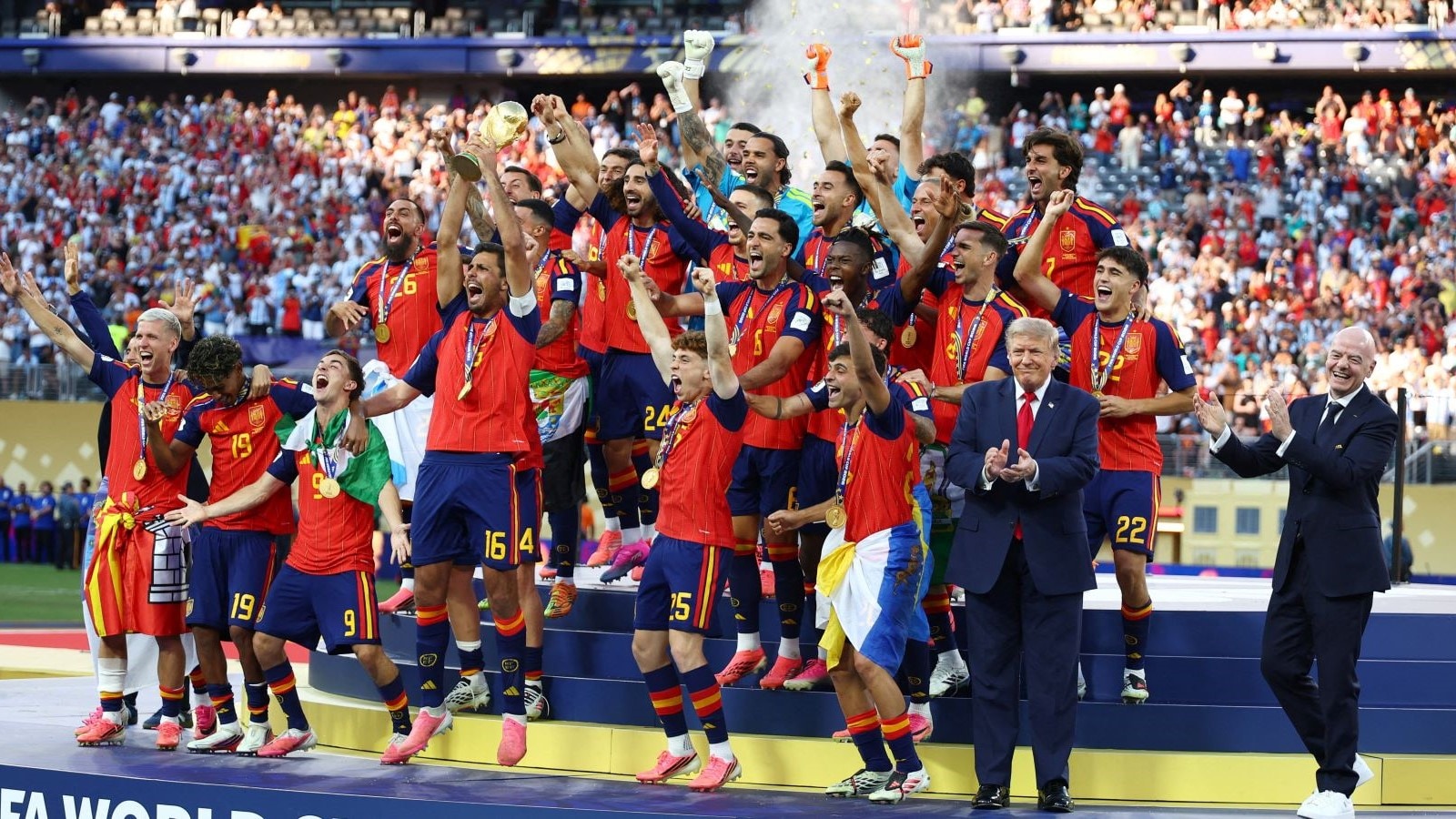
FIFA just dropped a massive reminder that the biggest sporting event on the planet is fast approaching. They brought together football royalty, a tennis icon, and a global screen star to showcase the official FIFA World Cup trophy. Seeing Andrés Iniesta, Mario Kempes, Carlos Alcaraz, and Jung Ho-yeon share the stage with that iconic golden statuette isn't just a random PR stunt. It's a calculated move to bridge generations, sports, and cultures before the tournament kicks off across North America.
If you watched the quick promotional clips circulating online, you probably just saw some famous faces smiling next to 18 karats of gold. But there is a much bigger strategy at play here. FIFA is actively trying to redefine what the World Cup means to a younger, more global audience that consumes media differently than fans did even a decade ago.
The Generation Bridge from 1978 to the Present Day
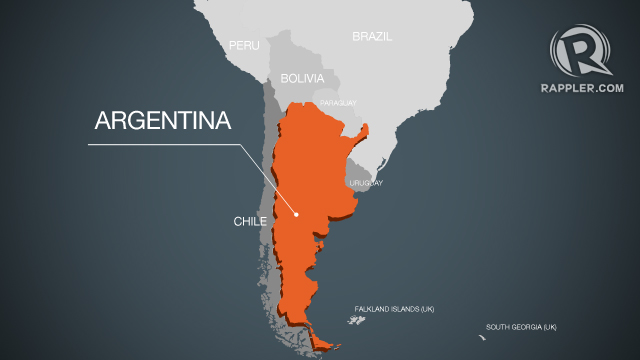
Look at the lineup they assembled. You have Mario Kempes, the legendary Argentine striker who practically carried his country to their first World Cup title on home soil back in 1978. Then you have Andrés Iniesta, the midfield maestro whose extra-time volley in 2010 gave Spain its historic first crown in South Africa.
That is not just history. It's footballing DNA.
Putting Kempes and Iniesta in the same room with the trophy creates an instant emotional link for millions of fans. It reminds everyone of the weight, the tears, and the sheer cultural impact of those tournament-winning moments. When Iniesta looks at that trophy, he isn't just looking at metal. He is looking at the exact object that defined his entire legacy. Fans feel that authenticity instantly.
Breaking the Football Bubble with Alcaraz and Jung Ho-yeon
The real genius of this presentation lies in the non-football talent. FIFA knows it already has the die-hard football fans in its pocket. To truly dominate the cultural conversation, the organization needs to reach people who might not watch a single domestic league match all year.
Enter Carlos Alcaraz. The young tennis phenomenon already has four Grand Slam titles to his name and commands a massive, young, energetic fanbase. He represents peak athletic excellence outside the football pitch. By bringing him into the fold, FIFA taps directly into the wider sports world, framing the World Cup not just as a football tournament, but as the ultimate pinnacle of all athletic achievement.
Then you have Jung Ho-yeon. The South Korean actress and model skyrocketed to international fame in Squid Game and has since become a global fashion and pop culture powerhouse. Her presence brings an entirely different demographic to the table. She represents the intersection of entertainment, global style, and youth culture.
This mix tells us exactly how FIFA views the upcoming tournament. It's no longer just a sports event. It's a massive, month-long pop culture festival.
What This Means for the Tournament Identity
This presentation highlights a major shift in how the tournament is marketed. By blending traditional football legends with modern crossover stars, the organizers are building a narrative of inclusivity and massive scale.
The next tournament will be historic for several reasons. It is the first time 48 teams will compete, expanding from the traditional 32-team format. It is also uniquely spread across three massive nations: the United States, Mexico, and Canada. Managing the logistics and cultural identities of three distinct host countries is a monumental task.
Using global figures like Jung Ho-yeon and Carlos Alcaraz helps create a unifying theme that transcends geographic borders. It signals that this event belongs to the entire world, not just the traditional football hotbeds of Europe and South America.
The Ultimate Symbol of Athletic Ambition
At the center of all this star power sits the trophy itself. Designed by Italian artist Silvio Gazzaniga in the early 1970s, the depiction of two human figures holding up the Earth remains the most recognized prize in sports.
Seeing athletes from other disciplines like tennis hold it in high regard only elevates its mythos. It reinforces the idea that winning this specific tournament is the hardest, most prestigious achievement in human competition.
FIFA wants every casual viewer to understand that weight. When the tournament kicks off, the drama won't just be about tactics or scorelines. It will be about who gets to write their name alongside Kempes and Iniesta.
To get ready for the upcoming spectacle, start tracking the qualification matches closely as the final slots open up. Pay attention to how the host cities are transforming their stadiums to handle the unprecedented 48-team crowd. The scale of this tournament will be unlike anything we have ever seen, and the promotional push is just the beginning.