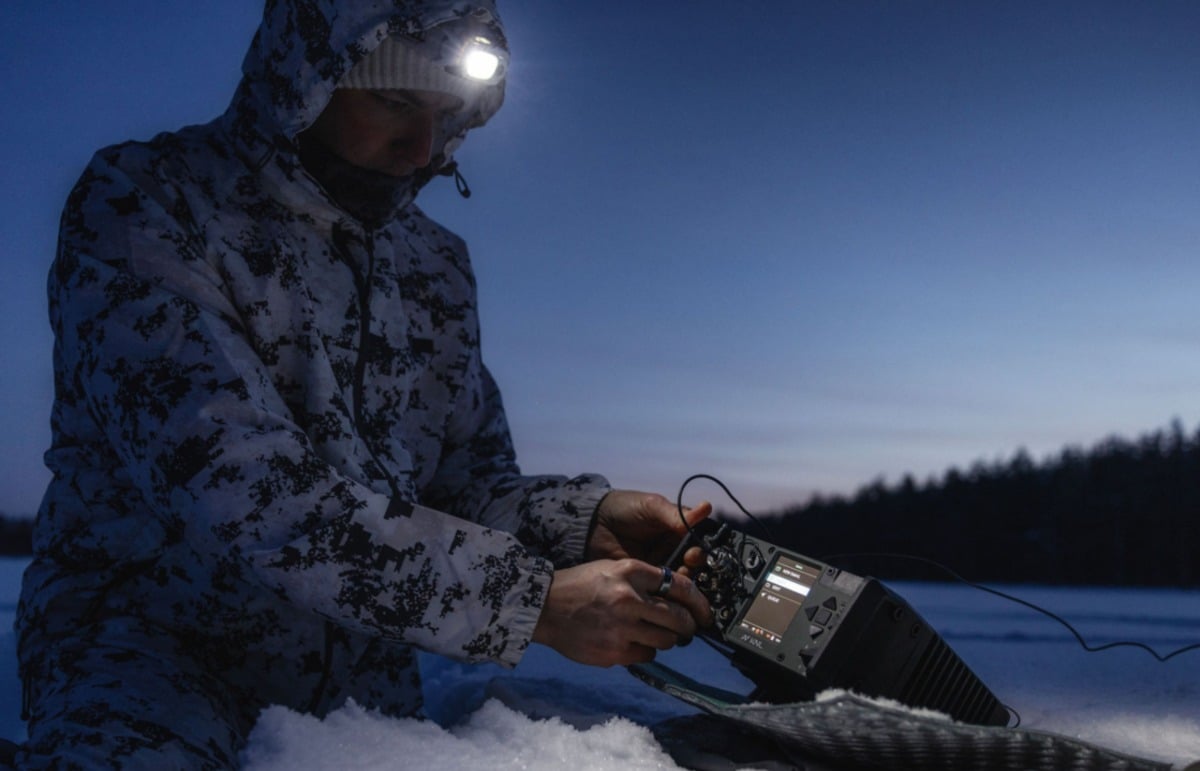
When the Finnish Defence Forces decided to order another massive batch of software-defined tactical radios, it wasn't just a routine hardware refresh. It was a direct response to a massive shift in how modern wars are fought.
If you look at recent conflicts, the first casualty isn't just truth—it's the radio signal. The electromagnetic spectrum has become a brutal, congested, and actively targeted combat zone. Knowing this, Finland is taking steps to ensure its soldiers are never left operating in silence. For an alternative look, check out: this related article.
The Finnish Defence Forces recently triggered a €25.6 million purchase order for Tough SDR tactical radios from Bittium. This marks the third major order under an ongoing procurement program, pushing these advanced handheld and vehicular systems deeper into every branch of the country's military.
They aren't just buying new gear. They are phasing out decades of legacy analog systems in favor of resilient, software-driven networks designed to survive aggressive electronic warfare. Similar reporting on the subject has been published by Al Jazeera.
The Reality of the Modern Contested Airwaves
For years, military communications relied on standard analog or basic digital radio networks. These worked fine when the enemy didn't have the tools to interfere. Today, that luxury is gone. Cheap, high-powered jamming equipment can blind traditional communications, leaving units isolated and vulnerable.
The biggest vulnerability for older tactical radios is their reliance on static frequencies or slow, predictable hopping patterns. If an adversary can locate your frequency, they can flood it with noise.
Even worse, legacy systems often rely heavily on GPS or other satellite networks for synchronization. When an adversary jams the GPS signal across an entire region, those radios lose sync and drop connections entirely.
Finland shares an 830-mile border with Russia, a nation that has spent decades perfecting electronic warfare and GPS spoofing tactics. For the Finns, jam-resistant communication isn't a premium feature. It's a basic requirement for survival.
Software is the Ultimate Shield
The magic of these new tactical systems lies in Software-Defined Radio (SDR) technology.
In older setups, a radio’s physical hardware determined how it transmitted data. If you wanted to change how the radio functioned, you had to replace the physical unit. With SDR, the hardware is basically a blank canvas. The critical features—like frequency management, encryption, and anti-jamming measures—are managed entirely by software.
This design offers two massive advantages:
- Adaptability in Real-Time: If an adversary develops a new way to jam a specific waveform, engineers can write a patch and update the radios in the field. You don't need to recall thousands of physical units from the front lines.
- Massive Bandwidth and Sharing: These systems can share real-time situational awareness, video, and data across different command levels simultaneously. It turns a simple voice radio into a secure, mobile broadband router for the battlefield.
How Cognitive Networks Bypass the Jammers
To truly appreciate why Finland and its neighbors are buying these tools, you have to look at how they handle interference. Finnish defense operators are pairing these tactical SDRs with cognitive high-frequency (HF) technologies.
Instead of searching for a signal on a single jammed frequency, cognitive radios scan thousands of channels simultaneously. The system actively listens to the spectrum, detects interference, and instantly hops to a clear frequency.
[Radio Node A] --(Scans 4,000 Channels)--> [Detects Jamming] --(Hops in 0.5s)--> [Clear Channel] --> [Radio Node B]
This frequency hopping happens in less than half a second. To the human ear, the transition is completely unnoticeable. To a hostile jamming unit, the signal is a moving target that is nearly impossible to pin down or block.
Because these networks run asynchronously, they don't care if the local GPS signal is completely blocked. They keep communicating, completely independent of external satellites.
The Big Picture: Coalition Interoperability
Finland’s defense strategy relies heavily on integration with its allies.
The Tough SDR systems are built to run standard European and NATO waveforms, like the ESSOR High Data Rate Waveform. This means a Finnish soldier on the ground can communicate directly and securely with Swedish, Estonian, or American units using different hardware, without needing complex translation equipment.
These radios plug directly into broader tactical IP networks, creating a self-healing, mobile internet across the entire force. If one node in the network is destroyed or jammed, the system automatically reroutes data through other units on the ground.
What Countries Must Do Next
Finland's proactive approach offers a clear blueprint for other nations looking to protect their forces from electronic warfare. If you are analyzing or managing defense procurement, keep these steps in mind:
- Audit Legacy Systems immediately: Identify any tactical systems that rely on static frequencies or require GPS synchronization to function. These are your weakest links.
- Prioritize SDR Hardware: Transition procurement to software-defined architectures. Hardware should be viewed as a long-term shell, while software updates keep the system relevant against evolving threats.
- Insist on Allied Interoperability: Ensure all new communication tools natively support shared waveforms, like ESSOR, to allow seamless joint operations.
Investing in multi-million dollar tanks and fighter jets is pointless if your troops can't talk to each other once the shooting starts. Finland knows this, and the rest of the world is watching closely.