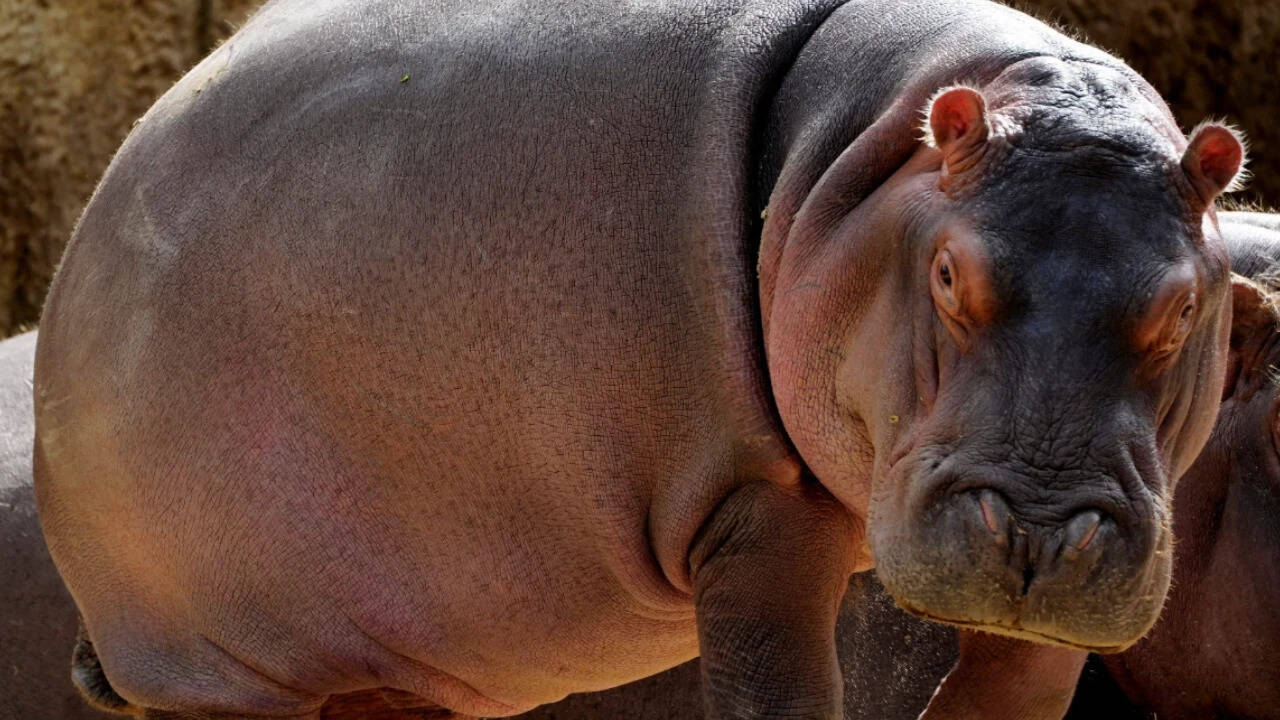
A tossed knit hat, a spinning ceiling fan, and a one-foot gap above a viewing window. That chain of freak events ended the life of Fiona the hippo on November 19, 2026, at the Cincinnati Zoo & Botanical Garden.
She was nine years old. She would have turned ten in January 2027.
For nearly a decade, Fiona stood for grit and survival. Born six weeks premature in January 2017 at just 29 pounds (13.2 kilograms), she couldn't stand or nurse on her own at first. Keepers bottle-fed her, tube-fed custom formula, and turned a tiny calf fighting for breath into a global symbol of resilience. Seeing a hippo with such a backstory die from something as ordinary as a piece of knitwear feels gut-wrenching. Honestly, it also forces a hard look at how easily harmless visitor habits turn lethal inside animal habitats.
How a Knit Hat Became a Fatal Medical Emergency
The sequence sounds almost impossible until you trace each step. Around 11 days before her death, a visitor tossed a knit cap into the air near the hippo habitat. A ceiling fan caught the hat, deflected it sideways, and sent it sailing through a narrow opening roughly one foot high above 12-foot-high viewing windows.
Zoo spokesperson Michelle Curley described the incident as an accident. Still, an accident doesn't make the outcome any less devastating.
Once Fiona swallowed the hat, she didn't show immediate distress. She was initially asymptomatic. That delayed onset is one of the trickiest parts of foreign-body ingestion in large animals. A few days passed before her appetite started dropping, signaling that something wasn't moving right inside her digestive tract.
Keepers and veterinarians put her on round-the-clock watch. They kept her hydrated, offered treats to keep her eating and moving food through her gut, and tried non-invasive ways to help the fabric pass. They even borrowed a vibration plate from a horse farm, encouraging Fiona to stand on it several times a day so gentle shaking might help move things along.
Mike Wenninger, the zoo's director of animal health, explained that vets sedated Fiona twice to examine her. An ultrasound showed bunching in her intestines. A colonoscopy using a 9-foot (2.7-meter) scope couldn't locate the hat.
Surgery wasn't a clean option. Operating on a full-grown hippopotamus requires navigating skin more than five centimeters thick in places, managing tricky anesthesia, and making multiple incisions just to hunt for an obstruction. Zoo director Dave Jenike said the team did everything possible, calling their efforts heroic, while noting that her body simply couldn't fight anymore. The Association of Zoos and Aquariums praised the zoo's 24/7 care during the crisis.
Why Foreign Objects Are So Dangerous for Zoo Animals
People assume zoo barriers exist mainly to keep animals in or keep hands out of teeth range. That's only half the job. Barriers and enclosure designs also exist to keep everyday human junk out of animals' stomachs.
Fabric, plastic caps, sunglasses, coins, and hair ties look trivial to us. Inside an animal's gastrointestinal tract, they don't break down like grass or browse. Knitwear and fabric can twist, bunch, or tangle intestinal loops—which lines up with the intestinal bunching vets saw on Fiona's ultrasound. Worse, by the time an animal stops eating or shows clear pain, an obstruction or tissue compromise may already be well advanced.
This isn't a one-off freak occurrence in zoo history. In 2014, a polar bear at a German zoo died after swallowing a jacket a visitor dropped into the enclosure. Two years ago, a rare antelope at a zoo in Tennessee choked to death on a plastic cap from a squeezable fruit pouch.
Every time one of these tragedies happens, the same debate flares up. Should zoos seal off every conceivable gap and install heavier physical barriers? Or does over-enclosing spaces trade away natural airflow, daylight, and open sightlines for animals and guests?
In practice, it's a balancing act. You can't hermetically seal every exhibit without hurting ventilation, acoustics, or habitat design, yet even a small gap can become a target when items get tossed, dropped, or blown around. That doesn't mean zoos ignore risk—facilities constantly audit exhibits and update protocols—but it does mean visitors carry real responsibility every single time they step up to glass or rail.
Fiona's Legacy Beyond Viral Fame
To understand why Cincinnati reacted so fast—leaving flowers and cards beside a hippo statue outside the zoo within an hour of the announcement—you have to look at what she meant to the city.
Before Fiona arrived in 2017, the Cincinnati Zoo was still dealing with heavy public scrutiny after the 2016 shooting of gorilla Harambe. Fiona's premature birth, documented openly by keepers and veterinary staff, gave people a story of care, science, and survival to rally behind. Even her mother, Bibi, had undergone the first-ever ultrasound on a Nile hippo before Fiona's birth, where Dr. Jessye Wojtusik detected her heartbeat.
Over the years, Fiona grew up alongside her younger brother Fritz, born in August 2022, and became part of everyday life in southwest Ohio. People read books about her, bought themed treats and merchandise, and followed her milestones from shaky newborn to full-grown adult.
After her death, tributes poured in from across the region and beyond. Ohio Governor Mike DeWine called her a true icon. Cincinnati Mayor Aftab Pureval remembered her as a symbol of perseverance and joy. The Cincinnati Bengals called her the queen of the Queen City, and the Cincinnati Reds posted a tribute honoring her legacy. Executive Chair of the Board Thane Maynard described her as "lightning in a bottle" from day one.
Strip away the pop-culture fame, and her real impact was simpler. She made millions of people care about a species they might otherwise have ignored.
What Visitors Get Wrong About Zoo Etiquette
I've spent plenty of time watching crowds at zoos, and the most dangerous moments rarely come from outright malice. They come from casual carelessness.
Here are the habits that trip people up most often:
- Tossing or waving items near enclosures. Kids toss hats, parents hand toddlers snacks or toys over rails, and adults dangle phones or sunglasses for photos. A gust of wind, a slip of the hand, or a ceiling fan changes the trajectory in a split second.
- Assuming high glass or overhead space is foolproof. People see a 12-foot window and assume nothing can cross it. Air currents, angled bounces, and small architectural gaps tell a different story.
- Treating small items as harmless. A plastic bottle cap or a soft knit beanie doesn't look sharp or toxic. Inside a digestive tract, size, shape, and weave matter far more than how harmless the item looks in your hand.
- Ignoring rules when no keeper is watching. Most zoo guests mean well, yet a quick rule-bend—"just for a second"—is how accidents start.
There's also a fair counterargument worth noting. Some visitors feel frustration when rules seem strict or when habitats look heavily restricted. Fair enough—nobody visits a zoo wanting to feel scolded. Still, animal health has zero margin for guesswork once something gets swallowed.
Practical Steps Every Zoo Visitor Can Take Right Now
If you visit a zoo, aquarium, or wildlife sanctuary—whether this weekend or on your next trip—a few straightforward habits cut down accidental hazards dramatically:
- Keep loose items secured and off the ground. Put hats, scarves, sunglasses, water bottles, and small toys away or hold them firmly when near open-air areas, fans, or ledges. Never toss anything into the air near an exhibit.
- Pack snacks carefully and dispose of trash immediately. Keep small lids, wrappers, and food pouches zipped inside a bag, and throw trash straight into bins rather than setting it on ledges where wind or curious hands can knock it loose.
- Set clear ground rules with kids before you walk up to an exhibit. Tell children plainly that nothing goes over a barrier, rail, or viewing wall—not hats, not toys, not food—and stay close near low ledges.
- Report dropped items to staff right away. If a hat, phone, cap, or wrapper falls into or near an enclosure, tell a keeper or zoo employee immediately instead of trying to fish it out or walking away quietly. Fast reporting helps staff assess whether an animal could reach or swallow it.
A knit hat shouldn't be able to end a life, yet on November 19, 2026, it did. Treating every barrier with respect is the most practical way to honor Fiona—and protect every animal still in care.