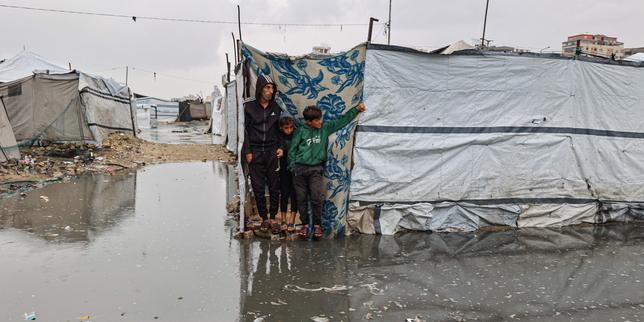
The first major storm of the season didn't just bring rain to Gaza. It swept through makeshift displacement camps on November 7, 2026, flooding an estimated 70,000 tents and instantly shattering what little protection hundreds of thousands of displaced Palestinians had left.
If you've ever wondered how families survive in a war-torn enclave stripped of infrastructure, the reality on the ground right now is stark. When heavy Mediterranean storms hit, nylon tarps and thin tent poles offer zero resistance against rushing water and freezing mud.
The Reality of Flooded Tent Camps
Across Deir al-Balah, Gaza City, and northern regions, families woke up waist-deep in water or watched helplessly as their mattresses, blankets, and meager belongings were soaked through within minutes.
Local civil defense teams received over 1,500 emergency calls during a single night. Yet, operating without heavy equipment, fuel, or functional drainage pumps, rescuers found themselves completely overwhelmed.
Mahmoud Bassal, spokesperson for Gaza's civil defense, warned that local responders cannot handle the catastrophe alone. The territory urgently needs heavy machinery to clear blocked drainage paths, repair damaged roads, and bring in prefabricated housing units before subsequent cold fronts hit.
Collapsing Structures and Rising Casualties
The danger extends far beyond rising water levels. Years of heavy bombardment have left tens of thousands of concrete buildings structurally compromised, their cracked walls and hanging roofs waiting for an excuse to cave in.
During the weekend storm, the combination of torrential rain and soil saturation caused a sandy embankment to collapse directly onto a camp south of Deir al-Balah. The incident killed multiple people, including young children, and left others missing beneath the debris.
Humanitarian groups like Save the Children have repeatedly warned that restrictive aid policies keep essential shelter materials out of the strip. Over half a million children now face sub-zero temperatures, persistent dampness, and the rapid spread of waterborne illnesses without adequate blankets, heaters, or proper roofing.
What Needs to Happen Now
Writing about a crisis from afar is easy; fixing it requires concrete, immediate logistics. Humanitarian coalitions on the ground are demanding three non-negotiable steps:
- Immediate entry of heavy machinery to clear blocked storm drains and stabilize precarious rubble mounds.
- Unrestricted flow of winter supplies, including waterproof tents, thermal blankets, and portable heating units.
- Deployment of transitional shelters to replace vulnerable nylon encampments before winter deepens.
Without these measures, every subsequent forecast won't just predict rain—it will predict another disaster for a population with nowhere left to run.