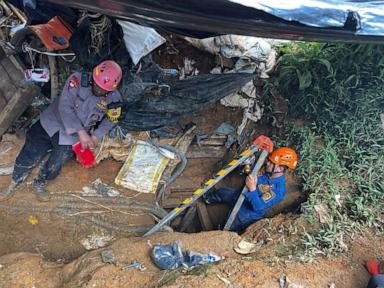
Rescuers crawling through a 100-meter shaft in West Java face pitch black, rising groundwater, and mud that gives way under a boot. It's brutal work.
A flood in an unauthorized gold mine near the Pongkor area of Bogor, roughly 60 kilometers south of Jakarta, turned into a grim multi-day recovery operation in late November 2026. West Java police spokesperson Hendra Rochmawan reported 16 bodies retrieved and at least 10 miners still missing by Thursday, noting how slim survival odds get after days underground. Jakarta Search and Rescue Agency chief Desiana Kartika Bahari said around 325 personnel worked across two adjacent shafts using rope access, submersible pumps, and efforts to block groundwater seepage.
Wire stories capture the immediate drama of those wet, dark shafts. Honestly, that's only half the story.
If you want to understand why these tragedies repeat across Indonesia, you have to look past the headlines and examine the geology, informal economics, and rescue math behind them.
What Actually Happens Inside a Flooded Mine Shaft
People picture a mine flood like a burst pipe in a basement. Underground in tropical rock, it's way messier.
Water doesn't just pour in from one clean spot. It seeps through fractured rock, follows old drift tunnels, and pools in low pockets where air can't escape. When a shaft drops roughly 100 meters—about 328 feet—vertical drops turn into hazards the moment water mixes with loose soil and clay.
- Zero visibility: Headlamp beams bounce off suspended silt and mist, shrinking sightlines to inches.
- Unmapped geometry: Unreported pits rarely have reliable blueprints, so adjacent shafts or old workings can connect unpredictably.
- Oxygen and air pockets: Trapped air can stay breathable for a while, or turn toxic and low-oxygen as water displaces air in dead-end drifts.
- Slippery vertical climbs: Rope access keeps rescuers off unstable ladders, yet wet walls make every anchor point and haul line a gamble.
That's why Bahari stressed that shaft depth, narrow access, and limited lighting dictate how teams move safely. Pushing fast into a flooded, unverified bore doesn't save people. It creates new victims.
Why Illegal Gold Pits Keep Opening Despite Crackdowns
You might wonder how dozens of miners end up working in an unreported hole when authorities shut down roughly 30 illegal gold pits in another part of Bogor just a week earlier. Enforcement is tough in rugged terrain.
Gold prices and local livelihoods pull people into informal workings. Even when state-owned PT Antam operates licensed gold mining facilities nearby in Pongkor—and stated this incident wasn't part of its operations—informal diggers often work near or between regulated zones where gold-bearing veins attract opportunistic labor.
I've seen how enforcement waves work on paper versus on steep hillsides. Closing a cluster of pits in one valley can push miners toward remote slopes where roads are rough and oversight is thin. Small-scale operations also skip formal geotechnical checks, proper timber or steel ground support, and engineered drainage.
To make matters worse, artisanal gold processing frequently relies on toxic mercury and cyanide with minimal protective gear. When floodwater churns through disturbed ground and processing areas, chemical and biological hazards add another layer of risk for anyone working or searching nearby.
Rescuing in the Dark vs. Safe Mine Engineering
Short wire reports sometimes treat rescue crews like superheroes who just need bigger pumps. Real underground rescue is a tug-of-war between urgency and physics.
| Aspect | Emergency Shaft Rescue | Regulated Mine Safety Systems |
|---|---|---|
| Primary goal | Locate and recover trapped people safely | Prevent ground failure and water inflow first |
| Site knowledge | Often incomplete or improvised on scene | Mapped plans, hazard logs, and rock mechanics |
| Water control | Submersible pumps and temporary blocking | Planned drainage, barriers, and monitoring |
| Crew protection | Rope systems, lighting, and strict pacing | Formal K3 safety officers, PPE, and training |
Indonesia's formal mining rules—including Government Regulation No. 50 of 2012 on occupational safety and health management systems and Ministry of Energy and Mineral Resources rules such as Regulation No. 26 of 2018—set strict standards for licensed operators. Those rules cover risk assessments, emergency response, equipment checks, and worker training.
Informal diggers operate outside that safety net. Without engineered dewatering or vetted ground control, a heavy rain event or sudden groundwater surge can flood a narrow shaft before anyone gets out.
What People Get Wrong About Mine Flood Rescues
One common myth is that pumping water out quickly solves the problem. If you pump fast without knowing where groundwater is feeding in, or if unreinforced walls are saturated, rapid drawdown can destabilize loose rock or pull mud into the shaft.
Another misconception is that rescuers hold back out of hesitation. Experienced search teams pace operations because a trapped rescuer helps nobody. Using rope access across adjacent shafts takes coordination among hundreds of police, rescue, and local personnel, especially when narrow passages limit how many people can work at once.
And no, illegal mining isn't just a law-and-order footnote. It's a safety and public-health problem tied to real economic pressure. Pretending a crackdown alone fixes the root incentive misses why people take these risks in the first place.
Practical Steps for Communities, Responders, and Policymakers
If you're following this crisis, working near mining communities, or looking at policy and safety response, a few concrete steps matter right now:
- Follow official briefings for verified counts: Rely on updates from agencies like Indonesia's search and rescue teams and provincial police rather than unverified social media tallies, since missing-person numbers can shift as site access changes.
- Support formalization and safer alternatives: Policymakers and local leaders do better pairing enforcement with technical assistance, legal pathways where viable, and safer ore-processing training instead of leaving informal miners in the shadows.
- Prioritize geotechnical and chemical hazard checks: Local disaster agencies and responders benefit from mapping abandoned or unreported shafts, testing water and soil risks around old workings, and keeping untrained bystanders well clear of active recovery zones.
- Invest in early warning and pump logistics: Before rainy seasons peak in high-risk hills, pre-staging high-capacity dewatering gear, comms equipment, and rope-rescue teams saves precious hours when a shaft floods.