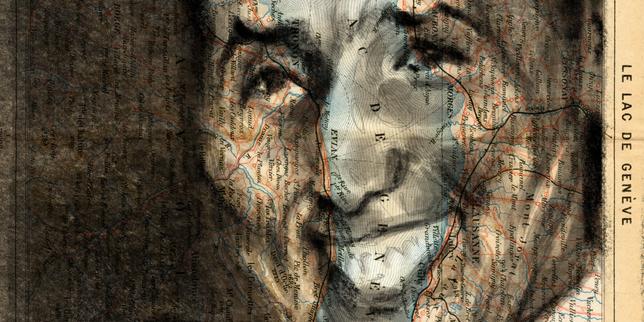
History has a habit of neatly packaging revolutionaries. We remember the triumphs, the speeches, and the dramatic downfalls, but we rarely look closely at the quiet spaces in between.
Ahmed Ben Bella is globally recognized as the face of the Algerian War of Independence, the charismatic figure who broke French colonial rule and stood as the first president of a free Algeria. You probably know about his radical agrarian reforms, his alliance with Che Guevara, and how he converted Algiers into a sanctuary for global liberation movements.
But you likely don't know the full story of what happened after his world shattered.
When his former ally, Defense Minister Houari Boumediene, ousted him in a swift 1965 military coup, Ben Bella vanished from the public eye. He spent the next fourteen years in absolute isolation, locked away in secret Algerian military prisons without a trial. When he finally walked out of confinement in 1980, he didn't return to the barricades. Instead, he retreated to the serene, terraced vineyards of Switzerland.
This transition wasn't just a change of scenery. It represents a profound political and psychological shift that reshaped the trajectory of post-colonial leadership.
The Crushing Silence of Algerian Confinement
Most political leaders broken by a coup fade quietly into the background or meet a violent end. Ben Bella faced a stranger, more grueling psychological torture: complete erasure.
From 1965 to 1979, the Algerian regime treated his very name like heresy. He was kept in subterranean isolation, completely detached from the nation he had helped birth. During this period of profound solitude, his mother arranged his marriage to Zohra Sellami, a young, courageous journalist who chose to share his captivity.
Imagine spending a total of twenty-four years of your life behind bars—shared between French colonial prisons and the dungeons of your own liberated homeland. That kind of isolation does one of two things: it breaks your spirit entirely, or it forces a complete ideological calibration. For Ben Bella, it did the latter.
By the time President Chadli Bendjedid formally pardoned and released him in 1980, the fiery, doctrinaire Marxist-adjacent statesman had evolved. He emerged from prison with his revolutionary fervor intact, but his worldview had expanded beyond the rigid confines of 1960s state socialism.
From Dungeons to the Swiss Vineyards
When Ben Bella chose Switzerland for his decade-long voluntary exile, it shocked both his allies and his critics. How did a fierce anti-imperialist, a man who once proudly accepted the Lenin Peace Prize and the title of Hero of the Soviet Union, wind up living quietly among the manicured landscapes and private banking hubs of Western Europe?
It was a calculated search for perspective.
Living in a small apartment surrounded by Swiss vineyards, Ben Bella used the tranquility to decompress and survey the changing global landscape. In Switzerland, away from the constant swarm of local journalists and the volatile factions of Algiers, he reinvented himself as an elder statesman of the global alternative-left.
Ben Bella's Political Evolution:
1940s: Decorated French Army Veteran (Monte Cassino)
1950s: Underground Paramilitary & FLN Strategist
1960s: Pan-Arabist Socialist President
1980s: Swiss Exile & Alter-Globalization Thinker
During his Swiss years, he realized that the traditional post-colonial nation-state model was failing across Africa and the Middle East. He watched the socialist experiments he once championed devolve into bureaucratic, military-dominated oligarchies. Instead of retreating into cynicism, he shifted his focus toward the alter-globalization movement, human rights, and fierce advocacy for the Palestinian cause.
What Most Historians Get Wrong About His Legacy
The common narrative portrays Ben Bella’s later years as a tragic, irrelevant footnote to his early revolutionary brilliance. That view is fundamentally incorrect.
His time in Switzerland allowed him to build bridges that would have been impossible from Algiers. He collaborated with European intellectuals, hosted opposition figures, and funded independent political journals. Even when the Algerian regime’s military intelligence targeted his inner circle—culminating in the tragic 1987 assassination of his close associate and lawyer, Ali Mécili, in Paris—Ben Bella refused to be silenced.
His exile proved that a true revolutionary's relevance isn't tied to an official government office or a military uniform. It lies in the ability to adapt, survive, and keep speaking truth to power long after the cameras turn away.
The Blueprint for Modern Political Survival
When Ben Bella finally returned to Algeria in 1990, he didn't return as a vengeful dictator-in-exile. He returned as a moderate, unifying figure who advocated for national reconciliation during the darkest days of the Algerian Civil War.
His journey offers vital insights for anyone analyzing modern geopolitical leadership and political resilience.
- Accept that isolation can be a crucible. True strategic clarity often comes only when you are completely removed from the daily noise of execution and governance.
- Decouple your identity from your position. Ben Bella was a president for less than three years, yet he remained an influential global icon for half a century because his mission outlasted his title.
- Adapt your tactics without compromising your core values. He moved from shipping crates of weapons in the 1950s to writing intellectual critiques of global capitalism in the 1980s, keeping his underlying commitment to human dignity unchanged.
To understand the full scope of post-colonial history, you have to look beyond the grand declarations of independence. Look instead to the quiet, brilliant defiance of a man who looked out over the peaceful Swiss vineyards and quietly plotted the next stage of global liberation.


.jpg?t=171648509292)