Sixty-six million years ago, a massive asteroid slammed into Earth and ended the age of the dinosaurs. Yet, amidst the ash and global firestorms, a few ancestral branches of birds managed to make it through. For decades, paleontologists argued over why some winged lineages lived while others vanished. The answer might be hidden inside fossilized predator waste.
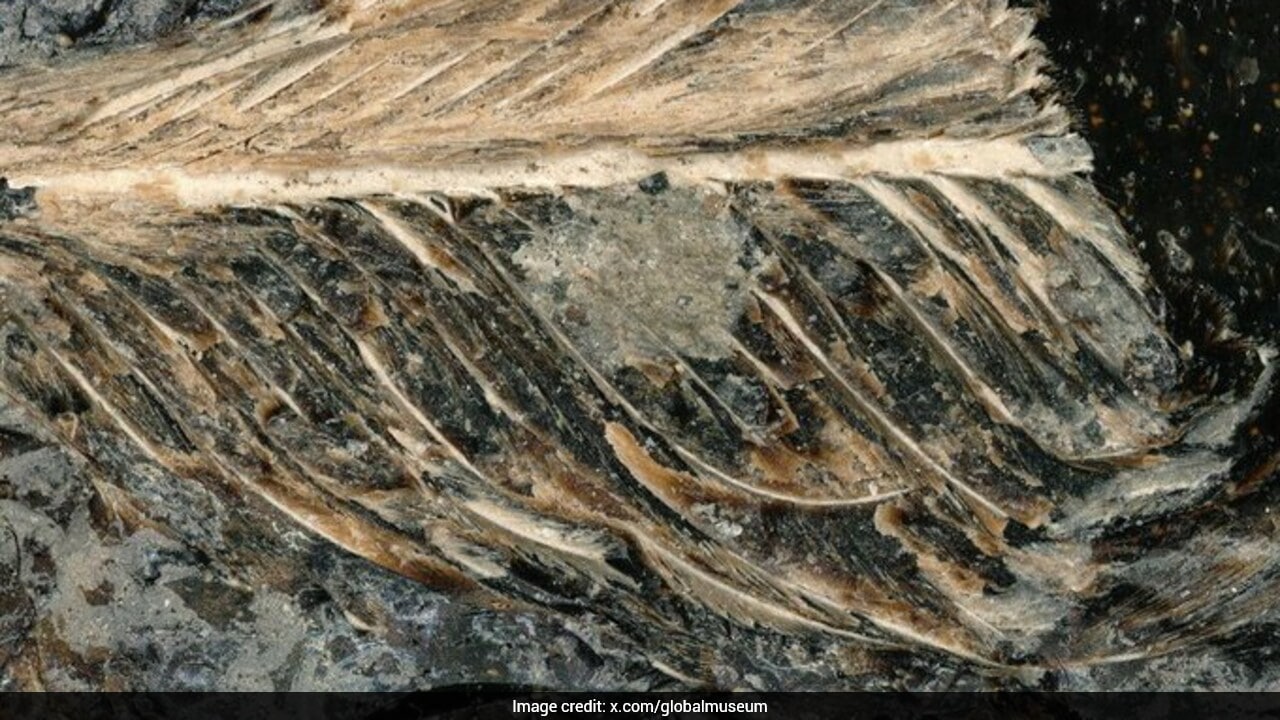
Recent research published in Current Biology focuses on an extraordinary specimen found in Montana. It's a piece of fossilized feces, known as a coprolite, likely left behind by a Tyrannosaurus rex or another large predator that snacked on a bird right before the end of the Cretaceous period. Inside this ancient droppings sample, scientists uncovered the best-preserved feather ever recovered from the Mesozoic era.
The Mystery of the Hesperornithiformes
The bones and feathers trapped inside the coprolite belonged to a creature from an extinct group called Hesperornithiformes. These were flightless, diving birds roughly similar to modern loons. They spent their lives around water, hunted aquatic prey, and looked remarkably well-equipped to handle environmental disruptions.
Yet, every single member of this group died out when the asteroid hit.
Meanwhile, another group known as Neornithes survived. Modern birds descend directly from this surviving lineage. For a long time, researchers assumed that living near water was the primary advantage that saved Neornithes ancestors. The flaw in that theory is obvious: Hesperornithiformes lived by the water too, and they still went extinct. Geography wasn't the deciding factor. Biology was.
What Ancient Feathers Tell Us About Survival
When researchers examined the Montana coprolite using high-resolution micro-CT scanners, they found microscopic details that changed how we view bird evolution. Alongside the bird bones and feathers, the sample contained two tiny, diamond-shaped scales from a gar fish that likely served as the bird's final meal.
More importantly, the feathers themselves revealed a stark structural divide.
Jingmai O'Connor, an associate curator of fossil reptiles at Chicago's Field Museum, noted that the specimen contained two distinct feather types. Some featured a central spine with a square cross-section, an engineering marvel that keeps modern feathers lightweight and rigid. Others were far more primitive, small, and fuzzy—structures that offered poor insulation against harsh temperatures.
When the asteroid struck, it threw up immense amounts of debris, blotting out the sun and plunging the planet into a punishing impact winter. Global temperatures dropped off a cliff. Birds with primitive, fuzzy plumage couldn't trap body heat effectively. They froze or starved as ecosystems collapsed. The ancestors of modern birds likely possessed superior feather morphology and metabolic flexibility that allowed them to weather the sudden freeze.
Looking Beyond the Bones
Paleontology often relies on pristine skeletons, but soft tissues tell the real story. Feathers rarely fossilize because they decay rapidly. Finding them preserved inside a predator's digestive tract is an extraordinary stroke of luck that bypasses normal taphonomic limits.
The stomach acid of the predator, combined with the rapid burial of the waste, created a bizarre microenvironment that protected these delicate keratin structures from complete destruction. It proves that museum drawers and old excavation sites might hold countless answers if researchers re-examine coprolites and other overlooked specimens with modern imaging technology.
To cement this theory, scientists now need matching fossil evidence from the surviving Neornithes lineage dating to the exact pre-impact window. Until then, the half-digested remnants of a prehistoric meal offer our clearest window into the resilience of modern birds.
Check museum collections with fresh imaging tools. The next breakthrough in evolutionary history is sitting in a drawer, disguised as a rock.