A frantic cry for help broke the quiet rhythm of a July afternoon along the Yellowstone River near Greycliff, Montana. Four people had just been violently thrown into freezing, rushing water when their raft and paddleboard slammed hard into a bridge pier. Three managed to claw their way back to the rocky shore. The fourth wasn't that lucky.
Swept fast down the heavy current, the remaining victim drifted away while clinging desperately to a floating cooler. Most people watching from the bank would have panicked or stood frozen. Fourteen-year-old Jory Thomas didn't even blink. He emptied his pockets, grabbed his lariat rope, and waded straight into the chest-deep rapids. What happened next looked like a scene straight out of a western movie, except it was completely real.
When Practice Meets Reality
Jory hadn't planned on becoming a headline-making hero during his family holiday. He was just a kid spending the Fourth of July weekend with his grandparents. But earlier that year, he had gotten obsessed with roping.
While helping out at local cattle brandings, Jory picked up the trade. Every single afternoon when the heavy Montana heat finally broke, he went outside to practice throwing loops at a roping dummy. His grandmother, Sandy Thomas, noted something strange about that specific day. Jory had visited that exact campground dozens of times before and never brought his lariat. This time, he packed it.
Intuition is a strange thing. When seconds counted, that rope was right there in his hands.
The Rescue on the Yellowstone
The Yellowstone River is notoriously unforgiving. That stretch features a deceptive, rapid current that funnels quickly into dangerous logjams and hidden hazards. Swimming against it is nearly impossible for an exhausted adult, let alone someone who just swallowed half the river in a crash.
Jory sprinted along the rocky bank to keep pace with the drifting man. He shouted instructions over the roar of the water, convincing the struggling swimmer to let go of the cooler. With the man momentarily free and drifting into range, Jory let fly.
His first throw hit the mark. The loop caught the man cleanly around the arm and neck.
A bystander rushed over to help the teenager pull. Together, they hauled the exhausted man through the freezing, chest-deep current to safety. By the time a Sweet Grass County sheriff's deputy arrived three minutes later, the immediate danger had already passed.
Why Quick Thinking Matters More Than Equipment
Sweet Grass County Sheriff Alan Ronneberg later stated publicly that Jory 100 percent saved the man's life. Without that split-second intervention, the odds of surviving that stretch of water were remarkably slim.
People often assume that water rescues require specialized life rings, heavy watercraft, or professional training. This event proves otherwise. It highlights a core truth about emergency response: raw practicality and muscle memory beat sophisticated gear every single time. Jory didn't wait for a committee or a manual. He used the exact physical skill set he had spent months drilling into his daily routine.
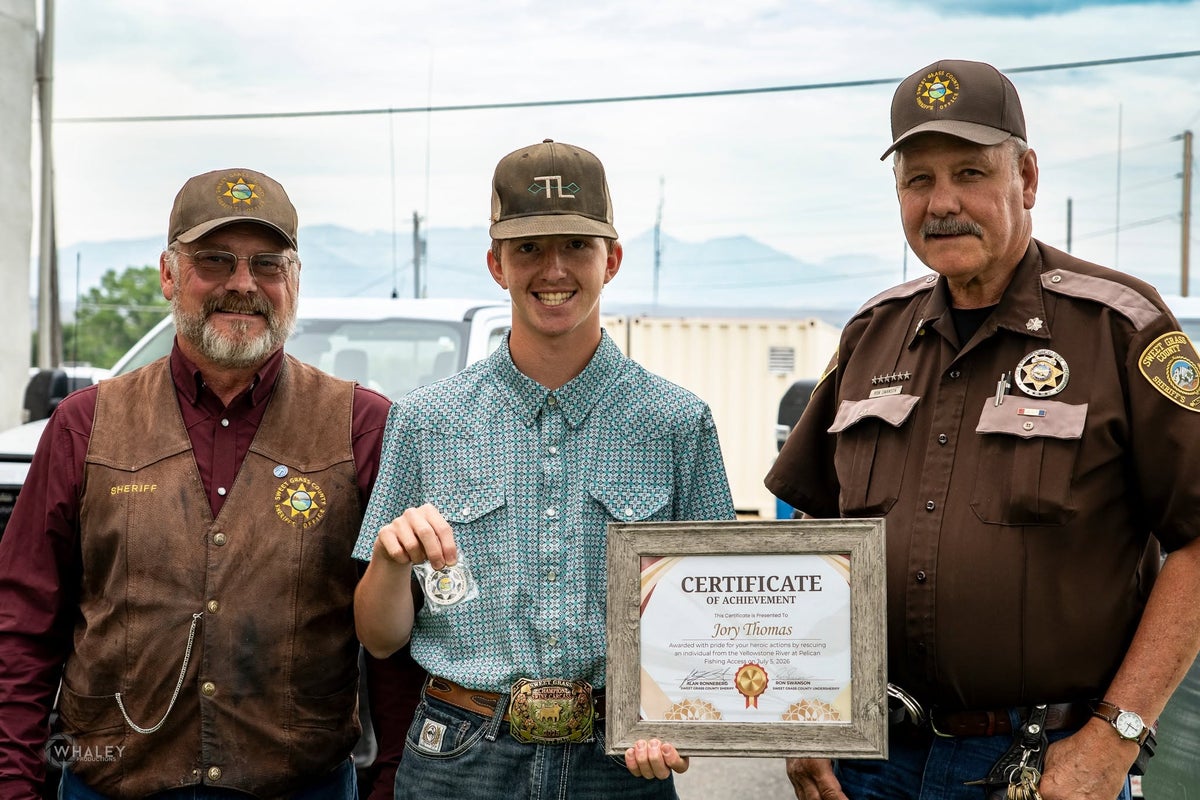
Local officials didn't let the moment pass quietly. The Sweet Grass County Sheriff's Office presented Jory with a Certificate of Achievement, and Senator Steve Daines formally recognized him as the Montanan of the Month.
When asked about his sudden fame, Jory kept it simple. He was just glad the guy made it out of the water alive. He started high school football season shortly after, leaving behind a story that proves ordinary kids can pull off extraordinary feats when they refuse to stand still.