The ink wasn't even dry on the landmark memorandum of understanding between Washington and Tehran before the entire arrangement began to split at the seams. Just days after US President Donald Trump and Iranian President Masoud Pezeshkian signed an agreement designed to halt a devastating month-long conflict, open up the blocked Strait of Hormuz, and kick off formal technical negotiations, the reality on the ground has delivered a massive reality check.
If you thought a diplomatic signature in Europe would instantly silence the guns across the Middle East, today's events show exactly why things are never that simple.
The highly anticipated peace talks scheduled to begin today at the luxurious Bürgenstock resort overlooking Lake Lucerne in Switzerland have been postponed indefinitely. The Swiss Foreign Ministry confirmed the sudden halt just hours after the White House announced that US Vice President JD Vance canceled his flight to Europe. While official statements point to predictable logistical hurdles, sources across the region suggest a much deeper crisis involving heavy military escalations in southern Lebanon and internal political friction.
Why the Swiss Talks Fell Apart Before They Began
Diplomacy at this level is incredibly fragile. The Swiss government had everything set up for delegations from the United States, Iran, Qatar, and Pakistan to begin a grueling 60-day cycle of technical negotiations. The primary focus was supposed to be the future of Iran's nuclear program and securing permanent maritime safety in the Persian Gulf.
Instead, the luxury suites at Bürgenstock remain empty.
The immediate catalyst for the collapse was the cancellation of Vice President JD Vance's trip. The White House attempted to smooth over the situation, releasing a statement that the logistics of these negotiations have never been simple or predictable and that the technical team remains ready to move at the first opportunity.
But logistics are rarely the real reason a international summit vanishes overnight.
According to reports from Al-Mayadeen, a pan-Arab news channel closely allied with Hezbollah, Tehran intentionally delayed sending its diplomatic team to Switzerland. The reason? Iran refuses to sit down at the negotiating table while Israel continues its heavy military operations across southern Lebanon. Pakistani Prime Minister Shehbaz Sharif, whose backchannel mediation was absolutely vital in securing the initial framework earlier this week, also dropped out of his scheduled attendance, signaling that the diplomatic window is closing fast.
The Lebanon Problem That Washington Ignored
The core flaw in the initial pact signed by Trump and Pezeshkian is becoming blindingly obvious. The text of the deal reportedly called for an immediate and permanent termination of military operations on all fronts, including Lebanon. It sounded great on paper during a high-profile dinner event, but it completely ignored the strategic realities of the Israeli leadership.
Israel isn't a direct party to this specific bilateral US-Iran memorandum, and Prime Minister Benjamin Netanyahu has zero intention of letting his foot off the gas.
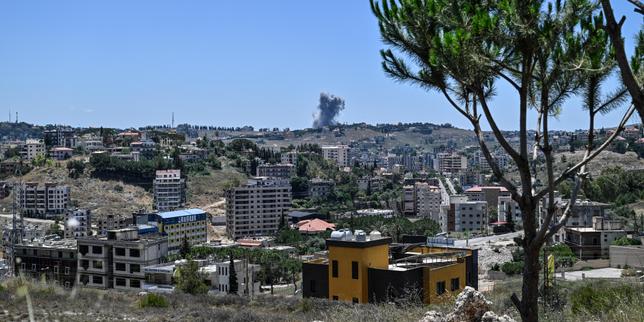
While US Central Command lifted its naval restrictions on Iranian ports and commercial ships began moving through the Strait of Hormuz again, the situation in the Levant exploded. The Israeli military launched a massive wave of overnight airstrikes targeting what it described as Hezbollah strongholds throughout southern Lebanon. Lebanon’s state-run National News Agency reported that at least 16 people were killed in these latest raids, heavily damaging civilian areas and local infrastructure.
Inside Israel, the political reaction to the US-Iran agreement has been fiercely negative. Right-wing members of Netanyahu's coalition have openly trashed the deal. Security Minister Itamar Ben Gvir reacted with fury to reports of ongoing border hostilities, declaring that the military campaign must intensify rather than wind down. Netanyahu himself warned earlier that the combat is far from finished, viewing the current regional environment as a rare opportunity to permanently degrade Hezbollah's capabilities along Israel's northern border.
The View From Tehran and the Hardline Pushback
Don't assume that the friction is only coming from the Israeli side. The political climate in Tehran is equally volatile right now. President Pezeshkian may have authorized the electronic signature on the agreement, but Iran's chief negotiator, Mohammad Bagher Ghalibaf, immediately adopted an incredibly aggressive posture to appease domestic hardliners.
Ghalibaf warned that Iran will deliver a decisive response if Washington makes excessive demands during the technical phases or if Israel violates the spirit of the truce.
The public in Iran is highly skeptical too. Local analysts and ordinary citizens point out that a 60-day pause is just a temporary band-aid. With over 5,300 Iranians killed during the intense weeks of direct conflict, mostly military personnel along with hundreds of civilians, the psychological scars are deep. Many fear that once the 60 days expire, the war will simply restart with even greater violence.
The Iranian leadership finds itself in a tough spot. They need the economic relief that comes from lifting naval blockades and restoring oil shipping routes, but they can't be seen as abandoning Hezbollah, their most important regional proxy, while southern Lebanon is being pounded into rubble.
What Happens to Global Trade Now
The one saving grace of the week was the rapid reopening of the Strait of Hormuz. Maritime data from organizations like Lloyd's List Intelligence confirmed that commercial vessels and stranded oil tankers finally began moving through the choke point yesterday. Iran’s Persian Gulf Strait Authority is currently handling the transit permits, and for twenty-four hours, global energy markets breathed a sigh of relief.
But that relief is going to be incredibly short-lived if the Swiss diplomatic track remains frozen.
Shipping companies are already expressing extreme hesitation about sending high-value cargo back into the Gulf. Insurance premiums for commercial vessels remain at astronomical highs. If the technical talks regarding Iran's nuclear framework and regional security don't resume quickly, the risk of a retaliatory incident at sea jumps right back up to one hundred percent. All it takes is one drone attack or an intercepted tanker to shut down the strait a second time, sending oil prices back into orbit.
The Next Critical Steps for Regional Stability
The current diplomatic paralysis can't last long without turning back into an active shooting war. To prevent the US-Iran framework from collapsing entirely before the week ends, several specific shifts have to happen immediately.
- Establish an Indirect Military Hotline: Washington and Tehran need an immediate, functional channel to de-escalate specific flashpoints on the ground while formal diplomatic talks are paused.
- Apply Real Pressure on Local Coalitions: The United States must use its leverage to rein in the most extreme operational elements in Israel, while Iran has to convince its proxy networks to avoid launching mass retaliatory rocket barrages that invite heavier bombings.
- Decouple Technical Issues from Regional Operations: Diplomats must find a way to get back to Switzerland to hammer out maritime safety agreements and nuclear safeguards independently of the daily tactical updates from the battlefield.
Relying on grand announcements at international summits means nothing if you don't have a plan for the realities on the ground. Right now, the local actors are running the show, and the diplomats in Switzerland are left waiting for a flight that might never take off.

:max_bytes(150000):strip_icc()/opera-garnier--paris--france--europe-173294974-5a2d8e5b4e4f7d0037eef37d.jpg)