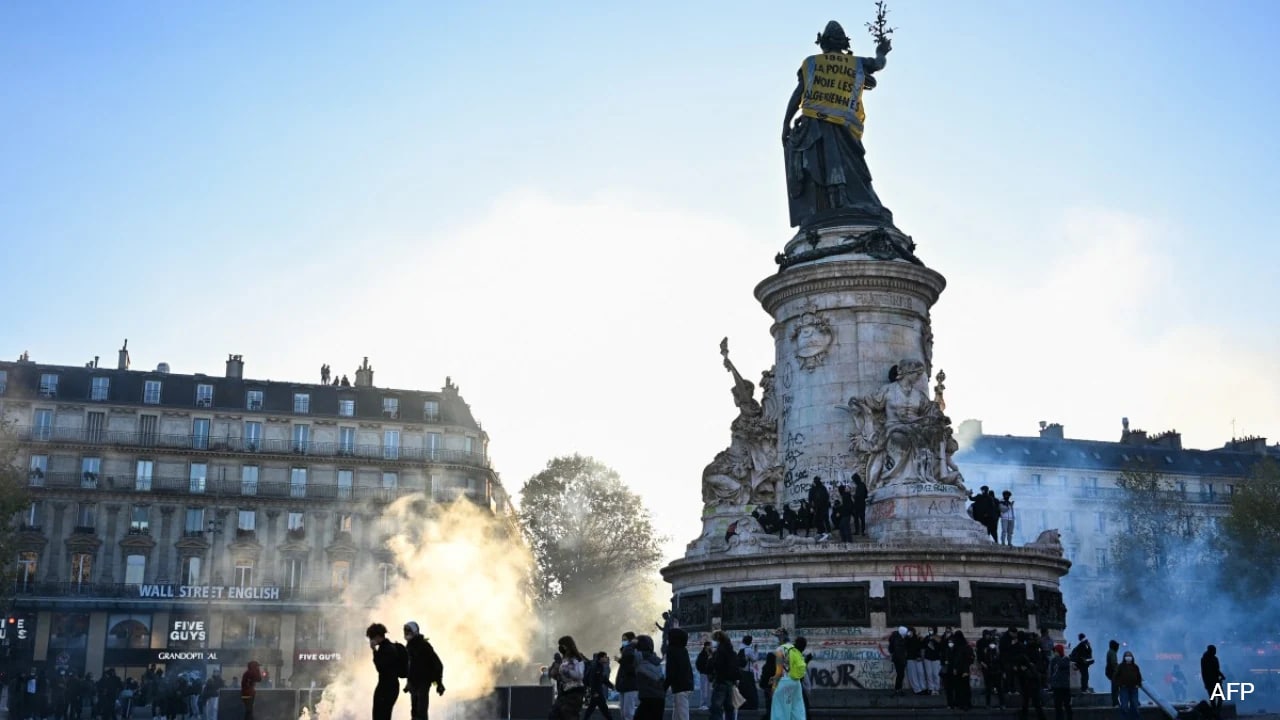
Streets burn, shop windows shatter, and Paris is locking down. France is facing its worst civil unrest in recent years as anger over soaring living costs boils over into open street battles. If you've been watching the news, you know things escalated quickly over the weekend. Now, the government is scrambling to contain a crisis that threatens to upend French politics just six months before a presidential election.
Prime Minister Sebastien Lecornu just announced partial night curfews across Paris and northern cities like Lille. It's a drastic move designed to protect local businesses after thousands of rioters smashed storefronts, torched cars, and clashed violently with police.
Let's look at what's actually happening on the ground and why this crisis is shaking Europe to its core.
The Breaking Point Behind the French Riots
You can't understand the current violence without looking at the numbers. People aren't just angry for the sake of it. They're broke.
Over the past few years, everyday essentials have become luxuries in France. Diesel prices jumped nearly 40 percent. Petrol is up 25 percent. Food prices climbed 25 percent over five years. When you combine crushing inflation with high taxes, you get a powder keg.
What started weeks ago as peaceful student demonstrations over high school conditions snowballed into a nationwide movement. Half a million people turned out on Saturday alone. But peaceful protests quickly fractured. Masked groups hijacked the demonstrations, storming town halls, looting luxury shops, and setting fire to vehicles.
The numbers are staggering. Over 2,500 people arrested. Nearly 1,000 security personnel injured. At least 3,000 shops damaged, running into hundreds of millions of euros in losses. Even the iconic Louvre museum in Paris saw its entrance blocked by demonstrators on Monday, leaving bewildered tourists standing outside barricades.
Inside the Government Panic Response
The political fallout has been immediate and messy. Interior Minister Laurent Nunez offered his resignation after admitting police lost control of the streets, though President Emmanuel Macron refused to accept it.
Instead, the government rolled out heavy-handed measures. Curfews are set from 8:00 pm to 6:00 am in northern cities, while Paris implemented partial bans on gatherings. Authorities deployed 60,000 law enforcement officers over the weekend, but it wasn't enough to stop widespread looting.
Digital Minister Anne Le Henanff took a different angle, summoning major online resale platforms like Vinted, eBay, Amazon, and TikTok. The goal? Force these tech giants to scrub listings for stolen goods being fenced by opportunistic rioters online.
International reactions are pouring in too. Germany updated its travel warnings, telling citizens to avoid high-risk areas in France. China issued safety advisories for travelers. The European Union condemned the violence outright, though officials reminded Paris that the right to peaceful protest remains a protected cornerstone of democracy.
A Wider European Discontent
France isn't alone in this. Across Europe, the cost-of-living squeeze is triggering copycat unrest.
Over the weekend, clashes broke out in Milan, Italy. Police in Brussels and Liege fired tear gas and water cannon to disperse angry crowds. In Spain and Portugal, protesters are setting up tent encampments to fight back against skyrocketing housing costs.
Inflation doesn't respect borders. When working-class families feel squeezed out of basic survival, public order breaks down fast.
What Comes Next for France
We are now six months away from an election that will decide Macron's successor. The timing couldn't be worse for the current administration. Far-right candidate Marine Le Pen is polling strongly, while the government accuses ultra-left factions of stoking street violence to boost far-left firebrand Jean-Luc Melenchon.
Organizers have already called for fresh protests next Saturday.
If you're planning a trip to France or doing business there, expect major disruptions, transit delays, and heavy security sweeps. Keep your travel documents close, avoid large crowds, and monitor local updates daily. This crisis won't blow over by tomorrow.