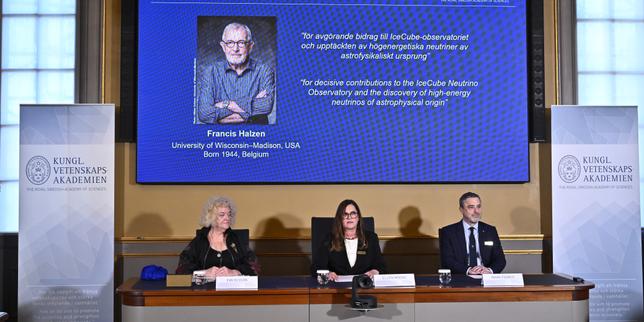
Ghost particles just shook the scientific community. Francis Halzen won the 2026 Nobel Prize in Physics for his work detecting high-energy cosmic neutrinos of astrophysical origin, transforming how we map the cosmos.
Most people think astronomy relies purely on light—telescopes staring at stars, capturing visible rays, X-rays, or infrared signals. But light gets blocked, scattered, and absorbed by cosmic dust. Neutrinos don't care. These subatomic particles pass straight through planets, stars, and galaxies as if nothing is there. Capturing them means opening a brand-new window to the universe. For a different perspective, see: this related article.
The IceCube Bet at the South Pole
Back in the late 1980s, Francis Halzen had an ambitious, slightly crazy idea. He wanted to catch these elusive particles by turning a massive chunk of Antarctic ice into a particle detector. Traditional detectors sitting above ground couldn't handle the job. You need an immense volume of completely dark, ultra-pure material to spot the faint flashes of light produced when a neutrino occasionally crashes into an atomic nucleus.
That vision became AMANDA, and eventually the IceCube Neutrino Observatory at the Amundsen–Scott South Pole Station. Buried up to a mile and a half deep into the Antarctic ice sheet, IceCube spans a full cubic kilometer. When it became fully operational in 2010, many traditional physicists doubted it would yield clear signals from deep space. Related reporting on the subject has been provided by Engadget.
They were wrong. In 2013, Halzen and his team announced the breakthrough discovery of high-energy neutrinos originating from outside our Milky Way galaxy. These weren't local particles from our sun or atmosphere. They were messengers carrying raw data from extreme cosmic cataclysms billions of light-years away, possessing energies far exceeding anything human-made particle accelerators like CERN's Large Hadron Collider could ever dream of producing.
Why Astroparticle Physics Matters Right Now
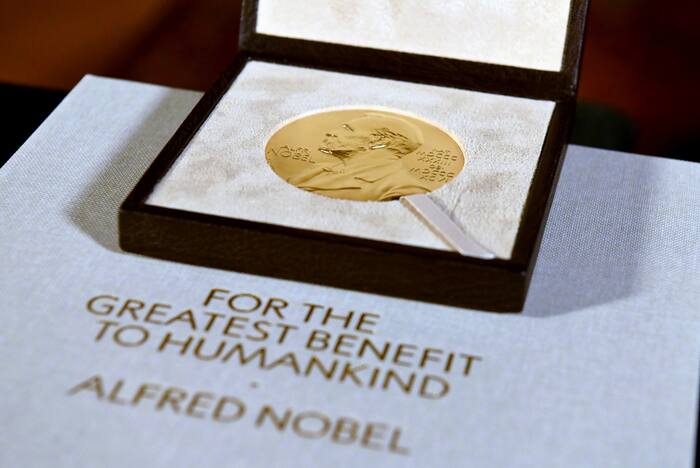
You might wonder why subatomic particles buried under Antarctic ice deserve a global prize worth 12 million Swedish kronor. It is simple. We are entering the era of multi-messenger astronomy.
For centuries, humanity was blind to most of what happens in deep space. Telescopes gave us pictures, but neutrinos give us physics. By tracking the trajectories of these ghost particles backward, scientists can pinpoint supermassive black holes, active galactic nuclei, and cataclysmic stellar explosions with absolute precision.
Halzen spent decades pushing through funding hurdles, technical roadblocks, and institutional skepticism. He didn't chase easy papers or incremental updates. He built a kilometer-scale detector in the most hostile environment on Earth and waited for the universe to speak to him.
The Nobel committee in Stockholm made the right call. Francis Halzen proved that sometimes, you have to look where nobody else is looking to see the entire picture.