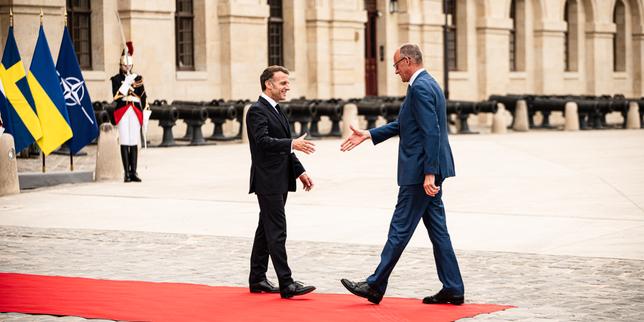
The smiling photo-ops in the historic rooms of Augustusburg Castle in Brühl can't hide the reality. When Emmanuel Macron and Germany's new Chancellor, Friedrich Merz, met for the 26th Franco-German Council of Ministers, the elephant in the room wasn't just big. It was terminal.
On June 8, 2026, the two leaders officially pulled the plug on the Future Combat Air System (SCAF), the highly anticipated sixth-generation fighter jet program launched in 2017. Nine years of negotiation, industrial posturing, and political bickering ended without a single prototype leaving the ground.
Now, the two nations are trying to salvage what's left of their defense partnership. But let's be honest. The collapse of SCAF isn't just a temporary setback. It's the end of a grand illusion. The idea that Paris and Berlin can build a unified European defense industry is dead.
Here is what really happened behind the closed doors in Brühl, why the alliance failed, and what this strategic divorce means for the future of European security.
The Illusion of Coexistence at Brühl
For decades, the Franco-German engine drove European integration. In defense, this took the form of massive joint projects. Yet, the summit in North Rhine-Westphalia felt more like a highly orchestrated damage-control campaign than a celebration of unity.
The primary goal in Brühl was to show that the defense partnership isn't completely dead. The leaders signed joint roadmaps, pledged deeper cooperation in cyber defense, and discussed the possibility of a European nuclear shield.
But these announcements feel like a thin coat of paint on a cracked foundation.
While Macron and Merz talked about "common strategic interests," their actions told a different story. Germany is rapidly building its own military path, fueled by a massively expanded defense budget. Paris, struggling with severe fiscal constraints, watches with growing anxiety as its traditional leadership in European defense slips away.
Why SCAF Was Doomed from the Start
To understand why SCAF failed, you have to look past the political speeches and examine the deep structural differences between France and Germany. The program didn't fail because of technical challenges. It failed because the two countries have irreconcilable military doctrines and economic goals.
1. The Fight Over Intellectual Property
From day one, French industrial champion Dassault Aviation and Germany's Airbus Defense fought bitterly over who would control the critical technologies. France wanted to protect its domestic aviation industry and keep its proprietary design secrets. Germany insisted on full technology transfers, arguing that if German taxpayers were footed with half the bill, German companies deserved equal access to the intellectual property. It was a classic stalemate.
2. Irreconcilable Military Doctrines
France designs its fighter jets with a specific mission in mind. It needs carrier-capable aircraft that can perform long-range nuclear strike missions to support its independent nuclear deterrent. Germany has no aircraft carriers and relies on the NATO nuclear sharing agreement, which uses American-made bombs designed for American jets. These differing operational requirements meant the two nations were essentially trying to build two completely different aircraft under a single name.
3. The Export Paradox
France relies heavily on arms exports to sustain its defense industrial base. When Paris builds a military asset, it expects to sell it to buyers in the Middle East, Asia, and beyond. Germany, however, has highly restrictive arms export laws. Paris feared that German political shifts could veto future export contracts, strangling the program's profitability.
The Shift in Financial Power
The balance of power between Paris and Berlin has fundamentally changed.
For years, France was the undisputed military heavyweight of continental Europe, while Germany focused on economic power. That era is over. Berlin is now on track to spend three times as much as France on defense annually.
Defense Spending Trajectory (Projected Annual Budgets)
======================================================
Germany:  ~€100 Billion+ (including Zeitenwende funds)
France:   ~€47 Billion
This massive influx of German cash has changed the dynamic. A partner with superior financial resources has little reason to accept French industrial leadership.
Instead of waiting for slow joint programs, Germany is using its financial muscle to buy off-the-shelf solutions and develop national technologies. Immediately after the SCAF project ended, Airbus announced a €10 billion national consortium with OHB and Rheinmetall to develop a sovereign military communications network. This "Combat Cloud" system essentially mimics the core digital architecture that was supposed to be built under SCAF.
The Domino Effect on Other Joint Projects
SCAF is not an isolated failure. It's the loudest collapse in a series of falling dominoes.
The Main Ground Combat System (MGCS), the joint project to build a next-generation battle tank, is also showing severe signs of strain. Just like SCAF, MGCS is bogged down by industrial infighting between French firm KNDS (Nexter) and German giants Rheinmetall and Krauss-Maffei Wegmann.
Other key collaborative projects have already been quietly abandoned or scaled back:
- Tiger Helicopter Upgrade (Mark 3): Effectively scrapped after Germany refused to participate.
- Maritime Airborne Warfare System (MAWS): The joint maritime patrol aircraft program was derailed when Germany decided to purchase American P-8A Poseidon aircraft instead.
- Eurodrone: Suffering from major delays and soaring costs, leaving both nations lagging behind global competitors.
What Happens Next?
The death of SCAF doesn't mean France and Germany will stop talking, but it does mean they are going their separate ways on critical capabilities.
For Germany, the immediate path is clear. Berlin is extending the operational life of its Eurofighter Typhoon fleet. Airbus recently completed the maiden flight of the new "Tranche 4" Eurofighter standard in Manching, Bavaria, signaling that Germany is doubling down on existing platforms rather than waiting for futuristic joint designs. Furthermore, Germany's purchase of American F-35 stealth fighters ensures its immediate operational needs are met.
For France, the future is centered entirely on the Rafale. Dassault Aviation will focus its energy on developing the Rafale F5 standard, equipping it with loyal wingman combat drones to keep the platform relevant deep into the 2030s and 2040s.
The Path Forward for European Defense
Instead of chasing unrealistic, top-down mega-projects, European nations should focus on practical next steps:
- Prioritize Interoperability Over Integration: Stop trying to build the exact same hardware. Instead, focus on making sure French Rafales, German Eurofighters, and American F-35s can seamlessly share data and communicate on the battlefield.
- Support Smaller, Agile Consortia: Smaller groupings of two or three countries with aligned military doctrines are far more likely to succeed than massive, politically mandated industrial partnerships.
- Decouple Tech Development From National Pride: Accept that sometimes buying off-the-shelf equipment from allies is faster, cheaper, and more effective than spending a decade arguing over who gets to manufacture the wings of a jet.
The Brühl summit showed that while the political language of cooperation remains, the practical reality of joint military procurement is dead. Accepting this divorce is the first step toward building a realistic, functional defense strategy for Europe.