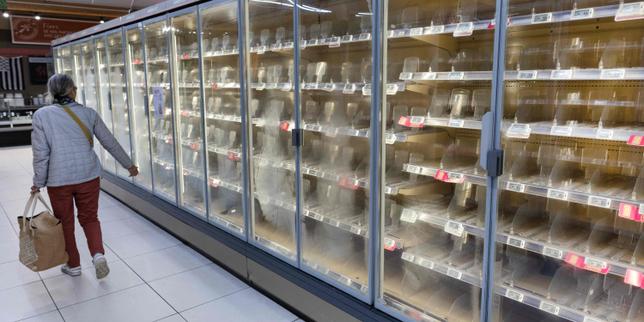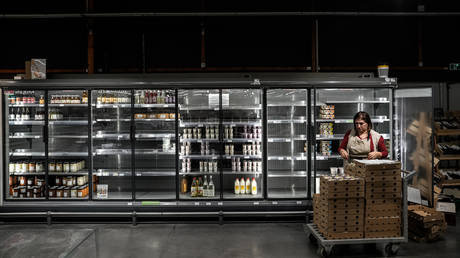
When thousands of commercial refrigerators across Europe suddenly spiked to over fifty degrees Celsius, retail executives initially thought it was a massive equipment failure. They were wrong. It was a digital assault that melted tons of fresh food, triggered property fires, and exposed the fragile underbelly of our modern supply chain.
French authorities didn't mince words when they pointed the finger. Paris officially blamed Iran's Islamic Revolutionary Guard Corps (IRGC)—specifically a cyberwarfare unit known as Shahid Kaveh—for orchestrating the unprecedented cold-chain attack. While political analysts debate the geopolitical fallout, a more troubling reality remains: basic internet-connected appliances are becoming the easiest weapons of choice in modern state-sponsored conflicts.
How a Simple IoT Oversight Brought Down European Retail Giants
If you imagine high-stakes cyber warfare as a scene out of a Hollywood movie with complex encryption breaking and neon green code, reality is far more mundane. The grocery store hacks didn't rely on bleeding-edge quantum computing. Instead, they exploited laziness and poor configuration.
Major retail chains including Carrefour, Intermarché, and Monoprix rely on industrial refrigeration controllers built by manufacturers like Danfoss. To make maintenance easier, contractors often hook these systems up to remote management web servers accessible via the public internet. Many of them were left running with default credentials—such as "admin" for a username and the current date or simple digits for a password.
Attackers didn't need to break down the front door because it was left wide open. Once inside the network, they bypassed standard safety lockouts and forced commercial display cases and freezers into high-temperature defrost cycles. Millions of euros worth of inventory spoiled overnight, forcing supermarkets to discard massive quantities of meat, dairy, and produce while dealing with localized equipment meltdowns and smoke damage.
The Real Motive Behind Targeting Grocery Aisles
Why would a state-backed military cyber unit target supermarket cooling units instead of banks or power grids? The answer lies in psychological impact and asymmetrical warfare.
Hitting financial institutions triggers immediate defensive safeguards and automated shutdowns. Striking critical infrastructure like power grids risks escalating into a hot military conflict. But tampering with everyday grocery stores? That hits citizens directly where they live. It creates instant panic, disrupts daily life, and undermines public trust in government stability without crossing the threshold into kinetic warfare.
This incident fits a broader pattern of Iranian cyber operations designed to project power and signal political displeasure
Why French Supermarkets Just Became the Front Line of Modern Cyber Warfare
technology, news
When intelligence agencies start pointing fingers at foreign actors over commercial refrigeration units, you know the boundaries of modern conflict have completely shifted.
Paris recently dropped a heavy accusation at Tehran, claiming Iranian state-linked hackers targeted the digital infrastructure running industrial supermarket fridges across France. It sounds bizarre on the surface. Why would a nation-state risk an international diplomatic crisis over yogurt and frozen vegetables?
The truth is stark. Modern statecraft doesn't just target power grids and military installations anymore. Every connected device is a potential weapon, a pressure point, or a back door.
The Anatomy of the Attack
Modern retail relies on complex Internet of Things networks. Walk into any major hypermarket in Europe, and you'll find thousands of smart sensors monitoring temperature, humidity, energy consumption, and automated logistics. These systems are rarely bolted down with military-grade security. They run on standard commercial firmware, often managed by third-party vendors who prioritize convenience over containment.
Intelligence reports indicate that the intrusion vectors weren't exotic zero-day exploits crafted in secret labs. They were standard credential stuffing and outdated software exploits targeting the supervisory control and data acquisition layers of these commercial cooling units.
Attackers don't need to break into the main mainframe when the back door through the local grocery store's temperature controller is left unlocked. Once inside a retail network, lateral movement becomes terrifyingly easy.
Why Retail Supply Chains Make Prime Targets
Targeting grocery store refrigeration isn't about ruining food supplies on a massive scale, though that physical disruption is a terrifying side effect. It is about psychological pressure and economic friction.
When supply chains stutter, public anxiety spikes. A nation that cannot guarantee the stability of basic food distribution looks vulnerable from the inside out.
State-backed threat actors look for asymmetrical leverage. Striking direct military targets invites devastating kinetic or high-level cyber retaliation. Hacking supermarket infrastructure sits in the gray zone. It causes real economic pain, grabs headlines, and forces an adversary to spend millions hardening civilian infrastructure, all while maintaining plausible deniability.
You're seeing a fundamental evolution in how geopolitical friction manifests. Physical borders mean nothing when your heating, ventilation, and air conditioning management system connects to a cloud server hosted three continents away.
The Blind Spots in Corporate Defense
Most retail chains operate on razor-thin margins. Cybersecurity spending often ranks well below inventory management and logistics optimization.
When chief information security officers audit their estates, they focus on point-of-sale terminals, customer databases, and corporate email servers. They forget about the smart HVAC systems, the automated loading dock doors, and the connected refrigeration compressors sitting quietly in the basement.
Hackers know this. They map the perimeter, find the weakest IoT node, and camp out inside the network for months. They map out dependencies. They test how deep their access goes.
France pointing the finger at Iran marks a turning point in public attribution. Governments are tired of sweeping these hybrid attacks under the rug. By dragging these incidents into the open, Paris is forcing a conversation about third-party vendor risk that retail executives have avoided for a decade.
What Needs to Change Right Now
If you run a business with physical infrastructure connected to the internet, you need to rethink your threat model today.
Stop trusting your vendors blindly. Demand end-to-end visibility into every smart device plugged into your network.
Segment your operational technology from your corporate IT network immediately. A compromised smart fridge should never share a local network path with financial databases or administrative domains.
Implement strict multi-factor authentication for remote maintenance access. Most of these breaches happen because a third-party technician used a weak password on a remote desktop gateway.
The digital cold war isn't happening in abstract server rooms. It's happening inside the infrastructure that keeps our daily lives running. Treat your thermostat and your cooling units like critical assets, or expect someone else to control them for you.