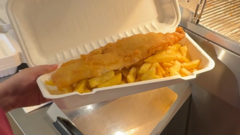
Go to your local chippy today, and you'll likely face a serious bout of sticker shock. The days of grabbing a massive, steaming portion of fish and chips with a side of mushy peas for a fiver are long gone. It's a brutal reality for British takeaway fans. What used to be the ultimate working-class comfort food has quietly transformed into a luxury dining experience.
If you feel like you're being ripped off, you aren't imagining things. The data backs you up completely.
According to official figures from the Office for National Statistics (ONS), the average price of a portion of fish and chips recently climbed to £11.17. Compare that to just a year prior when it was £10.28, or back in 2019 when you could get the exact same meal for £6.48. That's a near-doubling of the price in just a few years. When a casual Friday night dinner starts pushing toward London restaurant prices, something is fundamentally broken in the supply chain.
Chippy owners aren't suddenly getting greedy and buying sports cars. They're drowning. They're trapped between sky-high wholesale costs and customers who are already stretched to their absolute limits. If they don't raise prices, they shut down. It's that simple.
The Insane Surge in Fish Prices
The single biggest driver behind your expensive takeaway box is the white fish itself. Cod and haddock have become staggeringly expensive.
Take a look at what's happening behind the counter. Shop owners report that a standard 45-pound (20kg) box of cod, which cost around £110 in late 2024, ballooned to an unbelievable £330 just a few months later in early 2025. You can't absorb a 200% spike in your primary ingredient without passing that pain onto the consumer. ONS data tracks the average cost of fresh and chilled white fish—including cod, haddock, hake, and pollock—surging by 22% in a single year, climbing from £21.06 to £25.73 per kilo.
Why is the fish so expensive? It's a perfect storm of environmental crises and global politics.
Geopolitical conflicts have fractured traditional fishing routes and trade agreements, driving up the cost of importing fuel and goods. At the same time, we're facing a catastrophic ecological reality. Cod populations have been in a steady, worrying decline for a decade. Warmer sea temperatures caused by climate change are forcing fish populations to migrate north, completely disrupting traditional British fishing grounds. Overfishing has made things worse.
The International Council for the Exploration of the Sea (ICES), an independent body advising governments on marine management, issued a stark warning. They found cod populations in British waters so depleted that they recommended a complete halt on catches in certain areas to let the species recover. Less fish in the sea means less fish on the market, and basic economics dictates exactly what happens next. Prices skyrocket.
Energy and Potatoes Are Fueling the Fire
You can't fry fish without two crucial elements: an enormous amount of power and a massive pile of spuds. Both are costing small businesses a fortune right now.
Running commercial deep fryers requires serious energy. Ever since the global energy markets fractured due to international conflicts, keeping the gas and electricity running has been a financial nightmare for small high-street shops. While domestic energy price caps get plenty of news coverage, commercial businesses don't get the same safety nets. A local chippy faces commercial rates that can wipe out a week's profit in a matter of days.
Then there are the potatoes. You'd think a humble spud would be safe, but UK agriculture has taken a massive beating. Extreme weather patterns have broken the farming sector. Recent intense summer heatwaves and unpredictable winter flooding have ruined crops across the country.
When fields are waterlogged, tractors can't plant. When a heatwave bakes the soil solid, the potatoes don't grow to the right size. This has created a severe shortage of high-quality chipping potatoes. It's not just the chips either. Even your side dishes are at risk. Recent agricultural shocks have sparked warnings of severe shortages for mushy peas, sending the cost of those tiny green sides up along with everything else. From the oil in the fryer to the paper wrapping the food, every single line item on a chippy’s balance sheet has changed for the worse.
The End of the Traditional Menu
The reality is clear. The classic British chip shop as we know it has to evolve or die.
Many owners realize they can no longer rely solely on cod and haddock if they want to survive. We're starting to see a massive shift in what gets put on the menu. Smart operators are diversifying. They're introducing cheaper, more sustainable white fish alternatives to keep prices manageable for the average family.
Andrew Arnold, who runs Railway Street Fisheries in Pocklington, openly warned that the traditional setup is going to vanish if shops don't adapt. His strategy involves introducing Norwegian pollock to the menu. By selling pollock at around £10.50, he can still turn a reasonable profit while offering customers a break from £12 or £13 cod portions.
As a consumer, your mindset has to shift. Pollock, hake, and coley flake beautifully, fry up perfectly crisp, and taste incredible. Holding onto the idea that it must be cod is only going to drain your wallet faster.
How to Save Your Chippy Tea Night
You don't have to give up on your favorite comfort food entirely. You just need to change how you order and how you support your local business.
First, ditch the delivery apps. Using third-party apps like Deliveroo, Uber Eats, or Just Eat adds a massive premium to your meal. These platforms charge the shop hefty commissions, forcing them to inflate their app menus even higher than their in-shop prices. On top of that, you pay delivery fees and service charges. Walking down to the shop and ordering directly at the counter saves you money immediately and ensures 100% of your cash goes straight to the independent business.
Second, think about portion sizes. The average chippy portion of chips is notoriously massive. It's usually enough to feed two or three people easily. Instead of ordering individual fish and chips for every single family member, buy a couple of large fish and share a single large portion of chips. It cuts down on food waste and slashes your total bill significantly.
Finally, give the alternative fish options a chance. If your local shop offers pollock, hake, or plaice at a lower price point, order it. It tastes just as good under a layer of crispy batter, salt, and vinegar, and it keeps demand balanced so shops can survive. Our oceans are changing, global trade is messy, and the climate is forcing our hand. Adapting what we eat is the only way to keep the great British chippy alive.