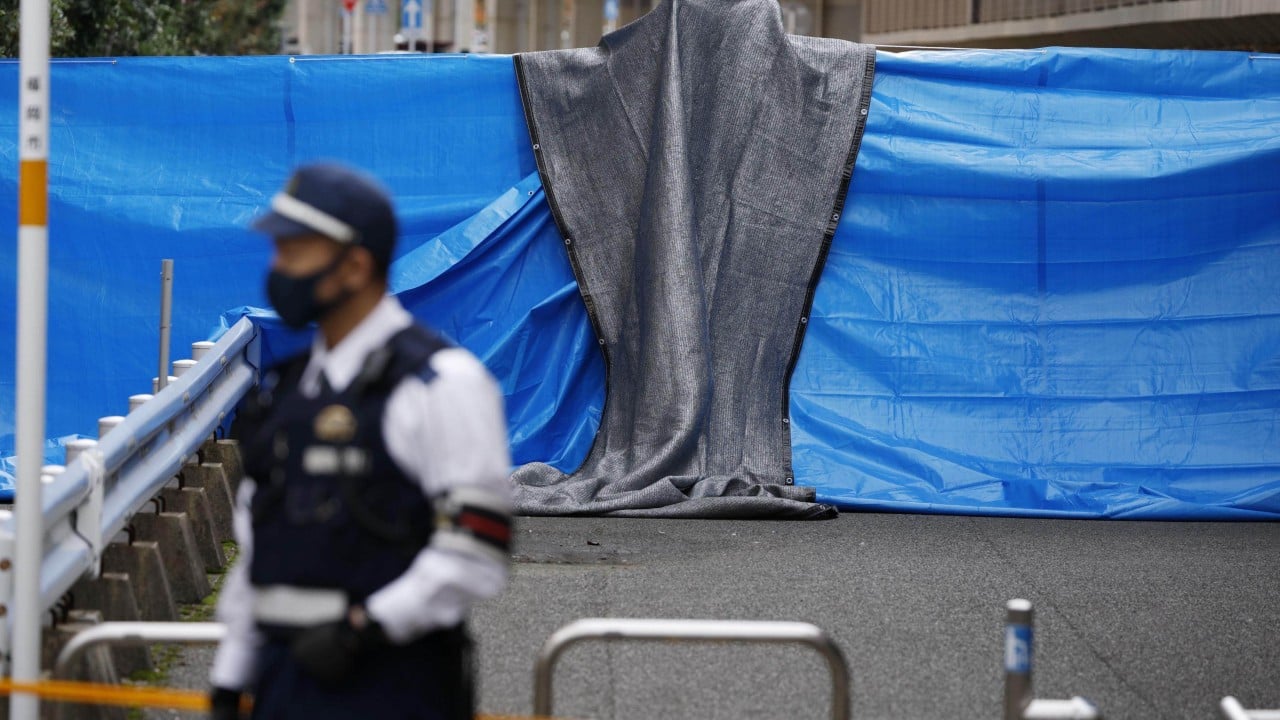
Hundreds evacuated from a Japanese mall on November 25, 2026, after a 70-year-old bicycle parking attendant was fatally stabbed in Fukuoka's Nishi Ward. Emergency calls came in just after 12:30 p.m. local time near Aeon Mall Fukuoka Ito. Shoppers poured out of the building while police hunted for a suspect believed to have fled carrying a blade-like weapon.
It rattled people fast. In a country famous for quiet streets and low violent crime, a midday attack right next to a busy shopping hub feels like a glitch in the matrix.
Why a Parking Lot Stabbing Triggered a Full Mall Evacuation
Evacuating hundreds of shoppers over a stabbing outside the main doors sounds dramatic. Honestly, from a crowd-safety standpoint, it makes total sense.
Local reports from Fukuoka broadcasters and wire services indicate the victim was 70-year-old Yoshiaki Ishikawa, who worked at the bicycle parking facility near the commercial complex. He was rushed to a hospital after being stabbed and was pronounced dead. Early police descriptions pointed to a man roughly 170 centimeters tall wearing a brown cardigan, dark trousers, and black and white sneakers, with initial reporting suggesting he may have moved through or near the mall area after the attack. Later reports noted police arrested a 49-year-old Fukuoka resident roughly 20 kilometers away in connection with investigation developments, while customer entry resumed before 3 p.m.
When a blade-armed suspect isn't yet cornered near a high-footfall building, mall operators don't wait for confirmation. You clear the floor first and sort out the details second.
In my experience reviewing commercial building emergency plans, the hardest part of an evacuation isn't unlocking doors. It's getting ordinary people to stop grabbing bags, finish a meal, or linger near glass storefronts when they don't see smoke or flames. Fire alarms train people to walk out. A violent incident outside creates confusion because there's no obvious hazard inside the aisle.
The Gap Between Japan's Crime Stats and Public Anxiety
Here's the paradox that trips up a lot of outside observers. Japan remains far safer on paper than most major economies, yet anxiety about public safety has climbed sharply.
According to a National Police Agency survey reported by The Japan Times, 79.7% of respondents said public safety had worsened over the past decade. Earlier National Police Agency crime reporting also showed a gap between low overall violent offense rates and widespread worry over random attacks, fraud, and personal security.
Why does fear spike when statistics stay relatively low? Because human risk perception runs on vividness, not averages.
- Broad daylight breaks expectations: People expect trouble late at night in rough districts, not at lunchtime beside a family mall and bicycle parking lot.
- Soft-target visibility: Malls, stations, and commuter parking areas mix elderly workers, parents, students, and tourists in open spaces with lots of entry and exit points.
- Fast-moving rumors: Once an evacuation order hits social media and messaging apps, unverified details spread quicker than official police updates.
That doesn't mean Japan is suddenly lawless. It isn't. According to U.S. Department of State country security reporting, violent crime targeting passersby remains uncommon compared to global averages. Still, pretending public anxiety doesn't exist misses half the story. When hundreds of shoppers get ushered outside during a manhunt, the emotional impact lingers long after the doors reopen.
What Malls and Commuters Get Wrong During Sudden Threats
Most retail safety drills focus on earthquakes and fires. Japan does earthquake preparedness better than almost anywhere else, and staff know how to guide crowds away from falling fixtures or fire hazards.
Sudden violence outside a perimeter is trickier. Security guards at retail centers are usually trained to deter shoplifting, handle medical fainting, or de-escalate minor disputes—not confront an armed assailant. Pushing unarmed guards into a tactical confrontation is a bad idea. Clearing the building and feeding accurate sightlines to responding police is the right call.
Common mistakes I see shoppers and commuters make during sudden evacuations include:
- Stopping at the threshold to look: Standing near glass entrances or escalators to film or watch police activity puts you right in a chaotic zone if a suspect doubles back or vehicles rush in.
- Splitting up without a meetup spot: Families and friends get separated fast when store shutters drop or staff redirect foot traffic toward side exits.
- Relying on one exit route: People naturally head back toward the entrance they used, even when staff or police are steering crowds in the opposite direction.
If you're ever caught in a mall or station evacuation, keep moving past the immediate perimeter. Put solid walls or distance between you and the reported incident area, and check official alerts rather than chasing every rumor online.
Practical Next Steps When You're Out in Public
You don't need to live in paranoia to stay sharp. A few simple habits take ten seconds and actually help if a place suddenly clears out.
- Notice two exits when you walk in: Check where the nearest side or rear exit is, not just the main doors you entered through.
- Pick a clear landmark outside: Tell anyone with you where to meet if separated—say, a specific corner across the street or a transit plaza well clear of the building.
- Follow staff and police instructions right away: When mall employees tell you to leave, walk out calmly without stopping to pack up trays or shopping bags.
- Know local emergency numbers: In Japan, dial 110 for police or 119 for fire and ambulance, and save local municipal or embassy advisories if you're visiting.