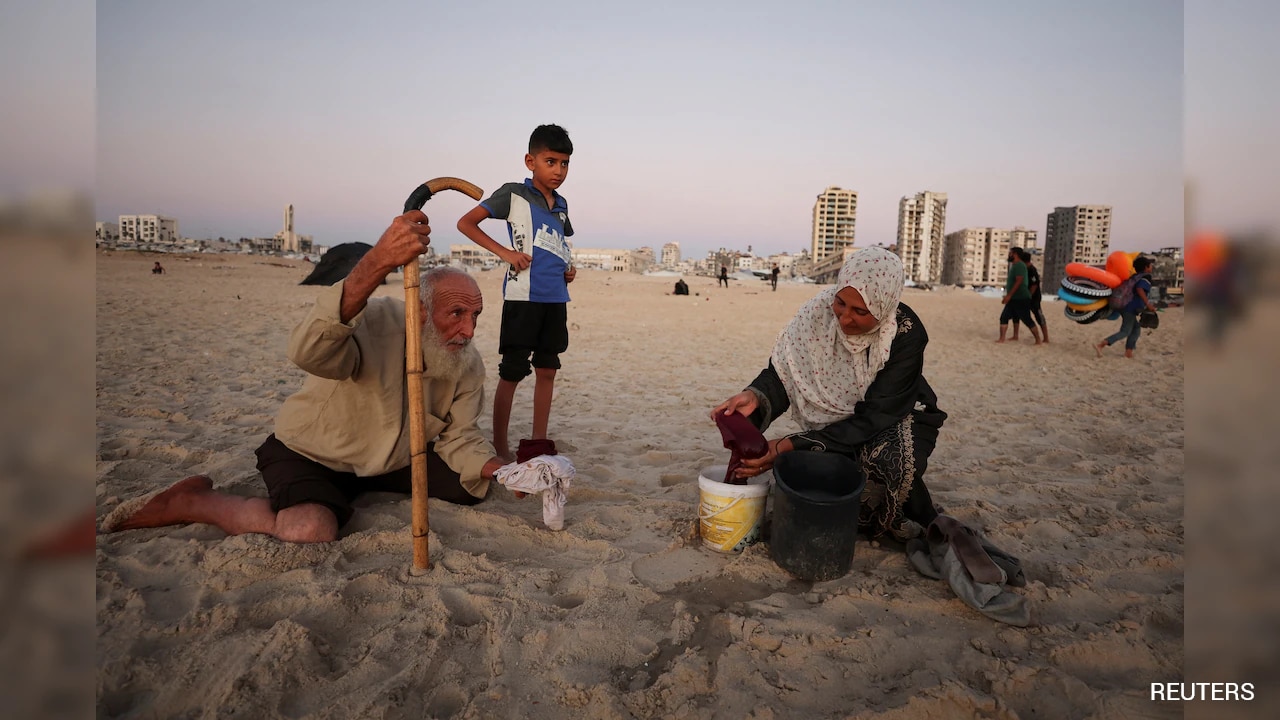
In the early morning darkness along Gaza's coastline, mothers walk for miles carrying plastic jerrycans before their children even wake up. They aren't looking for luxury or comfort. They just want a few liters of water that won't make their kids sick.
What used to be a basic chore has turned into a desperate daily struggle for survival. The Gaza water crisis has reached a breaking point where the total breakdown of clean water supply is now driving a secondary, catastrophic health emergency across displaced camps. When families can't wash their hands, cook clean food, or find safe drinking water, disease spreads faster than medicine can keep up.
Getting water isn't just difficult right now. It's an exhausting, multi-hour gamble that dictates whether a family survives the week without severe gastrointestinal infections, severe dehydration, or rampant skin conditions.
How the Fight for Clean Water Collapsed Into Chaos
Before the current destruction of civil infrastructure, Gaza’s municipal water network was already under heavy strain. However, the system still delivered piped water, operated local desalination units, and kept wastewater treatment facilities functional.
Today, that infrastructure lies in ruins. Centralized pumping stations lack fuel to run generators. High-voltage power lines that once powered main desalination plants remain disconnected or damaged. Pipelines running beneath streets have been crushed under debris.
That leaves over two million people relying on makeshift distribution methods. Families queue for four to six hours behind battered water trucks. These trucks haul whatever water they can source from private wells or small, temporary desalination units.
The math is brutal. World Health Organization guidelines state that a person needs a absolute minimum of 15 liters of water per day for basic drinking, cooking, and personal hygiene. In emergencies, 7.5 liters is considered the bare survival line. Right now, hundreds of thousands of displaced Palestinians in Gaza are trying to survive on less than 2 to 3 liters per day.
That tiny allocation has to cover everything. Drink. Cook. Wash. Clean. It simply isn't enough.
The Hidden Danger in the Water Trucks
When you're dying of thirst in summer heat exceeding 90 degrees Fahrenheit, you don't ask many questions about water purity. You take whatever fills your jug.
That's where the danger multiplies. Much of the ground water drawn from local agricultural wells in Gaza is heavily saline or contaminated with agricultural runoff and untreated sewage. When desalination units lack power or proper filtration membranes, water trucks end up carrying partially treated or completely raw water to displaced camps.
Containers create another layer of risk. Families use old fuel jugs, detergent bottles, or unsterilized plastic drums to store their haul. Without soap or boiling water, those containers quickly become breeding grounds for bacteria.
You can't sanitize a plastic jug when you don't have fuel to boil water or clean rags to scrub the interior. The water starts contaminated at the pump, gets contaminated further during transport, and sits degrading in hot tents all afternoon.
Disease Is Spreading Faster Than Local Clinics Can Handle
Healthcare workers on the ground face a wave of preventable illnesses that all stem from bad sanitation and polluted water. Clinics report soaring rates of waterborne pathogens and skin conditions that were once easily controlled.
Acute Diarrheal Illnesses and Dehydration
Children are taking the heaviest blow. Severe watery diarrhea linked to strains of E. coli and salmonella has become widespread in crowded coastal camps. For an infant or young child, a few days of diarrhea in intense summer heat without oral rehydration salts can be fatal. Doctors in overwhelmed field hospitals find themselves treating severe dehydration with dwindling supplies of intravenous fluids.
Hepatitis A Outbreaks
Overcrowded conditions combined with sewage overflow have created ideal conditions for Hepatitis A transmission. The virus spreads primarily through the fecal-oral route, usually when unwashed hands handle food or when drinking water contacts human waste. Without functioning latrines or running water for basic handwashing, breaking the chain of transmission becomes nearly impossible.
Severe Skin Infections and Parasites
Scabies, lice, and chronic bacterial skin infections like impetigo are exploding across tent cities. When families don't have enough water to wash clothes or bathe for weeks at a time, skin conditions spread like wildfire among children playing in dirt paths. Scraping itchy skin leads to open sores, which then get infected with staph or strep due to dirty living conditions.
What It Takes to Fetch Water Every Single Morning
To understand why people are collapsing from exhaustion, look at the physical toll of fetching water in Gaza right now.
- Pre-dawn Reconnaissance: Women and older children wake up around 4:00 AM to scout which water trucks or filling stations might operate that day.
- Hours in Line: Displaced residents line up shoulder-to-shoulder under direct sun, holding yellow and blue plastic cans. Arguments break out frequently as supplies run low.
- The Heavy Haul Back: A single full 20-liter jug weighs about 44 pounds. Carrying two of those jugs across uneven sand or rubble for miles causes severe back injuries, joint strain, and exhaustion, especially for malnourished mothers and young kids.
- Rationing the Drop: Back at the tent, every single cup is counted. Cooking takes priority. Drinking comes second. Washing skin or clothes falls to the very bottom of the list.
It's a relentless grind that drains physical strength and mental health. Mothers spend every waking hour worrying whether tomorrow's water truck will show up at all.
The Broader Environmental Breakdown
The lack of drinking water isn't happening in a vacuum. It's tightly linked to the complete collapse of waste management across the Gaza Strip.
Without electricity, sewage treatment plants have ceased operation. Raw sewage flows freely through streets and between tents in lower-elevation camps, eventually seeping directly into shallow coastal aquifers. That creates a toxic loop. The shallow groundwater people draw from wells gets further polluted by the unmanaged wastewater overflowing right above it.
Trash collection has also halted in most sectors. Solid waste piles up near residential areas and temporary shelters, attracting flies, mosquitoes, and rodents that vector pathogens directly to stored water and uncovered food.
International aid agencies keep warning that without immediate fuel deliveries for municipal pumps and water treatment equipment, public health will degrade even further. Medical supplies can treat sick patients, but they don't fix the underlying cause. Antibiotics won't stop cholera or dysentery if people keep drinking contaminated water every single day.
How Local Communities and Aid Organizations Are Trying to Adapt
People aren't sitting idle while their families suffer. Displaced communities and international non-profits are using grassroots methods to salvage what clean water they can find.
- Solar-Powered Micro-Desalination: Aid groups have started deploying small, portable solar panels to power micro-desalination units near coastal areas, bypassing the destroyed electrical grid.
- Aquatabs and Water Purification Packets: Distributing chlorine tablets directly to families helps disinfect stored water in plastic jugs, lowering bacterial loads even when the source water is questionable.
- Community Water Committees: Camp leaders organize strict queuing systems to ensure elderly residents, pregnant women, and injured individuals get access without having to fight through dense crowds.
- Makeshift Sand Filters: Some families pass turbid well water through layers of fine sand, gravel, and crushed charcoal to remove heavy sediment before attempting to treat it with chlorine.
These measures offer a lifeline, but they're small-scale fixes for a systemic disaster. They buy days, not months.
Practical Steps Aid Workers and Observers Must Focus On
Solving this crisis requires moving beyond temporary aid hand-outs and tackling basic operational infrastructure.
Priority one is securing guaranteed, continuous fuel shipments explicitly designated for municipal water pumping and sewage extraction. Without fuel, even undamaged treatment facilities remain totally useless.
Priority two is distributing clean, food-grade water containers equipped with tight lids and tap spouts. Preventing recontamination inside the tent is just as vital as treating water at the wellhead.
Priority three is expanding the rollout of mobile solar-powered water purification rigs that can operate independent of centralized power grids or diesel supply chains.
The water crisis in Gaza isn't just about thirst. It's a massive, unfolding health disaster that threatens to claim as many lives through disease and dehydration as direct warfare. Restoring clean, reliable water access remains the single most urgent task to prevent a complete public health collapse.