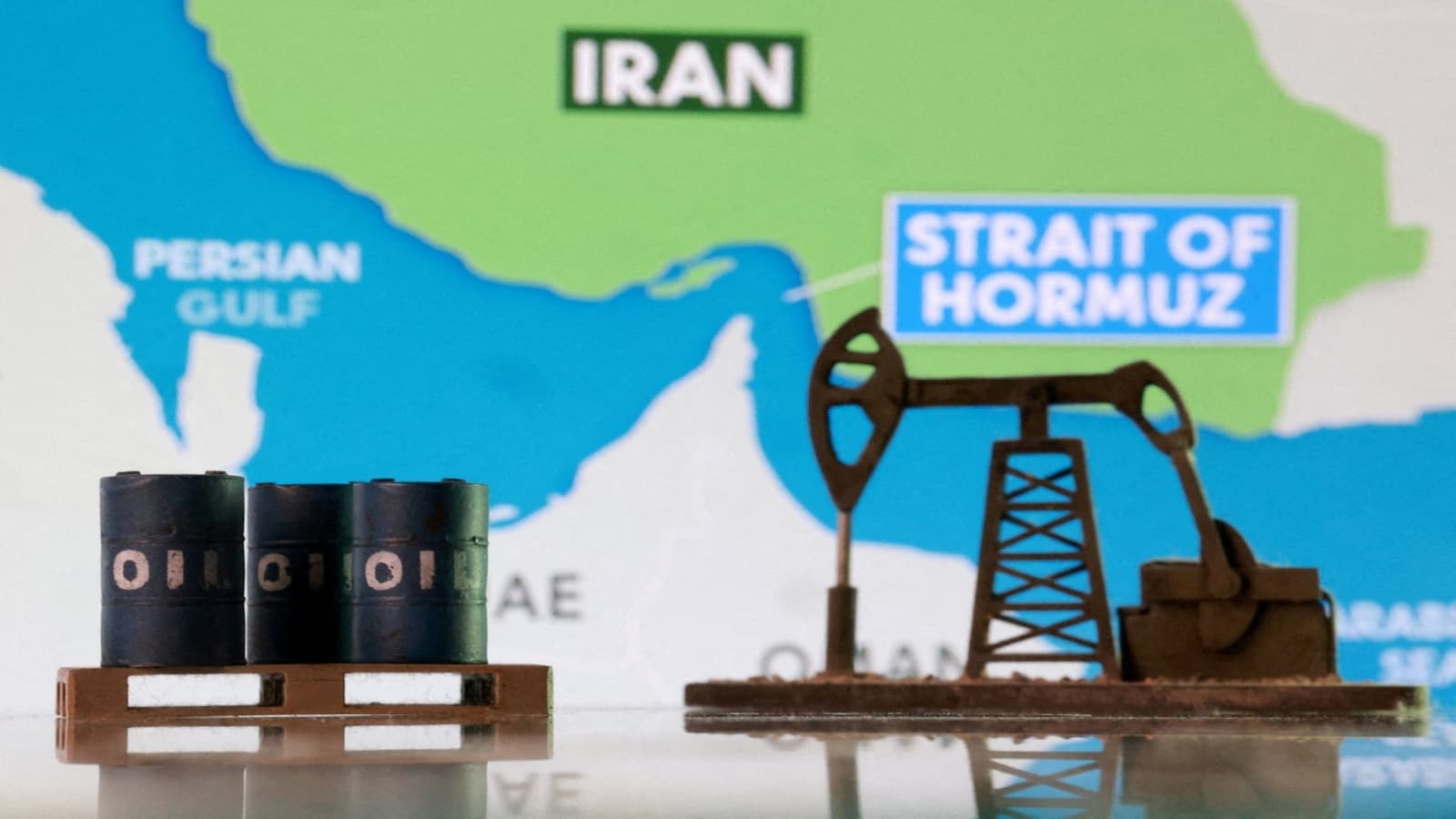
Conventional wisdom says that when tankers catch fire in the Strait of Hormuz, oil prices should rocket past $100 a barrel. It's the ultimate geopolitical trigger. One-fifth of the world's petroleum flows through this narrow choke point between Oman and Iran. Yet, despite fresh projectile strikes and disrupted shipping lanes, the global market is shrugging it off.
Brent crude is hovering around $71 to $74 a barrel. That is down dramatically from the $126 peak seen in late April during the height of the US-Iran hostilities. For anyone trading energy or tracking the global economy, this disconnect is baffling. Why is the market ignoring real, physical danger to the world's most critical oil highway? If you enjoyed this article, you should look at: this related article.
The short answer is that the underlying mechanics of global supply and demand have fundamentally shifted. Traders are looking past the scary headlines and focusing on hard data. Here is exactly why the fear premium has evaporated and what it means for the rest of the year.
The US Iran Truce Holds the Line
Geopolitical shocks only sustain high prices if investors believe a permanent supply outage is coming. Right now, nobody believes that. The mid-June memorandum of understanding between the United States and Iran fundamentally rewrote the risk calculations. For another angle on this development, refer to the recent update from The Motley Fool.
Even though sporadic rogue attacks continue to hit cargo vessels near the Omani coast, both Washington and Tehran have massive incentives to keep the truce alive. Wall Street banks like Citi emphasize that neither side wants to return to open confrontation. The political backdrop is moving toward stabilization.
Because of this diplomatic floor, ship traffic through the strait is recovering at a blistering pace. Vessel traffic has already bounced back to 70% of its pre-war levels. Oil flows through the passage are hitting roughly 75% of normal capacity. The market recognizes that intermittent security incidents are a far cry from a total blockade.
Western Safeguards and Global Stockpiles Are Plentiful
Another reason the market feels insulated is the sheer volume of oil sitting in storage. You can't trigger a panic-driven shortage when the world is swimming in emergency reserves.
Governments have spent the first half of the year executing massive inventory releases to blunt the impact of Middle Eastern disruptions. The International Energy Agency notes that global oil inventories sat at a comfortable 7.9 billion barrels heading into the summer. On top of that, a coordinated 400 million barrel drawdown plan has insulated western economies from sudden shocks. Nearly two-thirds of that emergency supply hit the market by mid-June.
When a tanker gets hit today, traders don't panic buy futures. They know commercial onshore facilities and floating storage can seamlessly fill the gap while local infrastructure remains undamaged.
Supply Is Booming Outside the Middle East
The Middle East no longer holds a monopoly on swing production. While the Gulf spent months untangling its logistics, non-OPEC+ producers stepped on the gas.
Output from Latin America and North America is projected to expand by 1.7 million barrels per day over the coming months. US production alone grew by roughly 500,000 barrels per day to offset Gulf losses. Even Russian oil exports defied expectations, surging by nearly a million barrels per day in late spring.
This geographic diversification means the world has alternatives. If shipping through Hormuz slows down for a few days, barrels from Texas, Brazil, or Guyana are ready to pick up the slack.
The Redirection of Global Shipping Routes
The oil market adapted during the worst months of the conflict, and those adjustments are now permanent fixtures. Energy giants learned how to bypass the Strait of Hormuz altogether.
Saudi Arabia aggressively utilized its East-West pipeline system, moving vast quantities of crude directly to the Red Sea. Meanwhile, the UAE bypassed the choke point entirely by routing production through Fujairah, all while fast-tracking secondary pipeline infrastructure designed to eliminate Hormuz dependency entirely.
When you combine these bypass routes with the fact that many active tankers are simply turning off their AIS transponders to move through the strait undetected, the actual volume of oil hitting the market is much higher than official tracking suggests. The physical shortage simply isn't there.
High Prices Cured High Prices
We can't ignore the demand side of the ledger. When Brent crude flirted with $125 earlier this year, it triggered classic demand destruction.
Expensive fuel crimped economic growth across Europe and Asia. High energy costs trickled into the technology supply chain, forcing consumer electronics giants to hike prices on hardware, which subsequently cooled consumer spending. Global oil consumption dropped by hundreds of thousands of barrels per day as major economies slowed down fuel intake.
Now, the market is facing a structural surplus. The front end of the oil forward curve has slipped into a state known as contango. This means September futures are trading at a higher price than immediate spot crude. Contango is a definitive mathematical signal that the market is oversupplied right now. Buyers have no incentive to bid up spot prices because there is more than enough oil to go around.
Where Prices Head Next
Forget the panic. The structural reality for energy is soft.
- Short-Term Volatility: Expect Brent crude to bounce between $70 and $76 as minor skirmishes and temporary transit pauses pop up in the news. Treat these as noise, not structural shifts.
- The Year-End Bear Case: If the US-Iran truce remains intact and transit volumes finish normalizing by the end of the summer, major institutional analysts expect Brent to drift down to the $60–$65 range by December.
- The Strategic Play: For businesses and investors managing fuel costs, locking in hedges during these minor geopolitical dips is a safer bet than waiting for a massive market crash that might not materialize until winter.
The fear premium is dead. Supply diversification, historic emergency stockpiles, and smart logistical bypasses have effectively neutralized the geopolitical leverage of maritime choke points. The next time a headline screams about trouble in the Gulf, look at the inventory data before you look at the price ticker.