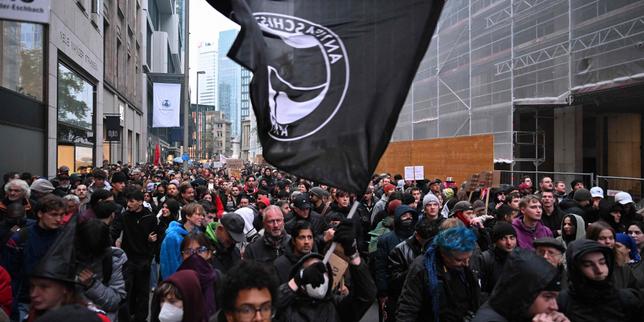
Tens of thousands of students hit the streets across Germany last week, chanting slogans against military service and slamming the government's push for rearmament. Organized under the banner "Gen Z regelt", these mass demonstrations erupted in over thirty cities, showing that today’s youth refuse to be drafted quietly into an era of rising geopolitical tensions.
If you thought young people only cared about TikTok trends and housing costs, recent events in Berlin, Hamburg, and beyond prove you wrong. The return of defense debates in Europe has triggered a massive youth backlash, and the friction between state ambitions and generational values is boiling over. Meanwhile, you can read similar events here: Why North Korean Defectors Think Kim Jong Un Is Grooming His Daughter For Power.
The Breaking Point Behind the Gen Z Protests
The current anger doesn't come out of nowhere. Since January 2026, the German state has implemented a questionnaire system for 18-year-olds to gauge military availability and boost the ranks of the Bundeswehr. While officials frame these measures as defensive necessities in a fragile global climate, students see a direct threat to their futures.
Crowds marched carrying sharp banners, rejecting any return to compulsory service. Organizers mobilized quickly using Telegram, Instagram, and TikTok, turning decentralized digital networks into physical power on the pavement. The grievances go beyond uniforms and barracks. Protesters are tying militarism directly to chronic underfunding in education, skyrocketing rent prices, and deteriorating public infrastructure. To explore the bigger picture, we recommend the recent analysis by The Washington Post.
Young people are asking a blunt question: why should they sacrifice their futures for institutions that have underinvested in their schools and mental health support for decades?
Why Voluntary Quotas Are Fueling Forced Conscription Fears
To understand why teenagers are furious, you have to look at the numbers. When the government introduced new frameworks requiring hundreds of thousands of young adults to fill out mandatory readiness questionnaires, initial recruitment numbers fell drastically short of official expectations. Out of hundreds of thousands of forms sent out, only a tiny fraction of young adults signed up voluntarily.
That massive gap between state goals and actual enlistment has stoked widespread fear. Critics and student groups argue that low voluntary numbers will inevitably push politicians to reinstate full, mandatory conscription.
History shows that once governments set up tracking infrastructure for military readiness, moving from "voluntary" to "mandatory" becomes a politically convenient next step during crises. That's precisely what has put thousands of teenagers on high alert. Rather than waiting for draft notices to arrive in their mailboxes, they're organizing school strikes and street blockades right now.
What This Means for European Politics
Berlin isn't an isolated case. Across Europe, governments are frantically rethinking defense budgets and military readiness in response to shifting global security. But leaders often forget a fundamental political truth: you cannot mandate patriotism from a generation facing economic uncertainty and a housing crisis.
When authorities push for military expansion while ignoring domestic living standards, they create a perfect storm of social unrest. The "Gen Z regelt" movement highlights a deep disconnect between traditional political establishments and the younger demographic expected to bear the brunt of future conflicts.
Dismissing these protesters as naive or uninformed misses the point entirely. They are organizing with sophisticated digital tools, coordinating across multiple cities, and demanding a voice in decisions that alter the trajectory of their lives.
The resistance in German streets proves that the path toward militarization will face fierce, organized pushback. When the state demands service from a generation it has largely ignored, it shouldn't be surprised when the response is a resounding refusal.