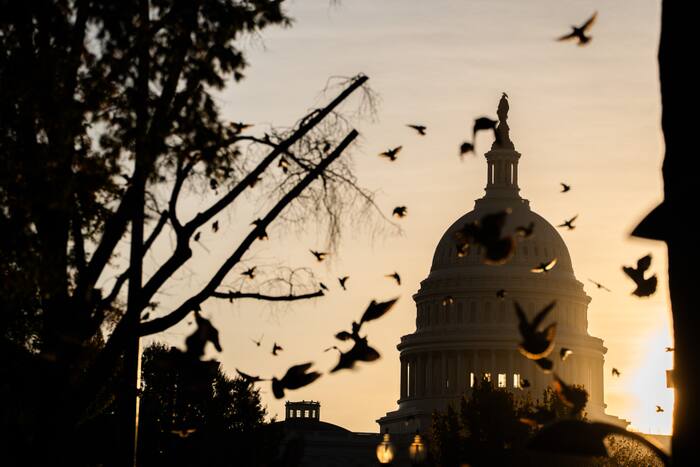
When the congressional election results rolled across international screens, capitals from London to Tokyo exhaled all at once. The Republican wipeout in the U.S. midterms felt like a seismic shift to foreign governments who spent years weathering a chaotic "America First" agenda.
Prime ministers and foreign ministers saw a clear rejection of MAGA politics. But beneath the public statements of solidarity and private cheers, a colder reality set in quickly. Foreign policy desks across Europe, Asia, and the Americas know that a bruised White House doesn't mean a complete pivot in Washington's global playbook.
The Immediate Relief Wave
You can't blame international leaders for feeling a rush of satisfaction. When your country has faced relentless tariff threats, unpredictable defense ultimatums, and a daily barrage of hostile social media posts, a domestic political rebuke of that style of governance feels vindicating.
Take Spain. Social Democratic Prime Minister Pedro Sánchez didn't hold back on social media, writing that American voters had decisively rejected hate, climate denialism, and elite privileges. Over in Norway, Foreign Minister Espen Barth Eide publicly noted that voters had simply grown exhausted by extreme polarization.
Up north, Ontario Premier Doug Ford was even more blunt about the immediate economic pressure his province faced from cross-border trade tensions and automotive tariffs. Admitting he felt like doing cartwheels down the street, Ford argued that a Democratic-controlled Congress gives Canada vital leverage it desperately needed.
Foreign capitals read the returns as a classic democratic check on executive overreach. Analysts at think tanks like Chatham House point out that domestic legislative gridlock will now tie down a lot of bandwidth in Washington. For countries caught in the crosshairs of aggressive trade policies, any brake on the administration's momentum is treated as a win.
Why the Caution Lingers
Don't mistake a collective sigh of relief for a belief that things are going back to the way they used to be. The underlying structural skepticism toward traditional alliances hasn't vanished just because Congress changed hands.
Foreign policy experts remind us that American presidents still retain sweeping, unilateral powers over foreign affairs, trade enforcement tools, and military positioning. A divided government makes domestic passing tough, but it doesn't strip the executive branch of its core instruments abroad.
European allies know this all too well. Years of transactional diplomacy have taught European Union leadership that U.S. security guarantees are no longer unconditional. Even with a weakened domestic legislative base, the administration's core worldview remains intact. Tariffs on key industrial goods, skepticism toward multilateral climate accords, and a cold approach to foreign aid are baked into the system.
Look at how adversaries view the map, too. In regions like the Middle East and Eastern Europe, observers are recalculating how a constrained presidency handles ongoing conflicts. While some factions see a weakened executive as an opportunity to push back, others worry that a cornered administration might double down on erratic maneuvers to score quick foreign wins.
What This Means for Global Strategy Going Forward
International diplomacy is moving past the illusion of a reset button. Leaders are realizing they have to adapt permanently to a fractured, hyper-nationalist American political climate that could easily swing back in future cycles.
Instead of waiting for Washington to restore old norms, foreign ministries are accelerating their own independent defense and economic coalitions. The focus has shifted from managing relations with one administration to building internal resilience against future political whiplash.
The midterm rout changed the immediate math in Washington, but it didn't rewrite the global rules of engagement. Survival for international allies now means navigating a permanently altered superpower.