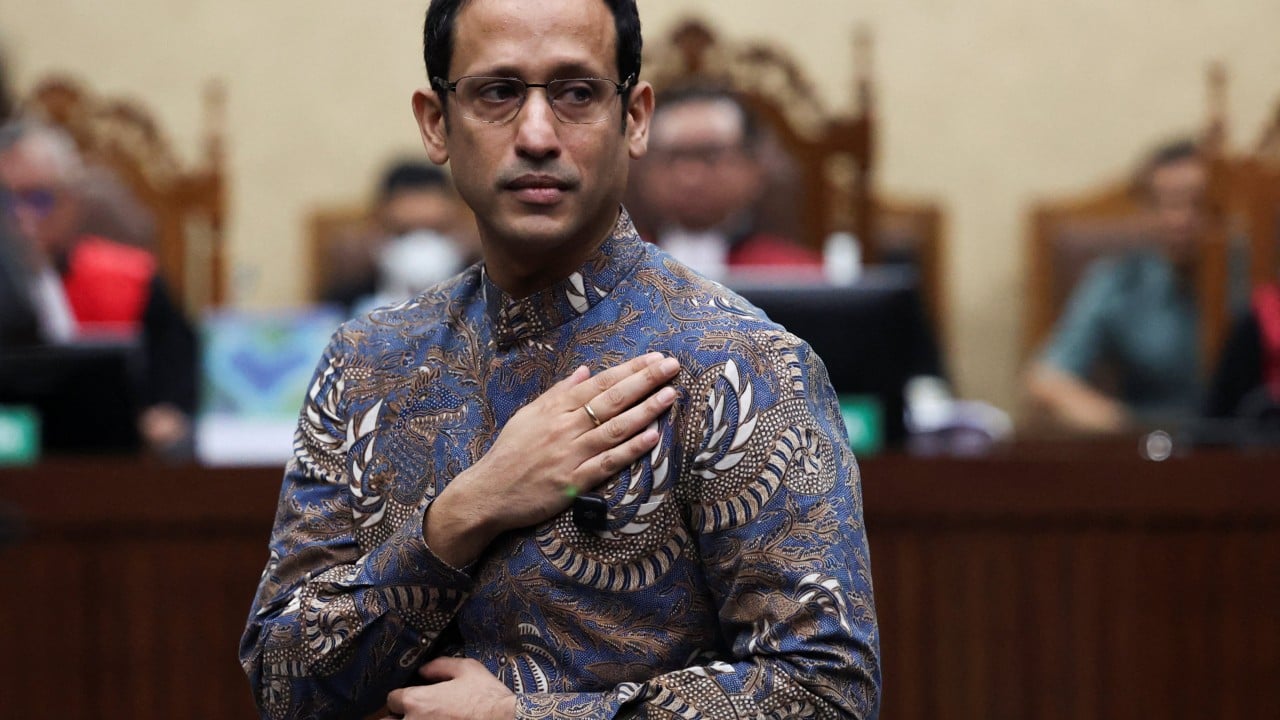
Indonesia just sent a terrifying signal to global capital. On June 30, 2026, the Central Jakarta District Court sentenced Nadiem Makarim to 10 years in prison. If you follow Southeast Asian tech, that name should ring a massive bell. He co-founded Gojek, the ride-hailing app that fundamentally reshaped how tens of millions of Indonesians move, eat, and work. He was the golden boy of the region's startup boom. Then he did what many thought was noble: he entered public service as the country's education minister.
Now he is facing a decade behind bars. The court also hit him with a one billion rupiah fine and a jaw-dropping 809 billion rupiah ($45 million) in restitution. If he can't pay that restitution—and he openly admits he doesn't have the cash—he faces another five years in a cell.
This decision changes everything for anyone doing business in Southeast Asia's biggest economy. It goes way beyond a single political downfall. It challenges the basic legal predictability that foreign investors require before deploying billions of dollars into emerging markets.
The Absurd Logic Behind the Chromebook Conviction
The entire case hinges on a massive pandemic-era policy. Between 2020 and 2022, when COVID-19 shut down schools across the Indonesian archipelago, the education ministry ordered roughly 1.1 million Chromebook laptops to facilitate remote learning. It was a chaotic time. Governments worldwide were scrambling to keep kids educated.
State prosecutors argued that Makarim's decision to buy Google Chromebooks wasn't a standard procurement choice. Instead, they claimed it was a calculated move to reward Google for its high-profile corporate investments in Gojek. They alleged the policy cost the state 2.18 trillion rupiah in losses.
But look closely at what the judges actually ruled.
The court explicitly found Makarim not guilty of self-enrichment. Let that sink in. The anti-corruption court agreed that he didn't take bribes, pocket kickbacks, or slice off state funds for his personal bank account. Instead, they convicted him of "abuse of authority" and causing state losses. The judges claimed he intentionally steered procurement toward Google's ecosystem because of his historical corporate ties, failing to recuse himself from the decision.
Think about the dangerous precedent this sets. If an official selects a global standard software or hardware system—like Google's ChromeOS, which dominates educational institutions globally—they can now be criminally prosecuted if a company they used to run happens to have an investment link with that supplier. Makarim stepped down from all decision-making roles at Gojek in 2019 before joining the cabinet. GoTo Group, the entity formed when Gojek merged with Tokopedia, has repeatedly verified that he had zero operational say after his resignation.
Makarim himself called the case a glaring investigative error. Before his sentencing, he pointed out that factual witnesses and industry experts found zero evidence of malicious intent or personal gain. He argued that choosing Chromebooks actually saved the state trillions of rupiah compared to other options. But the court didn't care.
Why Foreign Capital is Already Running for the Doors
This ruling lands at the worst possible moment for Indonesia. Foreign investors are already on edge. Under President Prabowo Subianto, the government has adopted a far more assertive, unpredictable stance toward private business.
The numbers tell a bleak story. Foreigners have pulled a net $4 billion from Indonesian equities this year alone. That mass exodus turned the country's stock benchmark into one of the worst performers globally. At the same time, the rupiah has slid about 6% against the US dollar.
The Makarim trial isn't an isolated event. It is part of a broader, aggressive campaign that looks increasingly like creeping state control over private corporate decisions. Look at what else has happened over the last few months:
- The government seized millions of hectares of land from private palm oil plantations and mining operations, citing environmental violations while ignoring corporate complaints about a total lack of due process.
- Executives at a state-backed venture capital firm were thrown into prison because a startup they invested in went bankrupt. The state treated a bad commercial investment as a criminal offense.
- High-ranking immigration officials were arrested after hours of aggressive interrogation, creating an atmosphere of institutional panic.
Former officials are starting to sound the alarm publicly. Tom Lembong, a highly respected former investment minister, openly criticized the legal basis of the Makarim prosecution. He noted that Indonesia faces severe fiscal pressures, global instability, and balance of payment issues stemming from geopolitical crises like the tensions involving Iran. Indonesia desperately needs international cash. Damaging investor confidence over absurd legal theories is economic self-sabotage.
The Horror Story for Young Professionals
The damage isn't just financial. It is human. When former President Joko Widodo brought Makarim into the cabinet in 2019, it was seen as a massive win for modernization. The goal was to bring elite, Western-educated tech talent into a notoriously sluggish, bureaucratic government apparatus to clean things up and digitize systems.
Makarim tried to do exactly that. He pushed through deep structural reforms and digitized major procurement tracks to increase transparency. Ironically, making transactions transparent is exactly what ruffled feathers among old-school bureaucrats who preferred the old, opaque ways of doing things.
Now, the tech elite sees public service as a death trap. Makarim didn't mince words during an interview from a hospital bed while under detention earlier this year. He explicitly stated that his case has become a horror story for young professionals across the country.
If you are a talented executive, why would you ever leave a highly lucrative private-sector job to help your country if a standard policy decision can land you in a jail cell for a decade? You wouldn't. The talent pipeline into the Indonesian government is officially frozen.
How to Protect Your Investments in the New Indonesia
If you have capital deployed in Indonesia, or if you're evaluating a market entry, you can't rely on the old rulebook. The boundary between a regular commercial decision and a criminal act has blurred completely. You must adapt your risk strategy immediately.
Scrub Every Past Corporate Affiliation
If your executives have previous ties to international tech giants, global funds, or regional conglomerates, audit every single touchpoint those companies have with Indonesian state entities. If your firm bids on a government contract, ensure that no one involved in the bidding process has even a historic, passive connection to the evaluating agency. The Makarim verdict proves that the absence of a bribe won't protect you if prosecutors can spin a narrative about past relationships.
Demand Ironclad Recusal Protocols
When doing business with Indonesian ministries or state-owned enterprises, do not accept standard signatures. Demand written proof that the officials signing off on contracts have completed full conflict-of-interest disclosures. If an official has a remote connection to your industry, explicitly request that they recuse themselves and that a neutral third party handles the final authorization. You are protecting them as much as you are protecting your corporate assets.
Re-evaluate Joint Ventures with State Firms
State-backed venture capital and state-owned enterprises are no longer safe partners. Because the Indonesian courts are now criminalizing bad business outcomes—like a startup going bust—any joint venture that loses money could trigger a state corruption probe. Treat every partnership with a state entity with extreme caution. If a project carries high commercial risk, structure it entirely through private entities outside the direct line of government oversight.
Brace for Continued Volatility
Don't assume this is the peak of the crackdown. The current administration is hungry for revenue and keen to project a nationalist, anti-corruption stance to its domestic base, even if it burns bridges with global markets. Keep your local capital structures highly liquid. Hedge your rupiah exposure against further depreciation, and ensure your legal teams are led by local compliance experts who understand how politics dictates courtroom outcomes in Jakarta.
The era of assuming tech founders are untouchable in Jakarta is dead. If Nadiem Makarim can get 10 years for buying laptops for schools, no one is safe.