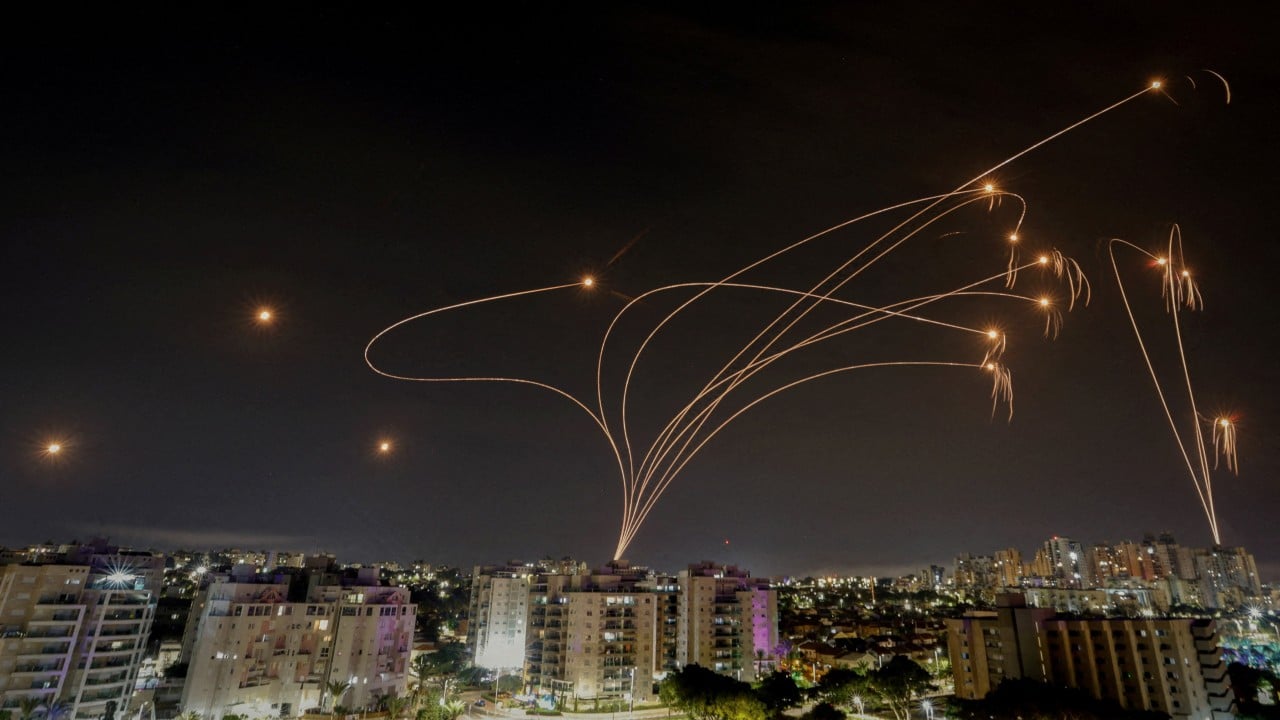
Greece just made a massive move in European defense politics. At a meeting of the Government Council for Foreign Affairs and Defense (KYSEA), Prime Minister Kyriakos Mitsotakis and his cabinet greenlit a multibillion-euro deal to acquire an Israeli-designed, multi-layered air defense grid named "Achilles Shield".
It isn't just another routine procurement order. We're witnessing a complete overhaul of how European countries handle airspace protection, moving away from slow, traditional anti-aircraft batteries toward real-time, layered denial networks.
If you've been watching the Eastern Mediterranean, you know the regional dynamics have been tense for years. But the shift toward a full-blown dome model proves that modern warfare—driven almost entirely by cheap drones, loitering munitions, and precision rockets—has caught up to classical NATO defense strategies.
What the Achilles Shield actually brings to the table
For decades, Athens relied on a patchwork of legacy hardware. They had American Patriot batteries, older Russian S-300s, and various short-range systems scattered across islands and mainland air bases.
Maintaining those older Russian platforms became impossible due to geopolitical strains and logistics bottlenecks. Worse, static surface-to-air missiles are horribly inefficient when dealing with swarms of low-cost drones. Spending a million-dollar interceptor missile on a $20,000 Turkish-made Bayraktar or Anka drone isn't math any military can sustain.
Achilles Shield fixes this by installing a layered umbrella:
- Short-Range Protection: Using platforms like Israel's SPYDER, designed to intercept low-flying drones, cruise missiles, and helicopters on short notice.
- Medium and Layered Air Defense: Integrating systems like the Barak MX, built to engage incoming threats across varied operational ranges with high flexibility.
- Long-Range & Ballistic Interception: Utilizing David's Sling technology to catch heavy artillery rockets, cruise missiles, and theater ballistic threats before they strike key infrastructure.
- Unified Radar Integration: Systems built by IAI's ELTA Systems will weave these layers into a single real-time air picture.
Defense Minister Nikos Dendias outlined a aggressive timeline, stating the network will be ready and operational within 35 months. That's fast for a project covering a geography as fractured as the Greek archipelago.
The 25% local manufacturing requirement
One key element missing from initial coverage is the domestic economic push. Athens isn't just buying off-the-shelf weapons systems and handing a blank check to Tel Aviv.
Dendias confirmed that Greek defense firms must produce at least 25% of the total system. That requirement guarantees local technology firms gain direct access to advanced radar integration, software coding, and missile maintenance infrastructure.
It's a smart play. Greece spends roughly 3.5% of its gross domestic product on defense—one of the highest ratios in NATO. Keeping a quarter of that spend within domestic borders helps appease local taxpayers while building out an indigenous industrial base.
Greece Defense Procurement at a Glance
├── Core Air Defense: Achilles Shield (€2.8B–€3.5B)
├── Naval Power: French Belharra frigates
├── Aviation: F-35 stealth fighters & Rafale jets
├── Unmanned Systems: Heron UAVs & V-BAT drones
└── Precision Strike: PULS rocket artillery
Why Greece is bypassing traditional European options
Why didn't Athens just go with European alternatives like SAMP/T or IRIS-T?
It comes down to battle testing and speed. Israel's defense sector has proven its systems under direct, constant saturation attacks involving thousands of rockets, cruise missiles, and suicide drones. European contractors simply can't offer the same real-world operational testing profiles.
There's also a deep strategic alignment occurring in the Eastern Mediterranean. Tensions between Turkey and both Greece and Israel have pushed Athens and Jerusalem into an tight security partnership over the past decade. From operating a joint pilot training center in southern Greece to running combined naval exercises, the military integration between the two nations is already deep.
Adding Achilles Shield to recent Greek purchases—like the $750 million deal for Israeli PULS rocket artillery—locks this alliance into place for the next two decades.
Island geography creates unique defense problems
Covering a mainland mass is hard enough. Protecting 6,000 islands and islets stretching across the Aegean Sea down to Kastellorizo creates an absolute nightmare for radar coverage. Radar waves don't bend over mountainous islands, leaving blind spots that low-flying drones can exploit.
To solve this, Achilles Shield relies heavily on decentralized sensors. KYSEA simultaneously approved purchases for satellite imaging hardware, synthetic aperture radar (SAR) satellites, counter-unmanned surface vessel systems, and fleet-wide drone acquisitions like the V-BAT and Heron UAVs.
By linking small-footprint radar stations scattered on isolated rocks with airborne early warning drones and naval frigates, Greece builds a mesh network. If one radar node goes down, the rest of the network fills the gap instantly.
Practical implications for European air defense
If you're tracking military modernization across NATO, keep your eye on how this deployment unfolds over the next three years.
- Watch the 35-month timeline: If Israel and Greek suppliers hit their milestones on time, expect other Southern and Eastern European nations to sign similar joint-production deals.
- Monitor Turkish reactions: Ankara has invested heavily in its own domestic air defense network (Steel Dome) and short-range drone capabilities. This purchase balances the scales in the Aegean.
- Track NATO interoperability: Integrating non-NATO origin software like Israeli radar logic with American F-35s and French Belharra frigates will be the ultimate engineering test for Greek technicians.