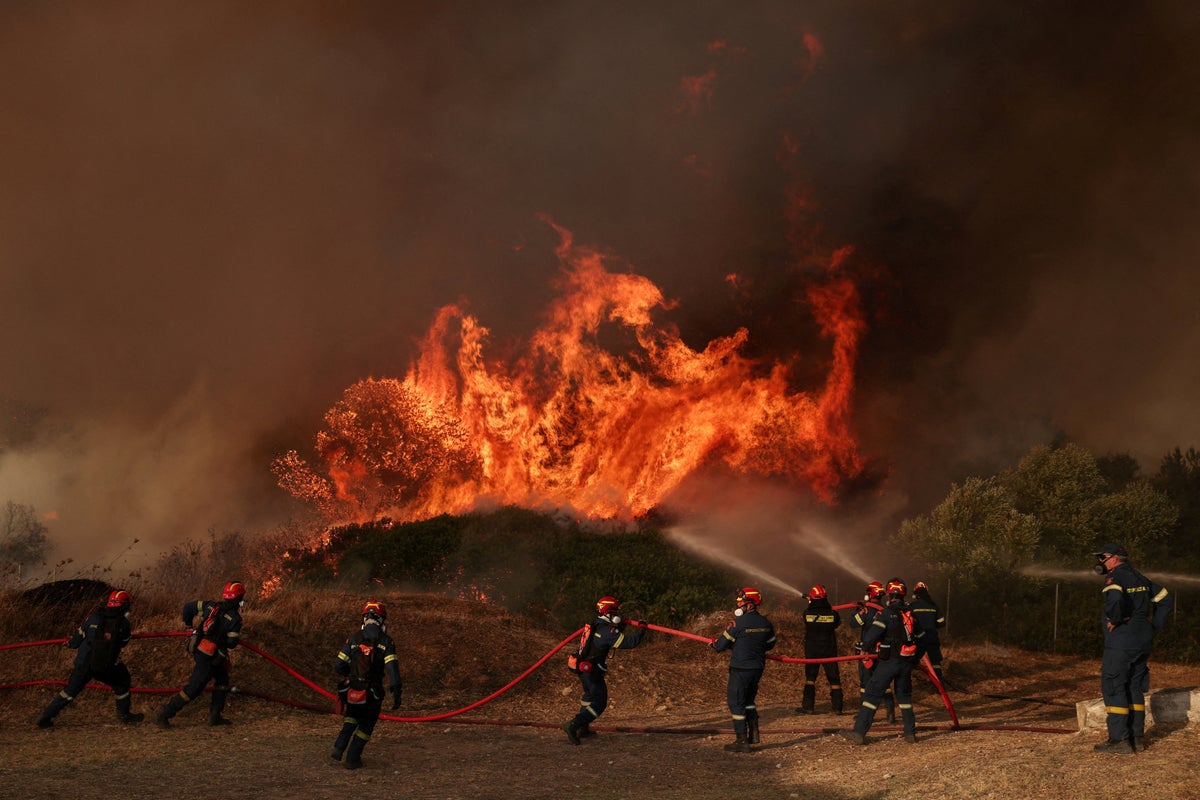
Smoke chokes the sky. Sirens wail through the night. When intense heat meets gale-force winds, the Greek wildfires turn entire landscapes into moving walls of fire.
Thousands of residents and tourists find themselves running for their lives as emergency services battle relentless blazes across regions like Crete and the outskirts of Athens. If you think this is just another seasonal brush fire, you are missing the bigger picture. The reality on the ground is far more chaotic, and the standard playbook for handling these disasters is breaking down. For a different look, check out: this related article.
What is Actually Happening on the Ground
The numbers tell a terrifying story. Across multiple active fronts, thousands of people have been forced out of hotels, rural villages, and suburban neighborhoods. Strong winds—often exceeding fifty miles per hour—turn minor brush flare-ups into raging firestorms within minutes.
Firefighters face an impossible math problem. When a fire splits into three or four distinct fronts simultaneously, aerial water drops can only do so much. Ground crews work around the clock, cutting firebreaks through dense pine forests and choking on thick ash. They aren't just fighting flames; they're fighting time. Related analysis on the subject has been shared by NBC News.
The Human Toll and Immediate Evacuations
Tourists sleeping in beachside resorts wake up to emergency evacuation alerts buzzing on their phones. Local authorities scramble buses, indoor sports arenas, and even private boats to pull people away from the coastline.
- Hotspots: Southern Crete and areas north of Athens bear the brunt of the destruction.
- Infrastructure: Power grids fail, roads close due to zero visibility, and local hospitals stay on high alert for smoke inhalation cases.
- The Rescue Effort: Coast guard vessels stand ready to pull trapped civilians directly off beaches when land routes cut off completely.
Why Traditional Firefighting is Failing
You can't throw water at a systemic crisis and expect it to go away. Climate shifts have created furnace-like conditions across southern Europe. Years of dry underbrush combined with record-breaking summer temperatures mean that a single spark transforms into an unstoppable monster.
Local municipalities often lack the sheer volume of specialized aircraft needed to cover multiple massive fronts at once. When wind speeds peak, planes are grounded for safety reasons, leaving ground crews entirely on their own against towering walls of heat.
The Misconception About Staying Behind
Many property owners think they can defend their homes with a garden hose. That instinct is deadly. Emergency officials repeat the same warning every single season: leave early. Once a crown fire hits a pine forest, radiant heat can ignite a house before the flames even touch it. Staying behind turns rescue workers into search-and-recovery teams.
What Needs to Change Right Now
We are past the point of treating these summers as anomalies. Governments must pivot from reactive emergency management to aggressive landscape management.
Clearer buffer zones around vulnerable towns, better forest thinning, and smarter early-detection sensor networks can buy critical minutes. Until those structural changes happen, thousands will keep running, and firefighters will keep paying the ultimate price.
Pack your go-bag. Pay attention to local emergency broadcasts. If an evacuation order hits your phone, do not wait.
Greece wildfires: 2 firefighters DIE as Crete blaze forces 8,000 residents and tourists to evacuate
This video provides an on-the-ground look at the devastating impact of the Crete wildfires, highlighting the intense conditions faced by emergency crews and evacuees.
http://googleusercontent.com/youtube_content/1