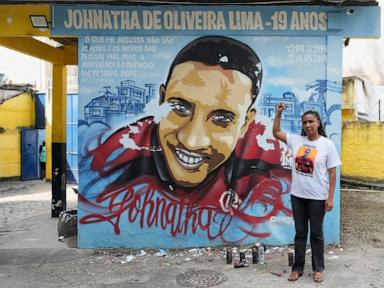
When a Rio de Janeiro police officer shot 19-year-old Johnatha de Oliveira Lima in the back in 2014, his mother, Ana Paula Oliveira, felt her world collapse. It is a story told a thousand times in the favelas of Brazil. You go to work. You buy bread. Suddenly, a gunshot echoes down the alley, and your child is gone.
If you are a mother in Manguinhos or Chapadão, the grief does not come alone. It arrives with a heavy dose of state-backed gaslighting. The police will claim your son was a criminal. They will say they fired to disperse a hostile crowd. They will lose evidence, stall investigations, and treat your tears as a nuisance.
But these women are refusing to fade away. Today, mothers in Brazil demand reparations after police violence, turning their living rooms into war rooms and their grief into a political force. They are not just asking for apologies anymore. They want systemic change, public funds, and a complete overhaul of how the state treats the families it leaves behind.
If you think this is just another local protest, you are missing the bigger picture. This is a massive, organized attempt to rebuild the social contract from the ground up.
The Raw Math of Favela Policing
Brazil has a police violence epidemic. Let us look at the actual numbers, because the data tells a brutal story.
In 2022 alone, Brazilian security forces killed 6,429 people. That is roughly 13% of all intentional violent deaths in the entire country. In states like Bahia, that number climbed to nearly 30%. Most of the victims are young, Black, and poor. They are boys under the age of 20, gunned down in neighborhoods that lack basic sanitation and decent schools but have an endless supply of military-grade ammunition.
In Rio de Janeiro, activists tracked 460 deaths during police operations last year alone. Despite repeated condemnation from the Inter-American Court of Human Rights, the local system remains incredibly efficient at protecting its own. Over 90% of police-related killings in Rio are shelved without any real investigation.
When the state kills a young man, it does not just end one life. It leaves behind a family that has to shoulder the emotional and economic fallout alone. Mothers develop chronic illnesses, depression, and severe physical ailments from the sheer stress of fighting for answers. The breadwinner of the household is gone, and the remaining siblings are left traumatized, often facing panic attacks and suicidal thoughts.
From Kitchen Table Support Groups to the Halls of Brasilia
Ana Paula Oliveira quickly realized that waiting for the justice system to do its job was a trap. If she wanted accountability, she had to build it herself. She co-founded Mães de Manguinhos (Mothers of Manguinhos), a collective of women who refuse to let their children be reduced to a statistic.
These women started small. They met in cramped favela kitchens, cooked for each other, cried together, and accompanied one another to court hearings. They learned how to read autopsy reports, how to track down witnesses, and how to deal with hostile prosecutors.
Slowly, those local support networks grew. Last year, mothers from across Rio traveled to the federal capital, Brasília. They did not go there to beg. They went to present a fully realized policy proposal to the country's executive, legislative, and judicial branches.
The collective is working closely with Raave, a network of organizations supporting people affected by state violence. Led by human rights lawyer Guilherme Pimentel, Raave is actively negotiating with the federal government to run a pilot project designed entirely by these grieving mothers. The goal is to build a national policy that guarantees institutional support, mental health services, and real reparations for families of victims.
The Sisters of Chapadao and the Memorial of the Fallen Sons
Walk through the Chapadão complex of favelas in Rio, and you will see a massive mural painted on the front wall of one home. It depicts three young faces: Cleyton, Cleyverson, and Fabricio.
They were all killed by the police.
Nadia dos Santos lost her son Cleyton in 2015 when he was 18. Seven years later, in 2022, her 17-year-old son Cleyverson was also killed. Her sister, Glaucia, lost her 17-year-old son Fabricio in 2014.
Think about that for a second. One family, three boys, all dead at the hands of the state before they could even vote.
Instead of letting the pain destroy them, the sisters founded their own support networks. They spent years digging for evidence, pushing the courts to act. In 2023, they won a rare victory: the officers who killed Fabricio were sentenced to nine years in prison.
It was a tiny sliver of hope. But Nadia is clear about one thing: the fight cannot depend on individual, exhausting court battles. "The state should have the obligation to give us mothers who lose our sons because of the state's violence reparations," she says. "We fight, we work, but we become ill. We need solutions".
Monica Cunha and the Long Road to the Ballot Box
The journey from victim to activist often leads to the halls of power. Monica Cunha is living proof of that.
Her 15-year-old son, Rafael, was arrested for robbery in 2003. He spent three years inside a brutal youth detention system, only to be shot and killed by police shortly after his release in December 2006. Monica remembers looking at his bullet-ridden body on the ground, realizing that the system had chewed him up and spit him out.
She did not stay quiet. She formed the Movimento Moleque to organize mothers of children targeted by state violence. Her activism eventually carried her into local politics, and she became a Rio city councilwoman. This month, in July 2026, she is launching her precandidacy to run for state lawmaker in the upcoming October elections.
For Cunha, the fight is about changing the laws so that no more mothers have to join her club. She is demanding "guarantees of nonrepetition"—a legal concept that forces the state to change its policing tactics to ensure these killings stop happening. She wants the systemic racism that drives these killings confronted through actual state laws, not just empty speeches.
What Real Reparations Look Like beyond Just Money
When people hear the word "reparations," they usually think of a check. But for these mothers, financial restitution is only a small part of the equation. They want something much deeper: the restoration of their children's dignity and memory.
The legal and cultural strategy of the movement focuses on several key areas:
- Public Memorialization: Placing the names of victims in public squares, parks, and streets.
- Institutional Renaming: Naming schools, daycares, and community health clinics after the young people whose lives were cut short.
- Public Policy of Nonrepetition: Creating mandatory, independent oversight of police operations and requiring body-worn cameras to prevent future abuses.
- Guaranteed Healthcare: Providing lifelong, state-funded physical and mental health treatment for relatives traumatized by state violence.
By pushing for these changes, the mothers are redefining what motherhood means in Brazil. They are refusing to let their sons be remembered as nameless casualties of an endless "war on drugs." They are forcing the country to look at its own citizens and acknowledge their value.
How to Support the Movement for Accountability in Brazil
If you want to support these families and help push for systemic changes in Brazilian public safety, there are concrete ways to take action today.
- Amplify Local Collectives: Follow and support organizations like Mães de Manguinhos and Movimento Moleque on social media. Helping their campaigns go viral puts international pressure on the Brazilian judicial system.
- Support Human Rights Defenders: Donate or volunteer with larger networks like Raave, Amnesty International Brazil, or Justiça Global, which provide legal aid and structural support to families.
- Advocate for Transparent Policing: Share data from independent watchdogs like the Brazilian Public Security Forum to counter the official narratives pushed by local police departments.
The fight is far from over, but the mothers of Brazil are not backing down. They are standing upright, holding their banners high, and rewriting the rules of justice in a country that has ignored them for far too long.